How Smart Sellers Are Beating Cookie Deprecation With Amazon DSP
Learn how clever eCommerce sellers are combining contextual targeting and Amazon’s demand-side platform to build hyper-relevant ad campaigns.


Updated November, 2025
Since we first published this analysis in late 2023, the AI revolution in advertising has accelerated beyond what most predicted. Amazon’s launch of Rufus—its generative AI shopping assistant—plus dramatic improvements to DSP’s automated targeting capabilities have made the combination of contextual advertising and demand-side platforms even more powerful.
As of 2025, the death of third-party cookies is no longer a future concern but present reality, making the strategies outlined here essential for competitive advantage.
Artificial intelligence is red hot right now! That’s because AI can help us do, well, everything.
At the same time, seemingly overnight, Amazon advertising has transitioned from a solid product launch strategy to an essential component of eCommerce success.
This post focuses on how these two topics are linked in a way that is going to help drive traffic to your target audience and put a lot of money in your pocket.
Whether you’re just getting started with digital advertising, or are a seasoned pro, AI, Amazon DSP, and programmatic advertising have combined to supercharge your targeting options.
That’s because the dramatic evolution of AI has acted as a huge lever on Amazon contextual data and dramatically increased the effectiveness and profitability of Amazon’s Demand-Side Platform.
Thinking About Hiring an Amazon Management Agency?
Canopy’s Partners Achieve an Average 84% Profit Increase!
Let’s talkWhat is Contextual Targeting?
Contextual advertising is a form of targeted advertising backed by AI and machine learning making it possible for your ads to show up on web pages featuring content that’s closely related to your products.
Marketers often find themselves torn between the exciting reach of large-scale advertising and the effectiveness of targeted, niche-down Amazon ad campaigns with their higher CVR (or conversion rate).
At the same time, the third-party cookie continues to lose favor with large digital advertising platforms. That might not concern businesses that are singularly focused on massive reach with their marketing funnel.
However, Amazon and other online sellers who use that data to fine tune their ad placement for their target audience have reason to be concerned.
Access to that data is one of the ways that an Amazon seller is able to properly allocate ad inventory.
Fortunately for Amazon sellers, there’s a work-around.
Before we examine how you can use an Amazon DSP campaign to drive brand awareness and supercharge your Amazon ads, let’s look at how we ended up here.
Changes to Data Privileges
In 2022, Google followed up on Apple’s announcement from April of 2021 updating its iOS operating system with new privacy controls designed to limit digital advertisers from tracking iPhone users. Google revealed its own privacy restrictions that cut tracking across apps on its Android devices.
Since that moment, there’s been an advertising-industry-wide panic as marketers attempt to come up with ways to replace the occasionally annoying, but extremely valuable cookies allowing advertisers to track shopper and buyer behavior.
Third-party sellers weren’t the only ones affected. Facebook said last year that Apple’s privacy changes would cost them approximately $10 billion in lost ad sales.
It’s hard to imagine that “cookies,” – those small pieces of data that catalog the behavior of users on a particular website – would have such a massive impact, but they do.
Behavioral (or Audience) Targeting
Cookies are a large part of what makes behavioral (or audience) targeting possible.
Behavioral targeting tracks people’s activities (with cookies) to better understand which products, campaigns, or ad format they are attracted to. Leveraging behavioral data allows advertisers to adjust their marketing based on several different sources of data. It might be data from website engagement or the behavior of shoppers and purchasers in an online marketplace such as Amazon.
In either case, availability of the data that’s generated by behavioral marketing has been trending downward. That’s led to a resurgence in a variety of different “cookieless” targeting strategies that allow marketers to continue to source the necessary data points they use to build their advertising campaigns.
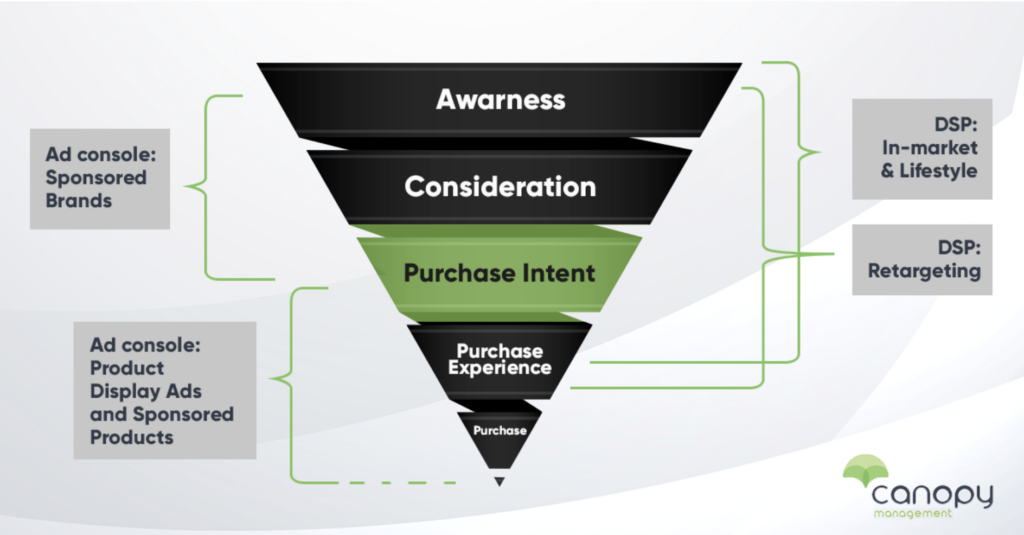
Cookieless Targeting?
Instead of sourcing user data from behavior, cookieless targeting collects data from the ad environment that a user is navigating. Cookieless campaigns use an algorithm to target ad placements based on keywords, website content, and other metadata attributed to the content that online consumers are browsing at any one time.
What’s made this all possible has been the same advances in artificial intelligence and data modeling that over the last few years has also fueled the innovations in livestream selling, augmented reality, and throughout eCommerce.
Identify (Real-Time) Audiences with Contextual Advertising
There are three primary tactics that allow marketers to replace third-party cookies: anonymous first-party data, interest-based groups such as Google’s Topics, and contextual targeting.
Although a variation of contextual advertising has been around for a long time, the evolution of artificial intelligence has dramatically accelerated the level of interest surrounding this data-collection strategy.
By closely examining user behavior, contextual advertising capitalizes on ads based on the environment in which the ad appears. For example, it might mean ads for a running watch or shoes on a news article about trail running, or it could be advertisements for the newest iPhone on a tech site.
In the first case above, instead of anticipating that a shopper is still interested in running because they signed up for an industry newsletter a year ago, contextual advertising lets advertisers know that shoppers are browsing for new trail shoes right now!
More importantly, contextual targeting is not subject to privacy regulations because it doesn’t use or collect cookies.
Data Just Keeps Getting Smarter
It might be easier to talk about the aspects of eCommerce that haven’t been affected by the ongoing advancement in artificial intelligence and data modeling.
The increased sophistication of inventory management platforms, omnichannel product discovery, and the rise of highly-effective voice-enabled shopping are just a few of the areas that have benefited from the relentless upgrades to AI.
Now, AI is helping analyze the “essence” of a web page’s content. That means that you can use that information to target shoppers with a closely “matched” ad campaign. Most of the time, that’s going to result in the right campaign being run to the right audience on the correct platform.
Amazon’s 2024 launch of Rufus—its generative AI shopping assistant—exemplifies this evolution. Rufus analyzes product context, customer reviews, and Q&A content to answer shopper questions conversationally. For advertisers, this means contextual targeting now reaches shoppers receiving AI-generated recommendations, making thorough product information and strategic ad placement even more critical for visibility in this AI-mediated discovery process.
That sounds like a conversion to me.
Contextual ad tech strategies allow marketers to target “context” by a prompt including a topic or keywords. In the contextual ad campaign set up, marketers can identify phrases and keywords that are to be included or excluded.
After that, algorithms help determine the optimum ad placements leading to an ad impression using artificial intelligence.
Contextual Advertising + DSP = Ad Accuracy
The world is moving faster than ever, sometimes pivoting on a dime.
Amazon sponsored product, sponsored brand, and sponsored display ads are extraordinary assets for an online advertiser.
Still, the ability of contextual DSP advertising to provide marketers with real-time metrics is a game changer.
With the right Demand Side Platform Agency, eCommerce sellers can use contextual targeting to identify ideal ad-campaign audiences in seconds, then quickly measure the results. That transparency makes it possible to adjust campaign context and keywords in real-time to increase performance, and reduce ad spend.
I’ve said before that I feel that Amazon DSP is the best kept secret on the Amazon advertising platform. As the founder and CEO of Canopy Management, the fastest growing Amazon Management Agency in North America, I’ve been privileged to watch the exciting results that pour in from our team of DSP experts.
If I was going to offer any advice to eCommerce sellers right now, it would be to look more closely at how you are able combine Amazon DSP and contextual targeting to level up your business.
That will more than make up for the loss of cookies in 2024.
Ready to Grow Your Amazon Business?
Start applicationFrequently Asked Questions
How much does it cost to run Amazon DSP campaigns?
Amazon DSP requires a minimum spend commitment that varies by management approach. Self-service DSP accounts typically require $35,000-$50,000 in total quarterly ad spend, while managed-service options (where Amazon’s team runs campaigns) often require $50,000+ minimums. These thresholds reflect the platform’s enterprise focus and the sophisticated targeting capabilities it provides.
For brands not ready for these minimums, starting with Amazon’s self-serve ad products (Sponsored Products, Sponsored Brands, Sponsored Display) builds the foundation and performance data needed before graduating to DSP. Many successful DSP advertisers began with these products, scaled to consistent five-figure monthly ad spends, then added DSP to expand reach beyond Amazon’s marketplace. Working with a specialized DSP agency like Canopy can also provide access to managed campaigns at lower thresholds through aggregated client spend.
What’s the difference between Amazon DSP and regular Amazon ads?
Regular Amazon ads (Sponsored Products, Sponsored Brands, Sponsored Display) appear within Amazon’s marketplace and target shoppers actively browsing products. Amazon DSP extends your reach far beyond Amazon, placing display and video ads across millions of websites, apps, and streaming services while leveraging Amazon’s rich shopper data for targeting.
The key advantage is audience targeting based on actual purchase behavior rather than browsing signals. DSP lets you reach someone who bought a competitor’s product last month with a remarketing message, or target high-income households that frequently purchase in your category across the entire web, not just Amazon. This makes DSP ideal for building brand awareness, conquering competitor customers, and driving traffic back to your Amazon listings from external touchpoints. Regular Amazon ads drive immediate conversions from in-market shoppers; DSP builds the audience that becomes those in-market shoppers.
Can small sellers benefit from contextual targeting without using DSP?
Absolutely. Contextual targeting principles apply to all Amazon advertising products, not just DSP. When you optimize your Sponsored Products campaigns by targeting specific ASINs (competitor products or complementary items), you’re using contextual targeting—your ad appears in the context of related products. Sponsored Display’s “views remarketing” and “similar product targeting” both leverage contextual signals.
The difference is scale and reach. DSP extends contextual targeting across the entire web using sophisticated AI to match your products with relevant content environments. But even smaller sellers spending $2,000-$5,000 monthly on Sponsored Products can apply contextual thinking: target your ads to appear on product pages where buyers are in the right mindset, use category targeting to reach contextually relevant shoppers, and leverage Amazon’s automatically generated audiences based on shopping behavior. As you scale and these tactics prove successful, DSP becomes the natural next evolution.
How does AI improve contextual targeting compared to traditional methods?
Traditional contextual targeting relied on simple keyword matching—running shoe ads on pages mentioning “running.” Modern AI analyzes the semantic meaning, sentiment, and overall context of web content to understand what a page is truly about, not just which keywords appear. This dramatically improves ad relevance and reduces wasted impressions.
Amazon’s AI examines shopping behavior patterns, purchase timing, category affinities, and thousands of other signals to predict when contextual ad placements will drive conversions. The system learns which content environments correlate with purchases for your specific products, continuously refining targeting based on performance. This means your camping gear ads might appear on articles about “work-life balance” or “digital detox” if AI identifies these contexts drive conversions for your products, even without obvious keyword matches. The result is substantially higher conversion rates and lower wasted spend compared to manual contextual targeting strategies.
What metrics should I track to measure DSP campaign success?
DSP success requires looking beyond immediate return on ad spend since the platform serves both brand awareness and conversion goals. Track ROAS (return on ad spend) for retargeting campaigns targeting known shoppers, but also monitor new-to-brand customer acquisition—often the primary DSP value. Brands typically see 2-4X ROAS on DSP remarketing and 1-2X on prospecting campaigns once optimized.
Equally important are upper-funnel metrics: total reach (unique users seeing your ads), view-through conversions (purchases within 14 days of seeing your ad without clicking), and branded search lift (increased searches for your brand name following DSP exposure). Many DSP campaigns appear “inefficient” on pure ROAS until you account for view-through attribution—shoppers who see your display ad, don’t click, but later search your brand on Amazon and purchase. This attribution typically reveals 30-50% more value than click-only tracking suggests. Track these comprehensively for 60-90 days before judging DSP performance.
Is contextual targeting as effective as behavioral targeting was with cookies?
For Amazon sellers specifically, contextual targeting combined with Amazon’s first-party shopper data often outperforms traditional cookie-based behavioral targeting. Amazon knows actual purchase behavior, not just browsing signals—far more valuable for conversion prediction. When you target “people who bought competitor products in the last 30 days” via DSP, that’s more powerful than cookie-based “people who browsed competitor websites.”
The key difference is privacy compliance and data quality. Contextual targeting doesn’t face the regulatory restrictions plaguing cookies, and Amazon’s logged-in user data provides authenticated signals rather than probabilistic cookie matching. For driving Amazon sales specifically, this combination frequently delivers better performance than traditional behavioral targeting ever did. However, for brand awareness campaigns requiring very broad reach, the scale of cookie-based targeting was larger—though that scale came with lower relevance. Quality over quantity typically wins for conversion-focused campaigns.
How long does it take to see results from DSP campaigns?
DSP campaigns typically require 4-6 weeks to gather sufficient data for Amazon’s algorithms to optimize effectively. Initial campaigns often show disappointing ROAS in weeks 1-2 as the system learns which audiences and placements drive conversions for your specific products. Patient brands that maintain spend through this learning phase usually see performance improve significantly by week 6-8.
Remarketing campaigns targeting known shoppers often perform well immediately since you’re reaching high-intent audiences who’ve already shown interest. Prospecting campaigns—reaching new audiences—take longer to optimize but ultimately drive the most growth. Set realistic expectations: month one is learning and testing, month two is optimization and improvement, month three is when you typically see the full potential. Brands pulling out after 3-4 weeks due to “poor performance” miss the point where campaigns become profitable. Combine DSP with ongoing Sponsored Products campaigns to maintain immediate returns while DSP builds your longer-term audience.
Do I need an agency to run Amazon DSP, or can I do it myself?
Amazon offers both self-service DSP (you manage campaigns directly) and managed-service DSP (Amazon’s team manages for you), but both options have significant learning curves and minimum spend requirements. Self-service provides more control but requires deep expertise in programmatic advertising, audience building, creative optimization, and attribution modeling—skills most sellers don’t have in-house.
Managed-service Amazon DSP means Amazon’s team runs campaigns, but you’re competing for attention with their hundreds of other clients, and their recommendations tend toward conservative, broad strategies rather than aggressive growth tactics. Specialized DSP agencies like Canopy provide a middle path: expert management with customized strategies, often with more flexible minimums than Amazon’s managed service, and dedicated attention to your specific goals. For most sellers doing $100,000+ monthly on Amazon, an experienced DSP agency delivers faster results and better returns than DIY approaches, since the agency’s learning curve has already been paid for across dozens of client accounts.
How Canopy Can Help
Built for Amazon. Designed for Growth
Ready to partner with a team that has the systems and expertise to scale your brand?
Canopy Management delivers end-to-end eCommerce growth, leading the industry in Amazon marketplace strategy while powering expansion through Shopify, Meta, and Google. Our full-funnel approach — from marketplace optimization to customer acquisition — has generated over $3.3 billion in partner revenue and made us the trusted growth engine for brands worldwide.
Schedule a strategy session with our team to discover exactly how our proven frameworks can accelerate your growth.