Case Study: How Canopy Propelled PetMD to Success in a Competitive Niche
How PetMD grew sales 8x in 12 months on Amazon by rebuilding their advertising strategy from the ground up in a saturated pet care market


The pet care space on Amazon is packed. You’re competing against established brands with huge budgets, knock-off products that undercut your pricing, and hundreds of sellers launching similar items every month.
PetMD faced all of this. Their cost per click kept climbing, their return on ad spend was dropping, and they were struggling to stand out across Amazon, Walmart, and Chewy. They needed someone who could actually fix the advertising strategy, not just manage what was already there.
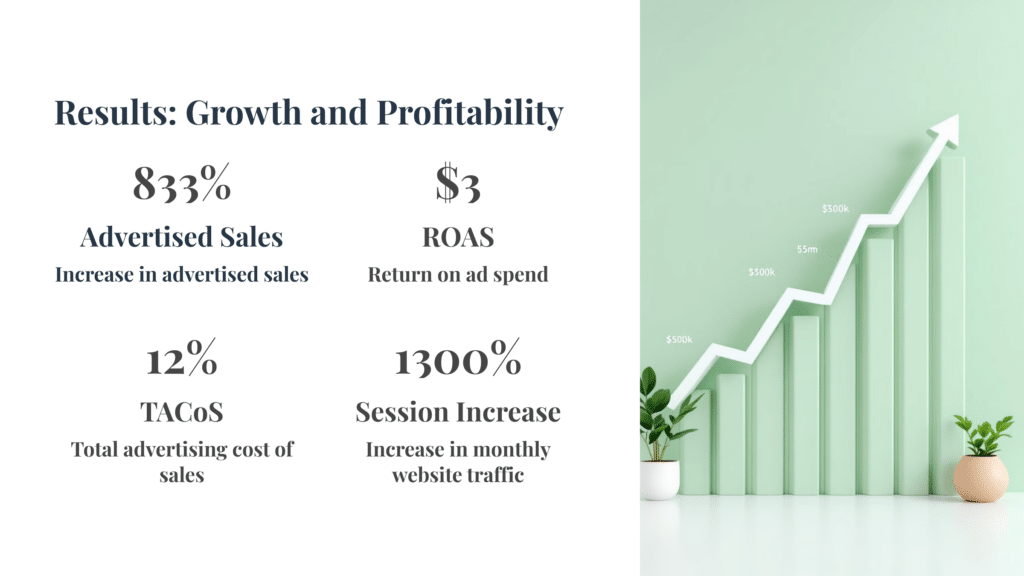
Over 12 months, we helped them grow advertised sales more than 8x while driving website traffic up over 13x. Here’s what we actually did and what you can learn from it.
The Problem: Rising Costs and Stagnant Growth
PetMD came to us with a common problem in competitive categories. Their campaigns were running, but the numbers were moving in the wrong direction:
- Cost per click was increasing every quarter
- Return on ad spend was flat or declining
- Total Advertising Cost of Sale (TACOS, the percentage of total revenue spent on ads) was eating into profitability
- They were getting lost in search results against bigger brands
The real issue wasn’t with their products, or their listings needing work. They had an extraordinary brand and great products. The problem was their advertising strategy hadn’t evolved as Amazon’s platform became more sophisticated.
They were running campaigns the way sellers did three years ago, when simpler strategies still worked.
Canopy Management’s Strategy
Campaign Structure Overhaul
The first thing we tackled was campaign structure. PetMD’s account had the classic setup that stops working once competition increases: broad campaigns with too many products grouped together, minimal negative keywords, and no real segmentation by performance.
We rebuilt everything from scratch:
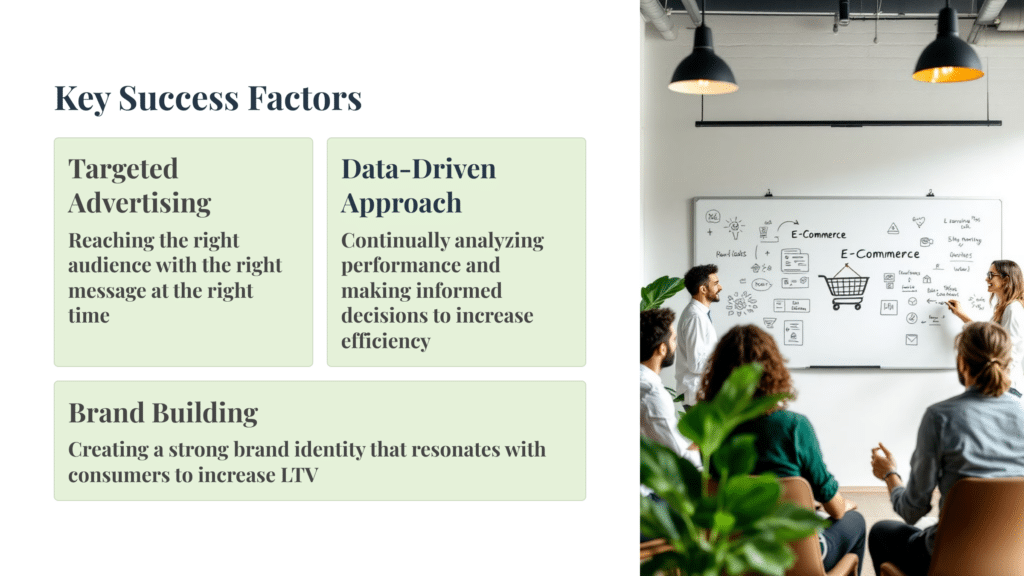
Separated top performers from everything else. Their best-selling products got dedicated campaigns with bigger budgets and tighter keyword targeting. Lower performers got their own campaigns with different goals and smaller budgets.
Added granular product targeting. Instead of just bidding on keywords, we started targeting specific competitor products and complementary items. If someone was looking at a competitor’s dog vitamins, our ads for PetMD’s vitamins showed up right there.
Built out negative keyword lists aggressively. Every week, we reviewed search terms and added anything that generated clicks but no sales. Over time, this saved thousands in wasted spend.
The structure changes alone improved efficiency by about 15% in the first month. But structure is just the foundation.
DSP Advertising for Brand Building
Here’s where things get interesting.
Most sellers focus entirely on Sponsored Products (the ads that show up in search results). Those are important, but they only capture people already searching for your product.
We launched Demand Side Platform (DSP) campaigns to reach shoppers earlier in their buying process.
What DSP actually does: DSP shows Amazon display ads to shoppers based on their browsing behavior, not just their current search. If someone looked at dog food last week but didn’t buy, we could show them PetMD’s products when they’re browsing other parts of Amazon or even on other websites.
This drove two major benefits:
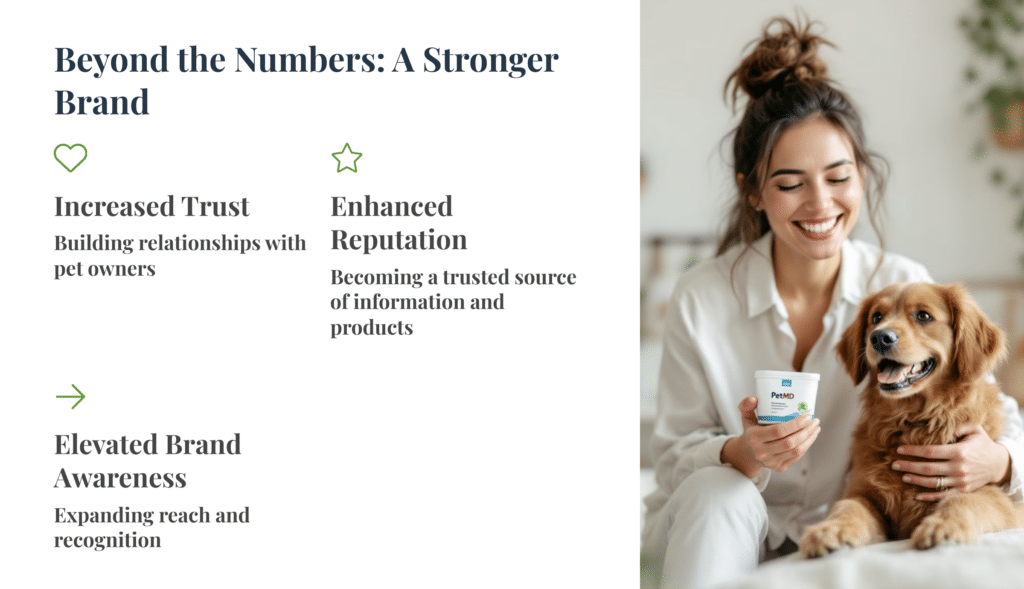
- Increased branded search volume. When more people see your brand through display ads, more people search for your brand name directly. Branded searches convert way better and cost less than generic keyword searches.
- Better conversion rates on other campaigns. When shoppers have seen your brand before, they’re more likely to click your Sponsored Product ads and actually buy. The DSP campaigns created a “warm audience” for everything else.
The combination of bottom-funnel (search) and mid-funnel (display) advertising is what actually drives scalable growth. You can’t just keep bidding up on the same keywords forever.
Cross-Platform Coordination
PetMD wasn’t just on Amazon. They were on Walmart and Chewy too. Instead of treating each platform separately, we coordinated the strategy across all three.
When we launched a new product on Amazon, we’d support it with DSP campaigns driving awareness, then launch similar products on Walmart and Chewy once we had proof of concept.
When we found winning product targets or keyword combinations on one platform, we tested them on the others.
This lets us scale faster and test more efficiently than if we treated each marketplace as its own island.
What Results Did PetMD See?
Over 12 months, here’s what changed:
Advertised sales grew more than 8x. This is sales directly attributed to advertising campaigns across all platforms. The starting point was meaningful revenue (they weren’t a brand new seller), so 8x growth represented millions in additional sales.
Website traffic increased more than 13x. The combination of marketplace advertising and coordinated content strategy drove significantly more people to their owned properties.
TACoS decreased substantially. They were spending a smaller percentage of total revenue on advertising while generating more sales. This is the key metric for profitability. You want ad sales growing faster than ad spend.
Conversion rates improved across the board. The brand awareness work through DSP meant more qualified traffic hitting their listings, which meant more of that traffic actually bought.
Return on ad spend (ROAS) increased significantly. For every dollar spent on ads, they were generating more revenue than before. This happened even as they scaled up spend.
The timeline matters here. Month one looked very different from month twelve. The first 90 days were about building the foundation, testing campaigns, and accumulating data. Real momentum hit around month four, and it accelerated from there.
Why This Approach Works in Competitive Categories
The pet care category isn’t getting less competitive. Neither is yours, probably. What worked here for PetMD works in any crowded space:
You need advertising at multiple stages of the buying journey. Bottom-funnel (search) advertising captures people ready to buy right now. Mid-funnel (display/DSP) advertising builds awareness so more people are ready to buy later. Most sellers only do the first part.
Campaign structure determines efficiency. Lumping everything together in broad campaigns might work when you’re small. As you scale, you need segmentation. Top performers should get more budget and aggressive bidding. Everything else needs its own strategy.
Cross-platform coordination accelerates learning. What works on Amazon often works on Walmart. What works in one category often works in adjacent categories. When you coordinate instead of treating each platform separately, you learn faster and scale more efficiently.Brand matters more than ever. On Amazon today, shoppers see dozens of options for every search. The brands that invest in building recognition through display advertising get clicked more and convert better. It compounds over time.
What Makes Pet Care Advertising on Amazon Difficult?
Pet owners are loyal to brands, but they’ll switch for a better deal or better reviews. Every product has 20 competitors within a few cents on price. Amazon’s algorithm prioritizes conversion rate, so if you can’t convert better than competitors, you get buried.
Seasonal patterns hit hard (pet supplies spike around holidays). Inventory planning is tricky (run out of stock and you lose your rank). And Amazon keeps launching its own private label pet products that get preferential placement.
To win in this environment, you need sophisticated advertising that builds brand preference while staying profitable. That’s exactly what we did for PetMD.
Thinking About Hiring an Amazon Management Agency?
Canopy’s Partners Achieve an Average 84% Profit Increase!
Let’s talkFrequently Asked Questions
How long did it take PetMD to see results?
We started seeing meaningful improvement around month three, with the biggest momentum hitting between months four and six. The full 8x growth in advertised sales happened over the full 12-month period. The first 90 days were mostly about restructuring campaigns, gathering data, and testing new strategies. If someone promises instant results in a competitive category, they’re not being straight with you.
What is TACOS and why did lowering it matter?
TACOS stands for Total Advertising Cost of Sale. It’s your total ad spend divided by your total revenue (not just ad-attributed revenue). So if you spend $10,000 on ads and generate $100,000 in total sales, your TACOS is 10%. Lowering TACOS while growing sales means your business is getting more profitable. You’re spending less as a percentage of revenue while selling more. That’s sustainable growth.
How does DSP advertising work for Amazon sellers?
Amazon DSP (Demand Side Platform) lets you show display ads to shoppers based on their behavior, not just their current search query. You can target people who viewed competitor products, people who bought similar items, or people who fit certain demographic profiles. The ads appear on Amazon, on other websites, on apps, and on streaming TV. It’s more expensive than Sponsored Products, but it builds brand awareness and drives people to search for you specifically. That branded traffic converts better and costs less to capture.
Can smaller pet brands achieve similar results?
The specific numbers will differ based on your starting point and budget, but the strategy works at different scales. You don’t need a massive budget to restructure campaigns intelligently or to start testing DSP. What matters more is having solid products, good listings, and enough budget to let campaigns run long enough to gather data. If you’re doing less than $50,000 per month in sales, you might want to master Sponsored Products first before adding DSP. But the principles of segmentation and full-funnel advertising apply whether you’re doing $100,000 or $10 million annually.
Should pet brands advertise on multiple marketplaces?
Yes, but not all at once if you’re just starting out. Amazon has the most pet care shoppers, so that’s where you prove your products work. Once you’re profitable there, Walmart is a natural next step (less competition, often better margins). Chewy is the category specialist and has loyal customers, but it’s harder to get traction there as a new brand. The key is coordinating your approach so you’re not learning the same lessons three separate times on three different platforms. What works on Amazon usually works on Walmart with some adjustments.
What’s the difference between ROAS and TACOS?
ROAS (Return on Ad Spend) measures revenue generated directly from ads divided by ad spend. If you spend $1,000 on ads and those ads generate $5,000 in sales, your ROAS is 5x. TACOS measures total ad spend divided by total sales (including sales not attributed to ads). ROAS tells you if your campaigns are efficient. TACOS tells you if your business is profitable. You can have great ROAS but bad TACOS if you’re spending too much overall. Both metrics matter, but TACOS is more important for overall business health.
What’s Next: Optimizing for Amazon’s AI Search
The strategies that drove PetMD’s growth in 2024 still work today. But the game is changing fast. Amazon’s Rufus, their generative AI shopping assistant, is now helping millions of shoppers discover products through conversational search instead of traditional keywords.
We’re already adapting our approach for partners. Instead of just optimizing listings for keyword searches, we’re making sure product information shows up when shoppers ask Rufus questions like “what’s the best supplement for older dogs with joint pain?” This means structuring content so AI can easily extract and cite it, building brand mentions across forums and review sites where Rufus pulls data, and creating FAQ-style content that answers the questions shoppers actually ask.
The brands that win in 2025 won’t just rank for keywords. They’ll be the ones AI shopping assistants recommend when answering natural language questions. That’s where we’re focused now.
Ready to Grow Your Brand on Amazon?
PetMD’s results show what’s possible when you combine platform expertise with systematic advertising across the full customer journey. If you’re tired of rising costs and stagnant growth, we should talk.
Canopy Management is a full-service marketing agency for Amazon, Walmart, and Shopify sellers. Following our recent acquisition of Area 6 Marketing, we now offer complete growth solutions spanning Amazon advertising, Walmart marketing, and direct-to-consumer Meta and Google advertising.
Our team includes former Amazon employees, multi-million dollar sellers, and award-winning advertising specialists. We’ve helped partners achieve an average 84% year-over-year profit increase while managing over $3.3 billion in revenue.
Contact us to find out how we can help your brand grow profitably across all major ecommerce platforms.
Ready to Start Growing Your Amazon Brand?
Canopy’s Partners Achieve an Average 84% Profit Increase!
Find out more