How Amazon Wellness Brands Fix Subscribe & Save Churn (It’s Not About the Discount)
Your S&S churn isn’t a subscription problem. It’s a timing problem. Learn the replenishment strategy that actually builds wellness brand LTV.


If your Subscribe & Save revenue isn’t growing, you don’t have a subscription problem. You have a timing problem.
This pattern plays out across hundreds of wellness brands. They enable S&S, set the standard 10-15% discount, and wait for that sweet recurring revenue to roll in. Six months later, they’re staring at churn rates that make the whole program feel pointless.
Here’s what most brands miss: customers aren’t quitting your product. They’re quitting your cadence.
The common 30-day interval most brands default to (or allow Amazon to suggest) has almost nothing to do with how fast customers actually use what you sell. Amazon lets shoppers choose intervals ranging from one to six months, and sometimes nudges longer options based on category or bundle size. But most brands never think about which interval they’re guiding customers toward.
That mismatch creates a predictable churn spike around day 30-45, right when the second shipment arrives and customers realize they’ve still got half a bottle sitting in the cabinet.
This post breaks down why the standard S&S approach fails wellness brands, and what a smarter replenishment strategy actually looks like.
Ready to Start Growing Your Amazon Brand?
Canopy’s Partners Achieve an Average 84% Profit Increase!
Find out moreThe Myth of Passive Recurring Revenue
Let’s get something out of the way. Amazon Subscribe & Save is not a set-it-and-forget-it revenue stream.
Too many brands treat it like a checkbox feature. Turn it on, offer a discount, watch the subscriptions compound over time. That’s not how it works.
The brands that struggle with S&S typically fall into one of two camps.
Low enrollment: S&S gets buried in the listing footer. Maybe it’s mentioned once in the bullets. There’s no lifecycle messaging, no visual reinforcement, no compelling reason to choose subscription over one-time purchase. Result: single-digit enrollment rates that never move the needle.
High churn: Customers sign up, receive their second shipment before they’ve finished the first, and cancel immediately. They’re not unhappy with your product. They just have three bottles of ashwagandha in the cabinet and no intention of reordering until sometime next year.
Both problems trace back to the same root cause. S&S alone doesn’t create loyalty. Timing, pricing, and messaging have to work together. Get one element wrong and the whole system falls apart.
Consumption Cycles: The Number You’re Probably Ignoring
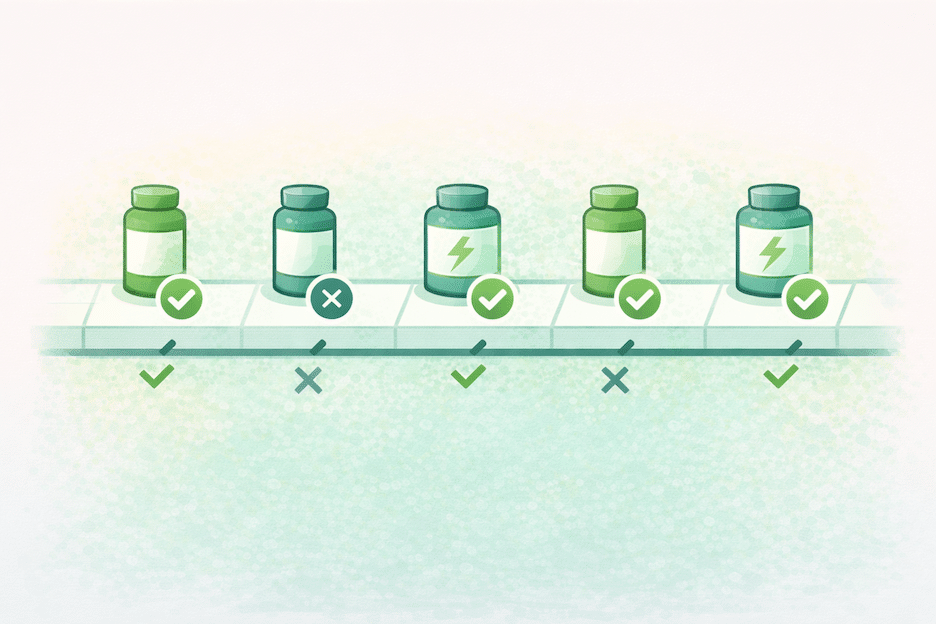
Every wellness product has what we call a functional replenishment curve. It’s the actual timeline between when a customer opens a product and when they genuinely need more.
This number varies wildly by category. And it almost never matches the 30-day default.
Some examples from categories we work with:
- Daily supplements in 30-count bottles: 28-32 days (this one actually aligns)
- Protein powder, 2lb container at one scoop per day: 45-60 days
- Functional gummies, 60-count at two per day: 28-30 days
- Greens powders, 30 servings with inconsistent use: 45-75 days
- Functional snacks or bars, weekly consumption: 14-21 days
The problem is most brands never calculate this. They accept whatever interval Amazon suggests and wonder why subscribers bail after one or two shipments.
How to find your actual replenishment interval:
Start with your reviews. Customers often mention how long a product lasts. “This bottle lasted me about six weeks” is gold.
If you have subscription analytics, look at the gap between cancellations and the shipment that triggered them. Cohort data showing when customers naturally reorder (without a subscription) tells the same story.
One more thing: customers want flexibility. The brands with the strongest S&S retention make it easy to skip or pause shipments. “Every 30 days, no exceptions” feels rigid. “Every 45 days, skip anytime” feels like you’re on their side.
Optimizing Your Listing for Qualified S&S Signups
Here’s a distinction that matters: you want qualified S&S signups, not just total volume.
A discount-motivated subscriber who cancels after one shipment is worse than a one-time buyer. They cost you the discount margin, trigger a cancellation that affects your metrics, and never become the repeat customer you were hoping for.
Variation setup matters more than you’d think. Organize your SKUs so customers can subscribe without friction. If someone loves your unflavored protein but you only offer S&S on a variety pack, you’ve created an obstacle. Flavor bundles, multi-packs, and single-SKU options should all have clear subscription paths.
Your copy strategy should emphasize continuity, not savings. “Keep your gut routine on track” beats “Save 10% every month.” The first speaks to someone building a habit. The second attracts someone hunting for deals.
Visual reinforcement helps. Imagery showing a stocked shelf, a daily ritual, a product that’s part of someone’s routine. You’re selling the steady state, not the transaction.
Don’t hide S&S in the listing footer. Call it out in your main bullet stack. Reference it in your A+ content. The brands that treat subscription as a premium feature (rather than a discount mechanism) see stronger enrollment from the right customers.
Pricing Psychology: Stop Incentivizing Churn
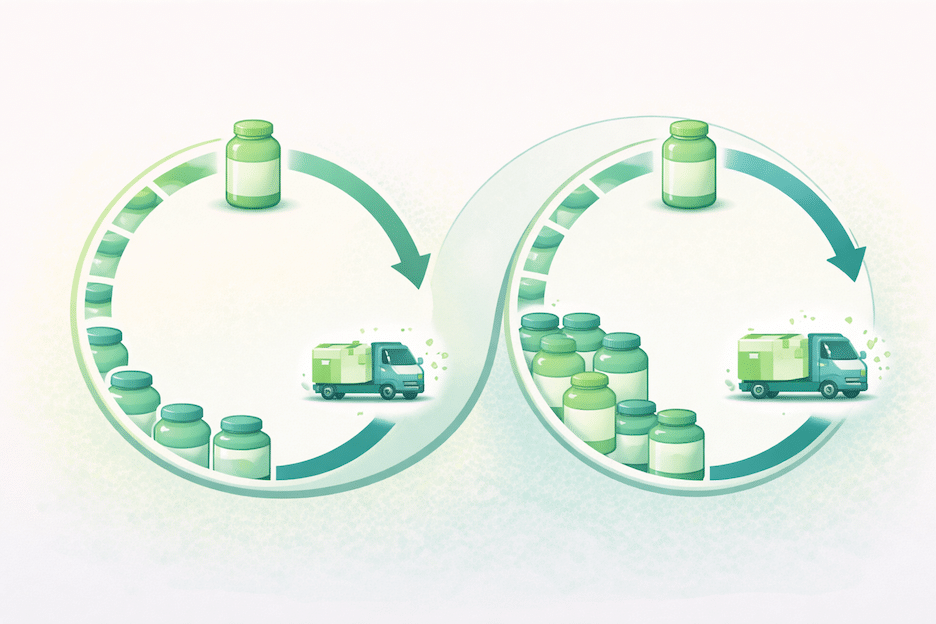
The default 10-15% S&S discount creates a problem most brands don’t recognize until it’s too late.
Steep discounts attract deal-seekers. Deal-seekers have no loyalty to your subscription. They’ll sign up for the discount, receive one or two shipments, then cancel when they find a better deal or realize they don’t need the product as often as they thought.
The customers you actually want, the ones who’ll stick around for 6, 12, 18 months, aren’t primarily motivated by saving a few dollars. They’re motivated by not running out of something that’s become part of their routine.
Reframe your subscription value around habit protection, not savings:
- “Lock in your routine” instead of “Save 15%”
- “Never run out of your core stack” instead of “Subscribe for the best price”
- “Stay consistent, see results” instead of “Subscribers save more”
If you need an incentive beyond convenience, consider alternatives to percentage-off discounts. Free shipping on subscription orders. Early access to new products. Loyalty program points that accumulate toward future purchases.
These attract habit-builders rather than discount-hunters.
The goal is to anchor perceived value to time saved and wellness consistency, not pure financial savings. A customer who subscribes because they don’t want to think about reordering is far stickier than one who subscribed because 15% off seemed like a good deal.
What This Looks Like in Practice
One supplement brand we work with was running a fairly standard S&S program. The 30-day default interval, 15% discount, subscription mentioned in the bullets but not emphasized. Enrollment was decent. Retention was not. Nearly 40% of subscribers cancelled before their third shipment.
We dug into the data. Reviews consistently mentioned the product lasting “about six weeks.” Subscription analytics showed the same pattern: cancellations clustered right after the second shipment, when customers had product stacking up.

The changes:
First, we adjusted the recommended interval to 45 days, matching actual usage patterns. Customers could still pick other intervals (Amazon always lets them choose), but 45 days became the guided default in our messaging and listing copy.
Second, we bundled complementary SKUs that made sense together. Rather than subscribing to one product, customers could subscribe to a stack. This increased order value and created a more integrated routine.
Third, we shifted the messaging. “Save 15%” became “Stay stocked for peak performance.” The focus moved from discount to continuity.
The results over the following 90 days:
- 90-day subscriber retention increased 2.5x
- LTV per subscriber lifted 28%
- S&S enrollment rate actually improved, despite the smaller discount emphasis
That last point surprised us a bit. We expected enrollment to dip when we stopped leading with the discount. Instead, we attracted more of the right subscribers: people who wanted the convenience and consistency rather than just the savings.
When timing and messaging sync up, retention compounds naturally. Each subscriber who sticks around for six months instead of two represents a significant LTV difference. And they’re far more likely to add products, leave reviews, and recommend your brand.
Audit Your Retention Flow
Most wellness brands treat Subscribe & Save as a conversion feature. The ones building real LTV treat it as a retention system.
The difference comes down to asking better questions. Not “how do we get more subscribers?” but “how do we keep subscribers longer?” Not “what discount should we offer?” but “what interval matches how customers actually use this product?”
If your S&S churn feels stubbornly high, the fix probably isn’t a bigger discount or more prominent placement. It’s alignment: timing that matches consumption, messaging that attracts habit-builders, and flexibility that keeps customers in control.
Canopy Management delivers end-to-end eCommerce growth, leading the industry in Amazon marketplace strategy while powering expansion through Shopify, Meta, and Google.
If you’re seeing the churn patterns we’ve described here, or if you’re just not sure where your S&S program is leaking value, let’s talk. We’ll look at your specific subscription data and identify what’s actually driving cancellations.
Schedule a strategy session with our team to discover exactly how our proven frameworks can accelerate your growth.

FAQ
What’s a good Subscribe & Save enrollment rate for wellness products? It varies by category, but many well-optimized wellness brands see 15-25% of eligible orders convert to S&S. Below 10% usually signals a visibility or messaging problem. Above 30% is excellent but rare without aggressive discounting (which creates its own retention issues).
How do I find my product’s actual consumption cycle? Three sources: customer reviews (people often mention how long products last), subscription analytics (when do cancellations cluster relative to shipments), and cohort purchase data (how often do non-subscribers naturally reorder). Cross-reference all three for the most accurate picture.
Should I offer the maximum S&S discount Amazon allows? Not necessarily. Larger discounts attract more subscribers, but they also attract more discount-motivated subscribers who churn quickly. Many brands see better net retention with modest discounts (5-10%) paired with strong continuity messaging. Test both approaches with your specific audience.
Can I change the default subscription interval on my listing? You can’t force a specific interval, but you can guide customers toward one. Amazon lets customers choose from several options (typically ranging from one to six months). Your listing copy and A+ content can recommend the interval that matches actual usage, even if Amazon’s default suggestion differs.
How long does it take to see results from S&S optimization? Retention improvements typically show up within 60-90 days, since that’s when you’ll see whether second and third shipments are sticking. Enrollment rate changes can appear faster, sometimes within 2-4 weeks of messaging updates. LTV impact takes longer to measure accurately, usually 4-6 months.
Is Subscribe & Save worth it for lower-priced wellness products? Yes, though the math works differently. Lower-priced items often have higher purchase frequency, which means subscription convenience matters more than discount percentage. A $15 product someone needs every three weeks is actually a strong S&S candidate if the interval is set correctly.
Thinking About Hiring an Amazon Management Agency?
Canopy’s Partners Achieve an Average 84% Profit Increase!
Let’s talk