Alexa for Shopping Doesn’t Care About Your Keyword Rank
Amazon publishes what its AI assistant reads and never how it weighs it. Why search rank does not predict AI visibility, and how to audit your listings.


Your search rank tells you nothing about whether Amazon’s AI assistant recommends your product. Those are two different systems reading your listing for two different purposes, and Amazon has never published anything connecting them.
There is also no report that will tell you. Amazon provides no seller-facing attribution for assistant-driven traffic. You cannot filter it in Business Reports, and it does not appear in your search term report.
So the work splits into two parts. Understand what the assistant demonstrably reads, and build your own measurement, because Amazon is not going to hand you one.
What Amazon Documents

When Amazon introduced the assistant in February 2024, it described the inputs: product listing details, customer reviews, community Q&A, and information from across the web. That announcement now carries an editor’s note recording that on May 13, 2026, Rufus was renamed Alexa for Shopping.
The rename did not restate that input list and did not withdraw it. Amazon presents Alexa for Shopping as the earlier assistant’s product expertise merged with the personalization of Alexa+, and its own help page still dates the assistant to February 2024. So the documented input set stands as the only first-party description of where product answers come from.
Two things are missing from that documentation, and their absence is the whole story.
Amazon has never stated how those inputs are weighted against each other. And Amazon has never stated that any particular listing format, attribute count, or phrasing improves how the assistant represents a product.
Every “optimize for Alexa” checklist in circulation, including the ones with confident percentages attached, is inference from observed behavior. Some of that inference is reasonable. None of it is documented. Treat anyone selling you a ranking factor list for this surface with the skepticism you would apply to a claimed A9 formula.
Your Rankings Look Fine. Your AI Visibility Might Not.
Canopy's Partners Achieve an Average 84% Profit Increase!
Audit my listings for AI visibilityWhy Rank Does Not Transfer
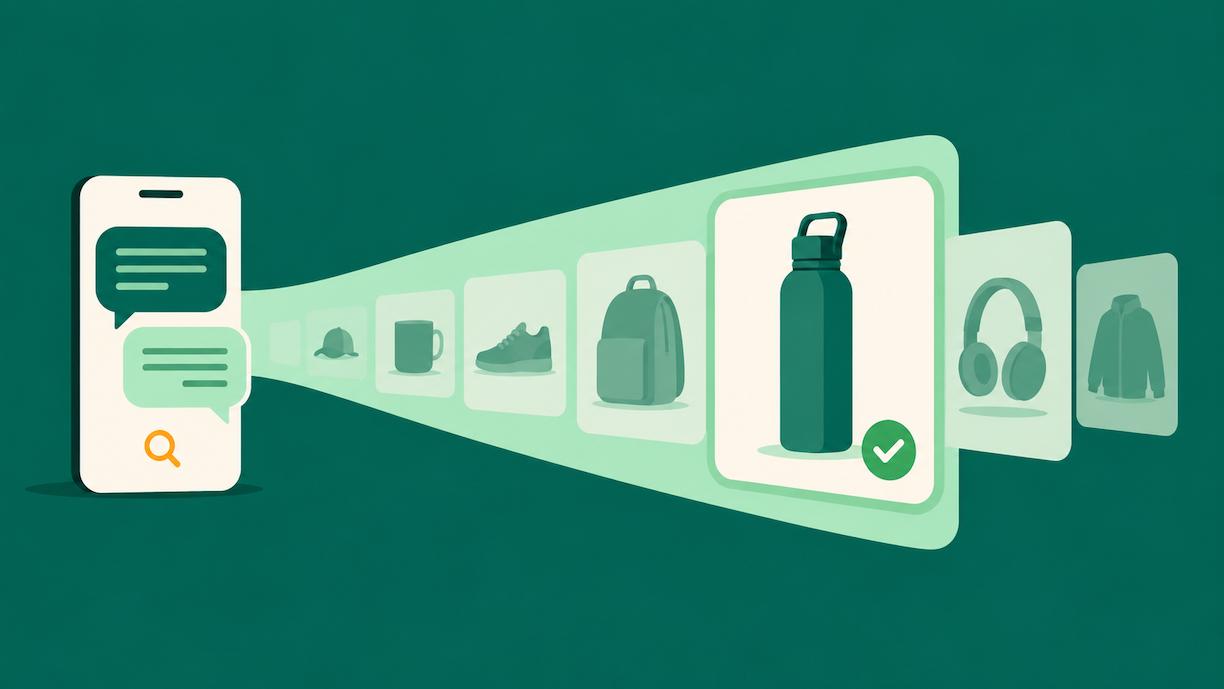
The ranking algorithm returns a list. The assistant constructs an answer.
A ranked list can accommodate a listing that matches keywords well and explains nothing. An answer cannot. When a shopper asks which option suits a small apartment, or what people complain about, the assistant needs content that addresses those questions in terms it can extract and attribute.
A bullet reading “Stainless steel construction. BPA-free. Dishwasher safe.” satisfies a keyword matcher. It gives an answer-constructing system nothing to work with on who the product is for or what problem it solves. That listing can hold page one and still be passed over when the same shopper asks the assistant the same question, because the two systems are not evaluating the same thing.
This is the part that catches experienced sellers. Strong rank, competitive price, healthy BSR, and no visibility on a surface that is growing fast. The ranking algorithm’s own logic has not stopped mattering. It has stopped being sufficient.

How Big the Surface Actually Is
On Amazon’s Q2 2026 earnings call, Andy Jassy said more than 350 million customers had used Alexa for Shopping over the previous 12 months, with active users nearly doubling in the quarter and interactions up more than five times year over year.
Amazon also reported that U.S. customers who use Alexa for Shopping spend an average of over 40% more per order than those who do not, and that customers who have tried Alexa+ sign up for Prime at a nearly 25% higher rate.
Read the 40% carefully. Amazon made no causal claim, and the number does not support one. Shoppers who open an AI assistant to research a purchase select themselves, and they were likely higher-intent before they opened it. What the figure does establish is that a meaningful share of high-value purchase intent now moves through this surface. Walmart published a nearly identical number about Sparky, with the same caveat attached.
The Audit Amazon Will Not Run For You
Since there is no attribution report, the practical measurement is asking the assistant directly and reading what comes back.
Open one of your top ASINs and tap the cursive A icon. The button that used to say “Ask Rufus” is gone. Ask five things:
- What is this product for?
- What do people like about this product?
- What don’t people like about this product?
- What are people buying instead of this product?
- Why do customers choose this product over alternatives?
Record the answers verbatim with the date. That transcript is your baseline, and it is the only measurement you control.
Most sellers find at least one meaningful gap between their intended positioning and how the assistant describes them. The patterns repeat. A competitor gets recommended alongside you and the visible difference is forty more answered Q&A entries. The assistant surfaces a complaint that appears throughout your reviews and is addressed nowhere in your listing copy. Or it cannot articulate a use case, because your listing never provided one.
Those are fixable. Knowing which one applies to you is the work before the work.
After you update listing content, allow 24 to 48 hours for changes to propagate, then rerun the same five questions and compare against your saved transcript. The goal is a set of answers that reads like your positioning document.
Do this on your top ten ASINs quarterly. It is unglamorous and it is the closest thing to a rank tracker this surface has.

What the Audit Usually Points To
The fixes cluster in a few places, and none of them are exotic.
Complete attribute fields, because empty fields are questions the assistant cannot answer about you. Bullets that lead with a specific feature and then the benefit, which extract cleanly. A+ content built as comparison tables and feature breakdowns rather than brand poetry. And an actively managed Q&A section, which remains one of the higher-return, lowest-competition places to put effort.
For the full breakdown of what shifted when the assistant moved into the search bar, see our guide to Alexa for Shopping and what it means for your listings.
The Title Limit Points the Same Direction
Amazon’s 75-character title cap took effect July 27, 2026, alongside a new Item Highlights field.
Read structurally, that change and the AI surface pull the same way. A 200-character keyword-stuffed title was built for a matcher. A 75-character title plus a dedicated highlights field is structured content, which is what an answer-constructing system uses well.
Sellers treating the title limit as a compliance chore are doing AI optimization work without getting credit for it. Sellers treating it as a rewrite opportunity are ahead on both surfaces at once.
How Canopy Management Helps
We audit partner listings for AI extractability, run the five-question diagnostic across top ASINs, and rebuild attributes, bullets, A+ content, and Q&A around what the assistant needs to construct an answer.
Canopy Management is a full-service omnichannel marketing agency covering Amazon, Walmart, TikTok Shop, Shopify, Meta, and Google. Our partners have generated more than $3.3 billion in revenue, with an average 84% year-over-year profit increase and a 99.1% partner retention rate.
Nobody Is Going to Send You a Report on This
Canopy's Partners Achieve an Average 84% Profit Increase!
Talk to a brand managerFrequently Asked Questions
No. Keyword-driven search still delivers most sessions, and those shoppers exist alongside assistant users. The practical problem is that the two require different work, and a listing can be well tuned for one while underperforming badly in the other. Most brands need to run both rather than choosing.
Plan on 24 to 48 hours for indexed content to propagate, though Amazon publishes no service level on this and the delay varies. Review-based and Q&A-based answers can take longer, since those depend on new customer content accumulating. Rerun your diagnostic questions two days after a change and again a week later before drawing conclusions.
They are worth evaluating with clear eyes about what they measure. None has access to Amazon’s internal data, so they infer visibility by running prompts and recording outputs, which is the same method as the manual audit, at scale. That is genuinely useful if you have hundreds of ASINs, and it is not a substitute for reading a handful of answers yourself.
The assistant operates in the UK, Germany, France, Italy, Spain, Canada, and India in addition to the US, and the documented inputs are the same. The earnings figures Amazon disclosed are US-specific, so do not assume the same adoption in other marketplaces. Run the audit separately per marketplace, since your listing content and review base differ by region.
The method transfers, the mechanics do not. Sparky reads Walmart’s structured catalog, which runs on Item Spec 5.0 rather than Amazon’s attribute model, so the fields you fill are different. Run the same style of prompt audit on Walmart separately rather than assuming your Amazon work carries over.
Not on the strength of that number, which is correlational and which Amazon never framed as causal. The reason to prioritize is the growth rate rather than the basket size, since interactions rose more than fivefold in a single quarter. Treat it as a surface worth a quarterly audit and a listing rewrite, not as a reason to redirect budget away from search.