How to Sell on TikTok Shop: The Complete Guide for 2026
How to sell on TikTok Shop in 2026: setup, fees, what the algorithm rewards, creators, GMV Max, the Account Health Rating, and the Amazon halo effect.

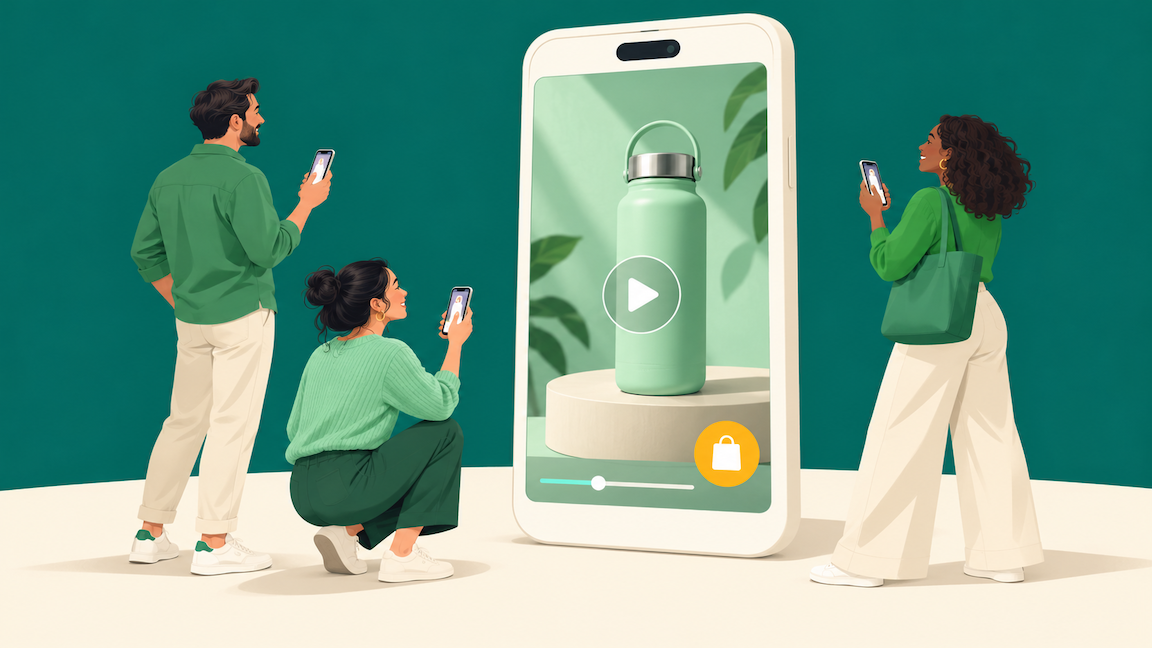
How TikTok Shop works in 2026, how to set up and stock a shop, what the algorithm rewards, how creators and GMV Max fit together, the Account Health Rating every seller now lives under, and how TikTok Shop feeds your Amazon sales.
To sell on TikTok Shop, register in TikTok Shop Seller Center as an individual or a business, get approved (usually within a day or two), list your products, choose how you’ll ship, and then get those products into videos and LIVE streams, your own and creators’. There’s no monthly fee. TikTok’s published standard referral fee is 6% of each sale, though several seller resources report a rise to 8% for many categories in August 2026, so check the current rate in Seller Center before you build a margin model.
The setup is the easy part. What decides whether a TikTok Shop sells is content. Amazon matches products to buyers who are already searching. TikTok puts products in front of people who weren’t looking, through videos the algorithm decides to show them. A product that can’t be shown off in a short video starts at a disadvantage on TikTok Shop, however good the listing is.
How TikTok Shop Works
TikTok Shop launched in the US on September 12, 2023. It’s a store built into the TikTok app: buyers find a product, check out, and track the order without leaving TikTok. Sellers run everything (listings, inventory, orders, creator partnerships, and analytics) from Seller Center, which is separate from TikTok’s ad platform.
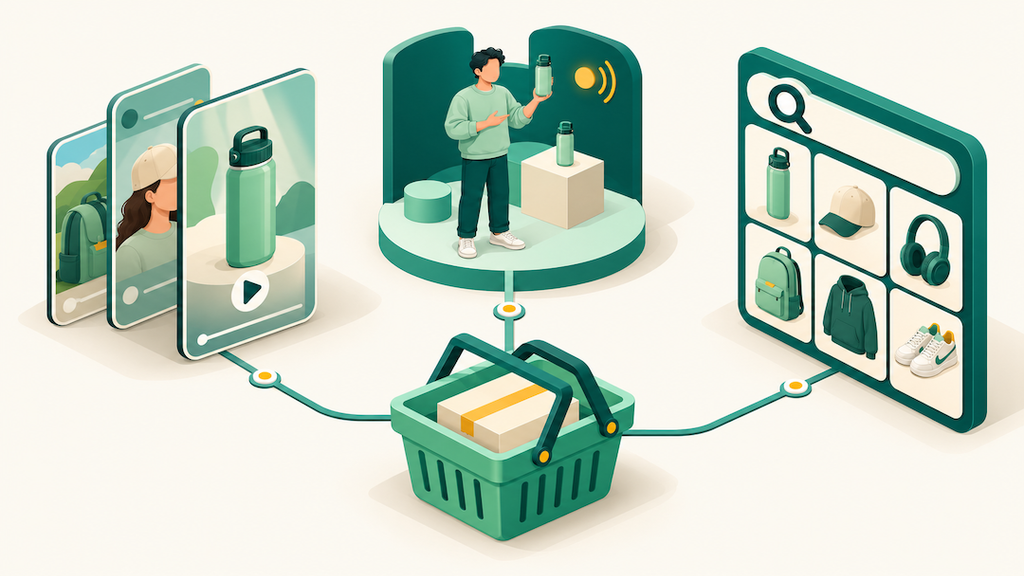
Buyers reach products in three places, and a complete program covers all three.
- The For You feed. Short videos with product links, organic or paid. This is where most products get their first exposure, and distribution depends almost entirely on how each video performs.
- LIVE shopping. Sellers or creators sell in real time while viewers ask questions and buy. In our work across TikTok Shop accounts, LIVE often converts better than short videos, especially for products where buyers want to see the product in use or ask about fit.
- The Shop tab and search. A marketplace-style browse and search experience. As more purchases start here, listing titles, images, and keywords matter more than they did when TikTok Shop was purely a feed product.
How to Start Selling on TikTok Shop
Here is the sequence we use with brands launching a shop. Our guide to TikTok Shop eligibility and registration covers the document requirements and the step-by-step application in detail.
- Register in Seller Center. Apply at seller-us.tiktok.com as an individual or a business. The account type has to match your documents: individuals register with a US ID, proof of address, a W-9, a US bank account, and the last four digits of an SSN or an ITIN; businesses add an EIN and owner details.
- Expect a probation period. New US shops start with daily order caps and move up tiers by completing onboarding tasks and keeping fulfillment and customer service clean.
- List your products. Write titles around the terms buyers search for, add strong images and a product video, and pick the right category. Some categories need extra approval or documentation.
- Set up shipping. Decide between shipping orders yourself or using Fulfilled by TikTok (more on both below).
- Open your products to creators. Set an affiliate commission in Seller Center so creators can find and promote your products, and start recruiting before you need the sales.
- Connect your TikTok account and ads. Link the brand’s TikTok account to the shop and set up GMV Max once you have content worth amplifying.
If you plan to sell beyond the US, read our guide to changing your TikTok Shop region before you set anything up. Forcing a region change is one of the quickest ways to get a shop restricted.
What TikTok Shop Costs
TikTok charges no subscription fee to sell. The main platform cost is the referral fee on each completed order: 6% for most categories on TikTok’s published fee table, with some categories priced differently. Several seller resources reported an increase to 8% for many non-food categories from August 4, 2026, but TikTok’s public table still showed 6% when we last checked, so treat the rate in your own Seller Center as the one that counts.
The referral fee is the smallest part of what a serious program costs. On top of it you’ll pay:
- Creator commissions on every affiliate sale, set by you.
- Shipping and fulfillment, whether you ship yourself or use Fulfilled by TikTok.
- Ad spend, if you run GMV Max.
- Content production and creator management, the cost most brands leave out of the model.
Brands used to FBA economics should model TikTok Shop on its own. The fee structure is lighter, but the operating cost sits in content and creators, and that cost is real from the first week.
Not Sure Whether TikTok Shop Is Helping Your Amazon Sales?
Canopy's Partners Achieve an Average 84% Profit Increase!
Get My TikTok Shop Strategy ReviewHow TikTok’s Algorithm Decides What Gets Seen
This is the part Amazon sellers most often get wrong. TikTok’s recommendation system ranks content. A product gets in front of buyers because a video featuring it performed well, and the product listing has much less to do with it than it would on Amazon.
The signals that drive distribution are mostly unfamiliar to Amazon sellers: how much of a video people watch, shares, comments, saves, clicks on the product link, and how many of those clicks become orders. A video that holds viewers past the first few seconds and converts the people it reaches gets shown to more people. A video that loses viewers early gets less distribution, however good the product is.
Two consequences follow. Account size matters less than you’d think: a brand with 500 followers posting useful product content can outsell a brand with 50,000 followers posting polished ads. And LIVE has its own layer, where conversion during the stream affects how widely TikTok shows it to people who don’t follow you. Our breakdown of the hidden algorithm patterns most sellers miss goes deeper on both.
The question to work from is how to make content the algorithm will distribute and that will convert the audience it reaches. Brands that keep asking how to get a listing in front of more people tend to stall.
TikTok Shop SEO and Product Listings
Search inside TikTok Shop is a real channel now, and it works on principles Amazon sellers will recognize. Lead product titles with the term buyers use for the product type, then key attributes. Use images that win the click in a grid, since the Shop tab shows products that way. Attach video to the listing itself, because it affects conversion on the product page as well as in the feed. Our TikTok Shop SEO strategy guide covers the ranking mechanics.
The difference is in how people search. TikTok queries skew conversational and trend-driven, while Amazon queries are shorter and packed with attributes. The buyer-intent thinking in our Amazon keyword research guide transfers, but the keyword list itself has to come from how people search inside TikTok.
Price is part of the listing, too. TikTok Shop buyers compare quickly, and a product that looks overpriced next to similar items, on TikTok or on Amazon, hears about it in the comments and reviews.
Creators and the Affiliate Program
The affiliate program is the most underused lever on the platform. You set a commission in Seller Center, either through an open collaboration that any eligible creator can join or a target collaboration offered to specific creators. When a creator’s video sells your product, the creator earns the commission. Run well, it gives you a sales force making content for audiences you couldn’t reach yourself.
The approach that works most consistently is matching audiences to products, and follower count comes second. A creator with 15,000 engaged followers in your niche will usually outsell one with 500,000 followers of mixed interests, because the conversion rate from a matched audience is much higher. We’ve watched brands spend a quarter’s creator budget on one large account and get one underwhelming video, when the same money spread across eight well-matched creators would have produced more revenue and a deeper content library. Our microinfluencer playbook covers how to build that roster.
What separates working programs from programs that exist on paper is management:
- Recruit creators whose audiences match your buyer, and have ten to twenty active before launch so the algorithm has content to work with from day one.
- Send samples and brief creators on the product’s key attributes and the questions buyers ask.
- Check compliance. Creators carry their own Creator Health Rating, a 0 to 1,000 score TikTok introduced in 2025, and a low score limits what they can sell. TikTok’s rules on what creators can say in branded content tightened again this year; our breakdown of what your creators can and can’t say covers the changes.
- Track conversions rather than views, and adjust commissions as the data comes in.
Buyer-generated content is the related practice of getting real customers to post about the product. Our guide to TikTok Shop UGC covers how to build it.
TikTok Shop Ads: GMV Max and the Organic-to-Paid Bridge
Since July 2025, GMV Max has been the default and only supported campaign type for TikTok Shop ads. TikTok automates delivery toward sales across the feed, search, the Shop tab, and its partner network, and you can no longer create the older manual Shop ad formats.
That automation makes one decision more important: what you feed it. TikTok ads work best as amplification for content that’s already converting. Organic content is the testing layer, and paid is the scaling layer. A video that sells organically has already shown TikTok who responds to it, and paid budget behind it buys more of the same. Brands that build TikTok campaigns from scratch the way they’d build Sponsored Products campaigns tend to get poor results and conclude TikTok ads don’t work. Our guide to TikTok Shop ads vs organic covers when to put money behind content and when to wait.
Measuring it takes more than ROAS. Buyers often see a video days before they buy, so attribution windows need careful reading. Our guide to TikTok Shop analytics covers the metrics that predict lasting revenue.

Fulfillment and Shipping
US sellers can still ship orders themselves. TikTok announced in January 2026 that it would phase out Seller Shipping by March 31, then reversed course in February, telling sellers that “Seller Shipping remains unchanged, and previously shared deadlines are not going into effect.” One rule did stick: since January 2026, any USPS label for a TikTok Shop order has to be bought through TikTok Shipping. UPS and FedEx labels can still come from your own carrier accounts.
The alternative is Fulfilled by TikTok (FBT), where you send inventory to TikTok’s warehouses and TikTok ships the orders. Eligibility and fees change, so check the current terms in Seller Center. Brands with FBA inventory have a third option: Amazon says its Multi-Channel Fulfillment “is a supported fulfillment solution for TikTok Shop,” connected through third-party integration apps. Our guide to fulfilling TikTok Shop orders with Amazon MCF walks through the setup.
Whichever you choose, shipping speed and order accuracy feed your shop’s scores, which is the next section. Plan inventory by channel, too. We’ve seen shared inventory pools drain on the FBA side during peak weeks and leave TikTok Shop out of stock just as a video started to take off.
Account Health Rating and Shop Performance Score
In mid-2026, TikTok moved US sellers from the old Violation Points system, where 48 points meant deactivation, to the Account Health Rating (AHR). Any TikTok Shop guide that doesn’t cover AHR is describing a platform that has changed.
How AHR works, per TikTok’s Seller Center documentation:
- Every shop starts at 200 points. Shops earn points for completed orders (4 points for every 200 finished orders, up to 20 a week) and for passing policy quizzes.
- Violations cost points, scaled to their severity and frequency.
- The score reflects the last 180 days, so it recovers through clean operation rather than resetting on a calendar.
- Penalties start below 150. At 150, 100, and 50 points, shops lose the ability to create new listings and join major campaigns for 7, 14, and 28 days. At 0, the shop “may be permanently deactivated.” TikTok’s advice is to stay above 150.
AHR measures policy compliance. The Shop Performance Score measures service, with each metric compared against other sellers in your category. TikTok added an After-Sales Handling Time metric to it on July 7, 2026. Our breakdown of the 2026 TikTok Shop rating changes covers both scores.
What this means week to week:
- Check AHR and the Shop Performance Score in the weekly review, not only when a violation notice arrives.
- Give one person ownership of account health, so correction and appeal deadlines never slip.
- Treat clean fulfillment as score protection. Order volume is what builds the buffer above the thresholds.
- When a violation lands, take the related policy quiz. It’s one of the few ways to earn points back directly.

The TikTok Halo Effect on Amazon
For brands that also sell on Amazon, this is often the most valuable part of TikTok Shop, and most guides bury it. In the accounts we manage, when a product gets real exposure on TikTok, branded searches for it on Amazon usually rise. Many buyers who see a product on TikTok go and buy it on Amazon, where they already have Prime and saved payment details.
The lift isn’t guaranteed, and it varies by category. But branded searches convert well, and branded search growth tends to lift organic rank on those terms. That changes how TikTok Shop should be judged: a product that sells modestly on TikTok but drives a clear rise in Amazon branded search is worth more than its TikTok revenue shows. Our breakdown of how the TikTok halo drives Amazon branded search covers the mechanics, and our guide to measuring TikTok’s impact on Amazon sales shows how to track it in Brand Analytics.
The halo also changes Amazon ad spend. When branded search is strong enough to hold your rank on brand terms, the budget you were spending to defend them can move to broader keywords or new launches. Our guide to integrating Amazon SEO and PPC covers that flywheel, and the listing has to be ready to convert the traffic when it arrives. Our Amazon listing optimization guide covers what to fix first.
TikTok Shop vs Amazon: Where Each One Fits
For most brands, the two platforms do different jobs, and choosing between them is the wrong frame.
Amazon captures demand that already exists. A buyer searching “stainless steel water bottle 40 oz” knows what they want and is comparing options. Amazon SEO and PPC make sure your product is the one they find.
TikTok Shop creates demand for products buyers hadn’t considered. That takes content that sparks interest in seconds, a price that supports an impulse purchase, and an easy checkout. Products that do well tend to show a visible result or solve a visible problem, look good on video, and make their value obvious quickly.
Brands that win on both build separate content for each. Amazon creative reposted to TikTok rarely works, and TikTok virality doesn’t fix an Amazon listing that doesn’t convert.
Common TikTok Shop Mistakes
- Treating the listing as the main lever. On TikTok Shop, content drives sales. A polished listing with no content plan gives the algorithm nothing to distribute.
- Chasing the biggest creators. Audience match predicts conversion far better than follower count.
- Launching without a creator pipeline. Brands that list products and wait for content to appear get little data and little distribution in the weeks that matter most.
- Skipping LIVE because it feels unfamiliar, and leaving one of the platform’s best-converting formats unused.
- Ignoring AHR until a violation lands. The score is always live, and recovering from below 150 takes weeks of clean orders.
- Measuring TikTok Shop on TikTok revenue alone, and missing the Amazon branded-search lift that may be its biggest contribution.

How Canopy Manages TikTok Shop
We run TikTok Shop as part of a connected program with Amazon, Walmart, Shopify, Meta, and Google, so TikTok decisions are made with full visibility into what they do to Amazon branded search, organic rank, and PPC efficiency. Each week covers the same ground this guide does: which videos and creators are converting, who to recruit and brief next, what GMV Max should amplify, and where the account health scores stand.
Canopy is a full-service omnichannel marketing agency based in Austin, Texas, working with brands at $20K to $1.5M in monthly revenue. Every partner has a dedicated brand manager who owns the account for the life of the engagement. Our partners have generated $3.3 billion in revenue, with an average 84% year-over-year profit increase and 99.1% partner retention. If TikTok Shop is one of several channels your team is stretched across, our guide to Amazon account management shows how we run the whole account.
Running TikTok Shop and Amazon as Two Separate Businesses?
Canopy's Partners Achieve an Average 84% Profit Increase!
Talk to Our TikTok Shop TeamFrequently Asked Questions
Most US applications are approved within 24 to 48 hours, though applications that need extra verification can take longer. Approval is only the first gate. New shops start in a probation program with daily order caps that rise as the shop completes onboarding tasks and keeps fulfillment and customer service clean, and there’s no fixed timeline for moving up.
Register the way you’re legally set up, because every document you submit has to match that entity. Individuals use personal ID, a personal bank account, and an SSN or ITIN. LLCs, corporations, and partnerships register as businesses with an EIN, business banking, and details for each beneficial owner. Getting this right at the start saves a rejected application or a painful fix later.
No. Many shops get most of their sales through affiliate creators, and creator content often outperforms brand content because it feels native to the feed. Brand-made content still helps, especially for LIVE and for testing which angles convert before you brief creators on them.
Usually, if your products work on video and you can commit to a steady content and creator cadence for at least a quarter. Judge it on TikTok sales and the change in Amazon branded search together, since a modest TikTok result can still lift your Amazon rank. If the products don’t demo well or nobody can own the weekly creator work, wait until one of those changes.
Yes. TikTok Shop runs local marketplaces in about 20 countries as of mid-2026, and each market has its own requirements. Forcing a region change on an existing account can get it restricted, so plan market expansion before setup.
Yes, through Amazon Multi-Channel Fulfillment, which Amazon lists as a supported option for TikTok Shop and connects through third-party integration apps. It lets a brand keep one inventory pool, but watch stock levels by channel so a TikTok spike doesn’t drain what Amazon needs.
ABOUT THE AUTHOR

Chuck Kessler
I'm a Colorado based outdoor adventurer and AI whisperer. As the SEO and GEO Strategist for Canopy Management, my focus is on technology, elegant prompt sequences, and next-gen ranking strategies for eCommerce brand entrepreneurs.
Related Contents
- Ecommerce
- Entrepreneurship
- Selling on TikTok Shop
- Amazon Advertising
- Ecommerce
- Walmart Advertising
- Ecommerce
- Generative Engine Optimization
- Selling on Shopify