TikTok Shop Eligibility in 2026: Who Qualifies and How to Register
Who qualifies for TikTok Shop in 2026, the documents you need to register, listing requirements, fees, and what new shops face in probation.


Approval is the easy part. Most U.S. TikTok Shops never make a sale. Here’s what the 2026 requirements are, what the fees really cost, and what separates the shops that sell from the ones that stall.
TikTok Shop approval for U.S. sellers usually takes 24 to 48 hours. To qualify, you need to be 18 or older and live in the U.S., with a U.S. passport, driver’s license, state ID, or permanent resident card, plus a U.S. bank account. Businesses also need an EIN backed by an IRS-issued document and a U.S. business address. There’s no minimum follower count.
TikTok’s published U.S. rate table lists a 6% referral fee for most categories, covering both marketplace commission and payment processing. TikTok Shop now runs local marketplaces in 20 countries. Approval is the quick part. After it, every new shop starts in a probation program with daily order caps, and its Account Health Rating starts counting from the first order.
Most rejected applications get caught on document mismatches or prohibited categories rather than the eligibility bar itself. We’ve watched sellers lose weeks to a resubmission cycle that a five-minute prep check would have prevented.
Why Do TikTok Shop Applications Get Rejected?
Five issues account for most rejections, and all five are paperwork problems rather than eligibility problems.
1. Name and address mismatches across documents
The name on your ID, the name on your bank account, and the name on any business documents need to match exactly. “Robert Smith” on a driver’s license and “Bob Smith” on a bank account triggers a manual review at best and an outright rejection at worst. TikTok’s rule is that information on every uploaded document must match what you typed into the registration form. Same logic for addresses: your proof of address needs to show the address you entered.
2. Prohibited category attempts
Submitting an application that includes products TikTok Shop doesn’t allow (firearms, tobacco, vaping, alcohol, regulated supplements without proper certification) can get the entire account flagged, not just the offending listings. Clean the catalog before applying. Don’t try to slip restricted items through and sort it out later.
3. The wrong proof of business
Businesses fail more often than individuals because there are more documents to get right. TikTok asks for an IRS-issued document that shows your legal business name, business address, and EIN, such as the CP 575 notice the IRS sent when the EIN was issued or a 147C letter. The common mistakes are uploading the SS-4 application instead, a screenshot of the IRS website, or a tax return. TikTok rejects all three. If you’ve lost the CP 575, call the IRS and request a 147C.
4. Bank account name conflicts
The account has to be in the seller’s legal name for individuals or the registered business name for entities. Using a personal account for a business application is one of the most common rejection triggers we see.
5. Unusable document images
Expired IDs, paper IDs, cropped or angled photos, photos of a screen, and files over 10 MB all get rejected. Upload a flat, uncropped JPG, PNG, or PDF of the full document.
If you’ve already been rejected, compare every name and address across every document you submitted, fix the inconsistency, and resubmit. Most problems come down to one mismatched field.
Not Sure If Your Brand Is a Fit for TikTok Shop?
Canopy's Partners Achieve an Average 84% Profit Increase!
Get a Free Channel Fit CheckWho Can Sell on TikTok Shop in the United States? Seller Requirements for 2026
Every applicant needs a phone number and email address that haven’t already been used to open another shop.
Individual sellers (including sole proprietors) need:
- To be at least 18 and live in the U.S.
- A valid U.S. passport or passport card, U.S. driver’s license, state ID, or permanent resident card
- Legal name, date of birth, and residential address
- The last 4 digits of your SSN, or an ITIN
- Proof of address if asked: a utility bill, bank or credit card statement, or insurance policy
- A W-9 for tax purposes
- An active U.S. bank account
Business sellers (corporations, partnerships, and LLCs) need:
- A primary business address in the U.S.
- Legal business name and Employer Identification Number (EIN)
- An IRS-issued proof of business (CP 575 or 147C letter) if requested
- Details for each ultimate beneficial owner, each with a valid U.S.-issued ID
- A primary representative, 18 or older, with ID and the last 4 digits of an SSN or ITIN
- A business bank account
Governments, politicians, and political parties can’t register as sellers.
Quick check: Are you 18+ with a valid U.S.-issued ID and a U.S. address? If yes, you can likely qualify as an individual seller.
What Countries Allow TikTok Shop?
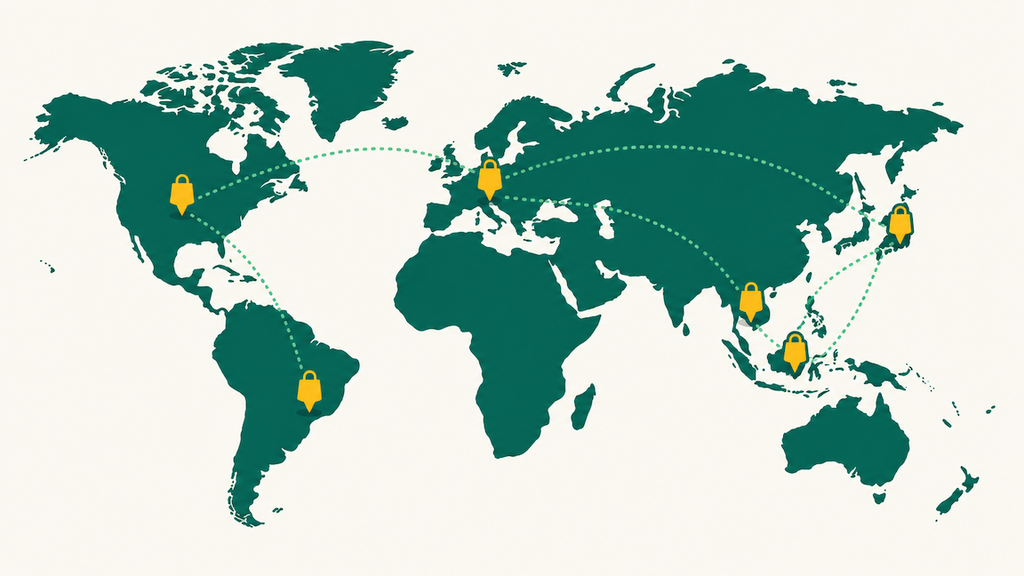
TikTok Shop runs local marketplaces in 20 countries as of mid-2026, after Austria, Belgium, the Netherlands, and Poland launched on June 15, 2026. A separate “Global” hub serves as the gateway to its cross-border program rather than a country market.
North America: United States, Mexico
South America: Brazil
Europe: United Kingdom, Ireland, Spain, France, Germany, Italy, Austria, Belgium, Netherlands, Poland
Southeast Asia: Indonesia, Malaysia, Philippines, Singapore, Thailand, Vietnam
East Asia: Japan
A note on cross-border selling: Selling across TikTok Shop markets is possible, but it’s not a simple switch. TikTok runs a structured cross-border program through its Global Seller Center, with specific source-to-destination lanes, approved logistics providers, and stricter performance thresholds. For U.S. sellers shipping directly into the U.S. market via cross-border, 2026 rules make direct-ship eligibility invitation-only and category-gated.
EU markets are also tightening VAT and digital reporting requirements, so each cross-border lane needs its own enrollment and comes with real compliance obligations. Turning on global shipping isn’t enough. Our guide to updating your TikTok region explains why forcing a region change backfires.
How Long Does TikTok Shop Approval Take?
- Typical timeline: 24 to 48 hours for most applications
- Delayed cases: Any field that fails automatic verification gets flagged in yellow during registration, and additional verification can extend the process
Pro tip: Have every document ready before you start. Complete applications process faster than those that need follow-up.
What Happens After Approval: New Shop Probation
Approval lets you list products and take orders, but every new U.S. shop starts in TikTok’s New Shop Probation Program. TikTok is clear that probation “is not a violation or punishment,” and it does cap how much you can sell while you’re in it:
| Probation status | Daily order limit | Product listing limit |
| Beginner | 50 | 100 |
| Standard | 100 | 200 |
| Premium | 200 | 1,000 |
| Pro (graduated) | No probation order limit | Not capped by probation tiers |
You move up by completing onboarding tasks and showing reliable fulfillment, accurate listings, and responsive customer support. There’s no fixed timeline. When a shop hits its daily order limit, its products show as out of stock until the limit resets the next day.
This matters most for brands with demand already waiting. If you’re bringing an Amazon audience or a creator campaign to a brand-new shop, a 50-order daily cap can turn your best launch day into a sold-out sign. Open the shop and work through the probation tasks before you send traffic.
Individual vs. Business TikTok Shop Accounts: Which Should You Choose?
Choose the account type that matches how you’re legally set up, because every document you submit has to match the entity you register.
Register as an individual or sole proprietor if:
- You haven’t formed a corporation, partnership, or LLC
- The bank account and tax details are in your own name
Register as a business if:
- You operate through a corporation, partnership, or LLC with its own EIN
- The bank account is in the business’s name
- More than one owner or team member needs to be involved in the account
Brands already selling on Amazon or Walmart through an LLC or corporation should register as a business so the legal name, EIN, and bank account match across channels.

What Products Can You Sell on TikTok Shop?
Permitted categories include:
- Fashion items and accessories
- Electronics and technology products
- Beauty and personal care items
- Home goods and decor
- Pre-owned luxury handbags (quality standards apply)
- Collectibles and small household goods
Strictly prohibited items:
- Firearms, weapons, and ammunition
- Tobacco, alcohol, and vaping products
- Drugs and illegal substances
- Counterfeit or replica goods
- Adult content or explicit materials
- Hazardous materials
Important note: Some categories require additional approval or documentation before you can list in them, and categories like cosmetics and food products require health and safety certifications. Get the category approved before you build listings for it.
TikTok Shop Listing Requirements: What Every Product Page Needs
Getting approved as a seller and getting a product listed are two separate checks. TikTok’s Product Listing Policy sets the rules, and listings that miss them can be removed and cost you Account Health Rating points.
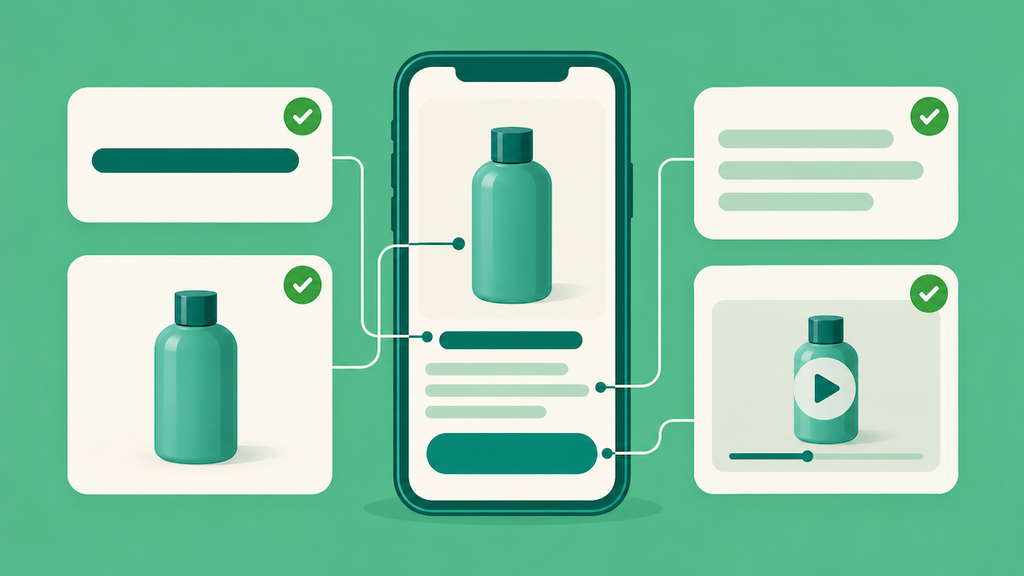
Every product detail page must include a product title, product description, brand, product images, variations where they apply (size, color, or flavor), and any legally required warnings, such as California Proposition 65 or choking hazard labels.
Titles: TikTok’s guidance is 25 to 200 characters, built from the brand, the product type, and the details needed to identify the item. Capitalize the first letter of each word, abbreviate measurements (“oz,” “cm”), and state the quantity on multipacks (“Pack of 10”). Size and color belong in the variation names, not the main title. No seller name, URL, all-caps, special characters, or claims like “Best Seller.”
Descriptions: at least 30 words, specific about features, measurements, care, and warranty. TikTok recommends 3 to 5 bullet points. Products with ingredients need the full ingredient list, ordered from highest to lowest by weight.
Images: up to 9 square images at 600 x 600 pixels or larger, and TikTok recommends at least 5. The main image must show the front of the product on a pure white background, with no added text, logos, borders, or watermarks on any image. No black-and-white photos, digital renderings, or placeholders, and no repeated angles. You can add one video of up to 5 MB.
Category, brand, and variations: pick the most specific correct category (TikTok’s auto-suggestion is your responsibility to check), use the brand name exactly as it appears on the packaging, and group every size, color, or style under one product page. Duplicate listings for the same product are prohibited.
What gets listings pulled: QR codes or links that send shoppers off TikTok, references to other marketplaces, “dupe” or “knock-off” claims, unverified before-and-after claims, and repurposing an old listing for a different product. When you redesign a product, TikTok wants a new listing so reviews and order history stay attached to the right item.
Passing the policy check only gets a listing live. Ranking it is a separate job, which our TikTok Shop SEO strategy covers.
What Are TikTok Shop’s Fees in 2026?
Understanding the unified referral fee
In the U.S., TikTok Shop’s referral fee covers every TikTok Shop fee except shipping and tax, so marketplace commission and payment processing come as a single charge.
Commission structure (TikTok’s category rate table, last revised May 2026):
- Standard referral fee: 6% for most categories
- Five fine jewelry sub-categories (diamond, gold, jade, platinum, and ruby, sapphire, and emerald): 5%
- Pre-owned categories: 5%, with 3% on any portion of a sale over $10,000
Fee calculation formula: Referral Fee = 6% x (Customer Payment + Platform Discount – Tax)
A caution on the rate: Since August 2026, several seller resources have reported that TikTok raised the standard U.S. rate to 8% for many non-food categories. TikTok’s public rate table still shows 6%, so check the rate shown for your category in Seller Center before you build a margin model.
New seller promotions: TikTok has offered new sellers reduced promotional referral rates, including a 3% rate in 2025 for sellers who made a first sale soon after onboarding. TikTok has since taken down its 2025 promotion page, so check Seller Center for the offer available when you register.
Fulfilled by TikTok (FBT): TikTok’s fulfillment service charges per unit by size and weight, plus storage. Check the current rate card in Seller Center before comparing it against shipping orders yourself.
Refund Administration Fee: When an order is refunded, returned, or canceled after purchase, TikTok refunds the referral fee minus a Refund Administration Fee of 20% of that referral fee, capped at $5 per SKU since May 15, 2025. For high-return categories like apparel and beauty, it’s worth factoring into your margin planning.
Compared to other marketplaces: at 6%, TikTok’s referral fee is lower than Amazon’s 8% to 15% in most categories, and it undercuts Walmart by more than most sellers expect. Walmart’s referral fee schedule runs from 5% to 15% depending on category, with 15% as the most common rate and several categories priced in tiers. A $30 beauty product pays 15% to Walmart and 6% to TikTok Shop.
That headline gap is real, and it’s also the least useful number in your margin model. TikTok’s take rate is where the cost starts. Creator commissions stack on top for affiliate-driven sales, and across the accounts we run those typically land between 10% and 25% depending on category. Beauty and supplements sit at the high end. On an affiliate-driven sale, your all-in platform cost is closer to 20% than 6%, which is still competitive but not the bargain the referral fee alone suggests.
One Thing to Know Before You Build on This Channel
In January 2026, TikTok Shop told U.S. sellers that Seller Shipping was ending. Existing sellers would move to TikTok-controlled logistics starting February 25, with a hard cutoff on March 31, and anyone onboarding after February 9 got no transition period at all.
On February 17, TikTok emailed merchants and withdrew it: Seller Shipping would stay unchanged, and the previously shared deadlines would not go into effect. Modern Retail and Digiday both covered the reversal, which followed brands saying publicly they would narrow assortments or leave the platform.
Seller Shipping is still available. But sellers who took the January notice at face value spent a quarter moving inventory into FBT and rebuilding fulfillment workflows, and nobody reimbursed them for the quarter. Brands that already use Amazon’s warehouses have another option: our guide to fulfilling TikTok Shop orders through Amazon MCF covers how that works.
The eligibility requirements have been stable. The operating rules have not. Budget for that.
Approval Takes 48 Hours. Profitable Selling Takes a Plan.
Canopy's Partners Achieve an Average 84% Profit Increase!
Get Your Free TikTok Shop AuditAccount Health Rating: The Score That Starts With Your First Order
In July 2026, TikTok Shop’s Account Health Rating (AHR) replaced the old violation points system for U.S. sellers. It’s a score from 0 to 1,000 based on your shop’s activity over the last 180 days, and every shop starts at 200 points.
- Earning points: 4 points for every 200 completed orders (up to 20 points a week), plus points for passing the policy quiz tied to a violation
- Losing points: deductions for policy breaches and missed performance standards, sized by severity and frequency
- At 150, 100, or 50 points: the shop may be blocked from creating new listings and enrolling in mega campaigns for 7, 14, or 28 days
- At 0 points: the account may be permanently deactivated, and reactivation is at TikTok’s discretion
Every point, gained or lost, drops off after 180 days. The math is harder for a new shop than it looks. A shop earns points slowly through volume, so a single serious violation in the first few months can take it from the healthy green zone into restrictions before it has any cushion. Fulfillment is the most common way to lose them: TikTok expects regular orders to be dispatched within 2 business days, and a late dispatch rate above 10% triggers enforcement, which can include AHR deductions and order volume limits.
Our breakdown of the TikTok Shop Account Health Rating changes covers how the new performance metrics are measured.
What Tax Requirements Must You Meet?
All U.S. sellers must:
- Complete a W-9 tax form
- Provide a Taxpayer Identification Number (TIN), either EIN or SSN
- Keep detailed sales and expense records
- Register for state sales tax where applicable
TikTok’s reporting: TikTok issues Form 1099-K to sellers who cross the federal reporting threshold, which the One Big Beautiful Bill Act restored to $20,000 and 200 transactions in 2025. Some states set lower thresholds.
State tax consideration: You may need to register to collect sales tax in states where you have economic nexus. Most states set it at $100,000 in sales, and some also count transactions, so check each state where you have meaningful volume.

How to Register for TikTok Shop: Step-by-Step
Phase 1: Preparation (before you start)
Gather your documents:
- Individual: valid U.S.-issued ID, proof of address, W-9 details, bank account information
- Business: EIN and an IRS-issued proof of business (CP 575 or 147C), owner and representative IDs, business bank account details
Verify your information:
- Make sure your legal name matches every document exactly
- Confirm your address is current and matches your bank records
- Use a phone number and email that have never been used for another TikTok Shop
Phase 2: Registration
- Go to the TikTok Shop Seller Center sign-up page
- Sign up with your TikTok account, or with an email or phone number and a verification code
- Choose your business type (individual, sole proprietorship, or business entity)
- Enter your details and upload documents
- Fix any fields flagged in yellow, and submit once every check shows as verified
- Set up payment and tax information
Phase 3: Shop setup
- Configure shipping preferences and delivery zones
- Set up return policies
- Create your shop profile
- Add your first products, following the listing requirements above
- Check your probation status on the Seller Center homepage and start the tasks that raise your limits
Timeline expectation: Leave time after approval for product review and the early probation tasks before you plan any launch push.
Is TikTok Shop Worth It for Your Brand in 2026?
TikTok Shop reached $64.3 billion in global GMV in 2025, a 94% year-over-year increase, with $15.1 billion of that coming from the United States, according to Momentum Works. Very few commerce platforms have ever grown at that rate.
Now the number that should drive your decision. Momentum Works counted 803,500 U.S. TikTok Shops in 2025. More than half of them recorded no sales at all. More than 2,000 cleared $1 million in GMV.
Round that out and roughly 400,000 approved shops sold nothing. Approval takes 48 hours. Selling is a separate problem, and clearing the eligibility bar tells you nothing about which side of that split you land on.
What separates the two groups, based on the accounts we run:
- Content capability, or budget to buy it. Brands without either one stall immediately. Our guide to TikTok Shop UGC covers how brands build it.
- Fulfillment that holds up to a two-business-day dispatch requirement without heroics.
- Products that demonstrate well on video. A supplement with a visible before and after outperforms a better supplement that photographs poorly.
- A margin structure that survives creator commissions stacked on top of the referral fee.
If your brand is missing two of those four, the honest answer is that your effort is better spent elsewhere this quarter.
How Canopy Management Helps You Run TikTok Shop With Amazon and Walmart
Here’s what we’re seeing with our partners: TikTok Shop performs best when it runs alongside an existing Amazon and Walmart operation rather than as a separate experiment. The sellers getting the strongest results coordinate all three.
- One plan across channels: we coordinate inventory, pricing, and promotions across TikTok Shop, Amazon, and Walmart, so a TikTok spike doesn’t strand stock or undercut your Amazon price
- Content that sells: we build TikTok content that drives sales while keeping your brand consistent everywhere else
- Fulfillment and service to TikTok’s standard: we set up dispatch, returns, and customer service to protect your Account Health Rating as you scale
TikTok demand doesn’t stay on TikTok. A lot of it shows up later as branded searches on Amazon, which our post on the TikTok halo effect explains. Our partners achieve an average 84% year-over-year profit increase.
Canopy Management is a full-service omnichannel marketing agency based in Austin, Texas. We run Amazon, Walmart, TikTok Shop, Shopify, Meta, and Google for growing brands, with the same dedicated brand manager owning the account for the life of the engagement.
The numbers we lead with: $3.3 billion in partner revenue, 84% average year-over-year profit increase, and 99.1% partner retention.
Schedule a strategy session to see how we’d approach your account.
Add TikTok Shop Without Breaking Your Amazon Operation.
Canopy's Partners Achieve an Average 84% Profit Increase!
Get Your Free Multi-Channel AuditFrequently Asked Questions
Citizenship isn’t on TikTok’s list of requirements. What it asks for is U.S. residency for individual sellers, a U.S. business address for entities, and a U.S. passport, driver’s license, state ID, or permanent resident card for each owner and representative. Sellers based outside the U.S. reach American shoppers through TikTok’s cross-border program, which has its own requirements.
No minimum follower count is required to sell products on TikTok Shop. Follower requirements apply to creator programs and affiliate marketing, not to opening a shop. Many brands sell almost entirely through other creators’ videos.
Yes. You can list the same products across platforms, sync inventory through a connector app, and even fulfill TikTok orders from Amazon’s warehouses with Multi-Channel Fulfillment. The constraint is TikTok’s two-business-day dispatch requirement, so whatever fulfillment route you choose has to meet it consistently.
You’ll receive an email explaining the rejection reason and how to resubmit. Common rejection causes include incomplete documentation, address mismatches, or prohibited product categories.
They do different jobs. TikTok Shop creates demand through video for products that demonstrate well, and it asks for steady content production. Amazon captures shoppers who already know what they want, with more competition and higher fees. Most brands that succeed on TikTok Shop treat it as a demand engine that feeds their Amazon sales.
It’s possible, but the seller of record carries all the responsibility. Late dispatches and returns count against your Account Health Rating no matter who ships the order, and listings must show only what the customer will receive. Dropshipping from slow overseas suppliers makes the dispatch requirement hard to meet.
Yes. TikTok asks for a primary business address in the U.S., not in a particular state, and accepts single-member and multi-member LLCs, corporations, and partnerships. What matters is that the legal name, address, and EIN match across your IRS documents, registration form, and bank account. Sales tax registration is a separate question that depends on where you have economic nexus.