Amazon DSP Retargeting: How to Re-Engage Shoppers Who Viewed But Didn’t Buy
Amazon DSP lets you reach shoppers who left without buying. Here’s how to build retargeting audiences that actually bring them back.


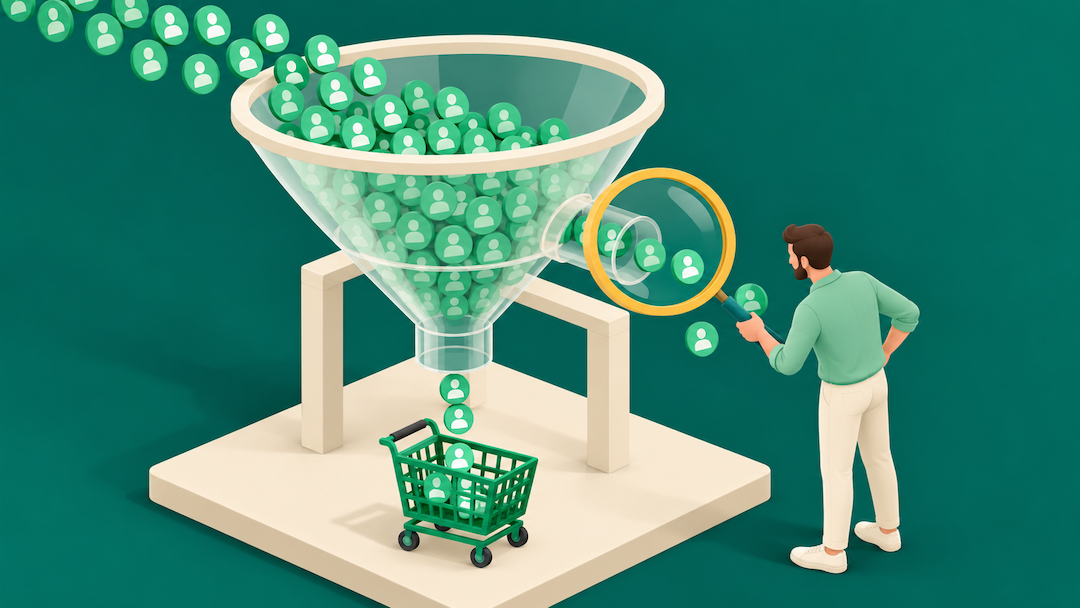
Most Amazon sellers have a leak in their funnel they can’t see. A shopper finds their product detail page, reads the title, scrolls through the images, maybe checks the reviews, then closes the tab. That’s not a failed conversion. That’s a warm lead walking out the door with no way to follow up.
Sponsored Ads can’t reach them once they leave. DSP can. Amazon’s Demand-Side Platform lets you serve display and video ads to shoppers across Amazon’s owned properties, partner sites, and apps outside of Amazon entirely.
For retargeting specifically, you’re not guessing at audience intent. These shoppers already found your listing. They’re in the window. The question is whether you have a system to bring them back.
Why Views Remarketing Hits Different Than Most Retargeting
Retargeting on Meta or Google works by tracking users who visited your website via pixel. Amazon DSP retargeting works differently because it’s built on Amazon’s first-party purchase intent data, not third-party cookies.
When a shopper views your product detail page on Amazon, clicks a sponsored ad, or searches a category where your product appears, Amazon logs that signal. DSP lets you build audience segments from those signals and serve ads to those users wherever they browse next, whether that’s a news site, an app, Twitch, or back on Amazon.
The four core retargeting audiences available are:

Views Remarketing: Shoppers who viewed your product page but didn’t buy. This is the most obvious entry point and where most retargeting budgets should start.
Cart Abandonment: Shoppers who added your item to their cart without completing checkout. These are high-intent prospects who hit a friction point. Price sensitivity, distraction, and comparison shopping are the usual culprits.
Brand Halo Remarketing: Shoppers who viewed other products from your brand. If someone browsed your supplement A and you want to introduce them to supplement B, this is the audience.
Similar Product Remarketing: Shoppers who viewed products similar to yours, including competitor listings. You’re reaching buyers who are actively in the consideration phase but haven’t found you yet.
Each audience should have its own campaign with messaging calibrated to where that shopper sits in the decision process. A shopper who viewed your page three times last week needs different creative than someone who glanced at a competitor listing once two months ago.
The Lookback Window Decision
DSP lets you set lookback windows of up to 90 days. This gives you a meaningful variable to work with, and most brands under-use it.

Our recommendation is to segment by recency rather than running one flat audience across the full 90 days:
0-14 days: This group has the highest purchase intent. They’re freshest. Bid more aggressively here and use product-specific creative tied directly to what they viewed.
15-45 days: Intent has cooled but hasn’t expired. Use social proof here: reviews, rating callouts, or bundling.
46-90 days: These shoppers either found an alternative or stalled. They need a different angle entirely. Price-point messaging, seasonal relevance, or a newer product that solves the same problem can revive interest.
Running all three segments under one campaign with one bid means you’re paying the same CPM to reach a shopper from yesterday as one from two months ago. That’s the kind of waste that compounds quietly across a catalog.
The Part Most Sellers Skip: Exclusions
Setting up who you want to reach is only half the job. Setting up who you want to exclude is where retargeting campaigns often fall apart.

The most common mistake: serving retargeting ads to people who already bought. You’re paying CPMs to show an acquisition ad to someone who converted last week. Beyond the wasted spend, it’s a poor experience for a customer who may have been loyal and is now being treated like a stranger.
The exclusion setup should cover:
- Purchasers within a recent window (typically 30 days, though this depends on your repurchase cycle)
- Customers who’ve already redeemed any active promotion tied to the campaign
- Any audience segments that are too broad to be actionable for your budget
Amazon DSP’s updated audience targeting interface (rolled out in November 2025) now separates include and exclude logic clearly, with a single exclude group that applies across all your inclusion combinations. It’s cleaner than the old setup and worth revisiting if you built your campaigns before that update.
Is Your Amazon Advertising Leaving Money Behind?
Canopy's Partners Achieve an Average 84% Profit Increase!
Find out howFrequency Capping Matters More Than Most Brands Realize
There’s a tendency to treat more impressions as better. In retargeting, that relationship breaks down fast.
Showing your ad to the same shopper ten times in a week doesn’t increase conversion probability on a linear curve. At some point it flattens, then works against you. The shopper who might have been nudged back to your listing becomes actively annoyed.
We manage frequency caps differently depending on campaign recency and audience type. Cart abandonment audiences tend to tolerate a slightly higher frequency because the intent signal is stronger. Views audiences from the 46-90 day window need tighter caps because you’re already working against fading intent.
There’s no universal number that applies cleanly across categories and products. The right approach is to monitor impression-to-click ratios by frequency tier using Amazon Marketing Cloud (AMC), then set caps based on where performance starts degrading for your specific audience.
Creative Sequencing vs. Serving the Same Ad Repeatedly
If a shopper has seen your static display ad three times and hasn’t clicked, showing it again isn’t a strategy. It’s inertia.

DSP gives you the infrastructure to run sequenced creative across your retargeting funnel. The first touch can be product-specific. The second can emphasize a differentiator they might have missed (a warranty, a bundle, a certification). The third can address the most common objection in your category.
Responsive eCommerce creatives (RECs) pull product details, pricing, and promotional information directly from your listing, meaning shoppers see the exact item they previously viewed rather than a generic brand ad. Amazon’s machine learning then optimizes which ad variation – Add to Cart, Coupon, Customer Review, or Shop Now – serves to each user. For views remarketing campaigns especially, RECs consistently outperform static creatives in accounts we manage because the personalization is built into the format.
If you’re running the same static ad across your entire retargeting audience regardless of where they are in the funnel or what they’ve already seen, you’re leaving performance on the table.
How This Fits With Your Sponsored Ads Strategy
One question that comes up often: does DSP cannibalize Sponsored Ads performance, or does it add to it?
DSP retargeting operates as a reinforcing layer on top of a well-managed Amazon PPC foundation. A shopper might first encounter your product through a Sponsored Products ad, leave without buying, then see a DSP retargeting ad on a third-party site two days later. When they return to Amazon and search the category again, your Sponsored Products ad captures them at the conversion moment.
The DSP isn’t replacing the bottom-funnel Sponsored Ads touchpoint. It’s maintaining brand presence across the consideration gap in between. That gap – the time between initial exposure and final purchase decision – is where Amazon’s Sponsored Ads have no reach.
How Sponsored Display compares to DSP covers the distinction in detail: Sponsored Display retargeting keeps buyers within Amazon’s ecosystem, while DSP follows them off-platform entirely.
DSP retargeting fills that gap. The other thing worth noting: optimizing for ACoS alone will never capture DSP’s full contribution to account performance, because DSP touchpoints that influence a purchase often get credited elsewhere in the attribution model. Tracking TACoS alongside ACoS gives you a more complete picture of whether DSP is actually moving the needle at the account level.
For brands that have already extracted most of the value from their keyword targeting and are looking for additional ways to stay in front of high-intent buyers, DSP retargeting is a logical next layer to build.
What to Set Up First
If you’re new to DSP retargeting, start with views remarketing for your top-selling ASINs. Build two audiences: shoppers from the last 14 days and shoppers from days 15 through 45. Exclude purchasers. Set modest frequency caps. Use responsive eCommerce creatives.
Let those run for 30 days before drawing conclusions. DSP campaigns have a longer feedback loop than Sponsored Ads, and campaigns optimized too early on insufficient data tend to get miscalibrated. How Surviveware used views retargeting to win back past shoppers is a useful reference for what that setup looks like in practice and what results a properly structured campaign can produce.
Once you have baseline performance on views remarketing, cart abandonment audiences are the next logical build. From there, adding brand halo and similar product audiences gives you a full retargeting infrastructure.
The DSP setup that works is rarely the most complex one. It’s the one built around the right audience segments, exclusions that prevent waste, and creative that respects where the shopper actually is in their decision process.
Canopy Management delivers end-to-end eCommerce growth, leading the industry in Amazon marketplace strategy while powering expansion through Shopify, Meta, and Google. Our full-funnel approach — from marketplace optimization to customer acquisition — has generated over $3.3 billion in partner revenue and made us the trusted growth engine for brands worldwide.
Schedule a strategy session with our team to discover exactly how our proven frameworks can accelerate your growth.
Ready to turn lost shoppers into your easiest revenue wins?
Canopy's Partners Achieve an Average 84% Profit Increase!
Find out howFAQ
Sponsored Display retargeting runs within Amazon’s ecosystem. DSP retargeting follows shoppers off Amazon entirely, serving ads on third-party sites, apps, streaming platforms, and Amazon-owned properties like Twitch and IMDb. DSP also gives you far more control over audience segmentation, lookback windows, frequency caps, and creative sequencing.
Amazon’s managed service DSP typically requires a minimum monthly budget in the tens of thousands of dollars. Self-service DSP access through a qualified agency has lower entry points but still requires meaningful spend to build audiences large enough to generate useful data. For most brands, views remarketing campaigns on top ASINs make the most efficient use of limited DSP budgets because the audience is pre-qualified.
DSP handles both, but they work differently. Retargeting (views remarketing, cart audiences) targets shoppers who’ve already interacted with your listings. Prospecting campaigns use in-market and lifestyle audiences to reach new shoppers who haven’t encountered your brand. Most brands benefit from running both, with separate campaign structures and distinct KPIs for each.
DSP campaigns have longer feedback loops than Sponsored Ads. We typically advise letting retargeting campaigns run for 30 days before making significant optimization decisions. The CPM model means you’re building frequency and reach before conversion signals accumulate, so early performance metrics can look misleading if evaluated too quickly.
ROAS and total sales are the primary conversion indicators. For retargeting specifically, also track detail page view rate (DPVR), new-to-brand percentage, and click-through rate segmented by creative and audience. Amazon Marketing Cloud (AMC) gives you path-to-purchase visibility that the standard DSP dashboard doesn’t, and it’s particularly valuable for understanding how retargeting touchpoints contribute to eventual conversions that get credited elsewhere in the funnel.