What Is Amazon DVA+? (And Does It Replace Sponsored Display?)
Amazon DVA+ runs display, video, and streaming TV ads as one AI-optimized campaign. How it works, what happened to Sponsored Display, and when to test it.

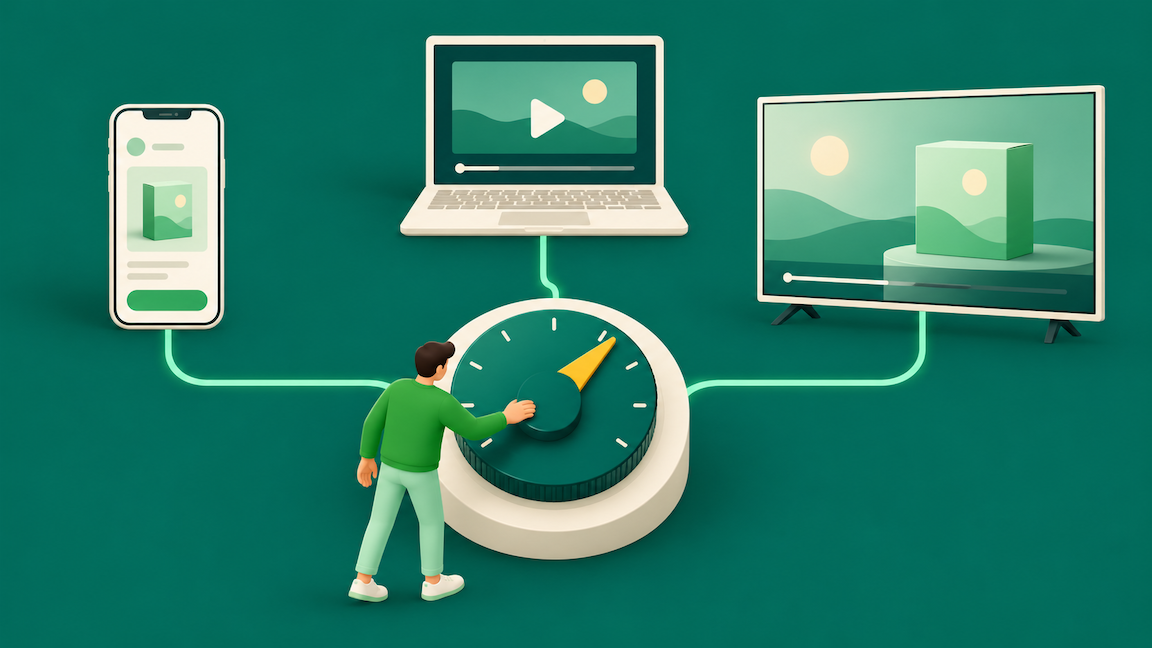
Amazon DVA+ is a new Amazon Ads campaign type that runs display, online video, and streaming TV ads, with audio coming, as one AI-optimized campaign. You pick a goal, choose your products, review the creative Amazon generates, and set a budget. Amazon’s Brand+ and Performance+ optimization then handles targeting, bidding, and how the budget splits across formats. It bills on cost per thousand impressions (CPM) with no minimum spend. It’s US only for now, rolling out to advertisers from late October 2026, with general availability planned for early 2027.
Does it replace Sponsored Display? Not directly. Amazon renamed Sponsored Display “display ads,” and existing campaigns keep running. DVA+ is a new option in the same part of the console that bundles display with video and streaming TV, and Amazon describes it as combining work that used to live in separate Sponsored Display, Sponsored TV, and programmatic campaigns. You can still run display ads on their own. The direction of travel, though, is toward DVA+.
What Happened to Sponsored Display
Amazon’s own Sponsored Display page now says it plainly: “Sponsored Display is now known as display ads.” Three things follow from that:
- Your existing campaigns keep going. “Existing Sponsored Display campaigns will continue to run uninterrupted.”
- They’ve moved in the console. Amazon says you can now find them “through Display, Video, and Audio campaigns in Amazon Ads Agent,” the new name for Amazon’s unified advertising platform.
- New display campaigns start in the same place. Go to Campaigns, click Create Campaign, then under Display, Video, and Audio, click Display.
Display ads now sit next to DVA+ under Display, Video, and Audio, outside the sponsored ads group with Sponsored Products and Sponsored Brands. That’s the clearest signal of where Amazon is taking display: into the same bucket as video, streaming TV, and Amazon DSP’s programmatic buying.
Our guide to Amazon display ads covers how the standalone format works today.

How DVA+ Works
Amazon’s setup guide describes four steps “designed to get you live in 15 minutes or less.”
- Pick an objective. “Choose the objective that matters most: sales, leads, subscriptions, traffic, or awareness.” The goal decides how DVA+ bids, targets, and splits the budget across formats.
- Choose what you’re promoting. “Sellers and vendors choose ASINs from their catalog.” Brands that don’t sell on Amazon give a landing page URL instead.
- Review the creative. DVA+ generates display, online video, and streaming TV creative from your product pages. You can edit it or upload your own.
- Set budget and pacing, then launch. “Choose daily, weekly, monthly, or lifetime pacing, set your flight dates, and go live.” Amazon recommends “flights of 14 days or longer” so the optimization has time to learn.
The ads run “across Amazon properties and thousands of premium third-party sites and apps.” That includes streaming TV on Fire TV, Prime Video, Twitch, and other streaming apps, plus online video and display. Audio is listed as “coming soon.”
For reporting, Amazon promises “glass-box reporting with domain-level delivery visibility,” meaning you can see where the ads ran and how each placement performed, and you can connect Amazon Marketing Cloud for deeper analysis.
If you want more control than the default, DVA+ has advanced settings for audiences, bidding, deals, and inventory. For now, Amazon says those are “available to limited advertisers in the U.S.”
DVA+ vs. Display Ads
| Display ads (formerly Sponsored Display) | DVA+ | |
| Formats | Display | Display, online video, streaming TV; audio coming |
| Who decides targeting | You choose tactics and audiences | Amazon’s AI by default; advanced settings for limited US advertisers |
| Billing | Unchanged from Sponsored Display | CPM, no minimum spend |
| Creative | Your product images and custom creative | AI-generated across formats, editable, or your own |
| Availability | Live | US, rolling out from late October 2026; general availability early 2027 |
| Best for | Retargeting and defending your own listings with tight control | Brands ready to test video and streaming TV without managing each format separately |
The billing row matters more than it looks. Paying per thousand impressions means you pay for reach whether or not anyone clicks. Sellers used to buying clicks will need to judge DVA+ on sales and new-to-brand customers over the full flight instead of on click metrics.
What Amazon Hasn’t Said Yet
- Whether display ads eventually go away. Amazon says existing campaigns run “uninterrupted” and new ones can still be created. It hasn’t said for how long, or whether display ads will eventually fold fully into DVA+.
- How much control most advertisers get. Advanced settings are limited to some US advertisers. Everyone else gets Amazon’s targeting and budget split, with reporting after the fact.
- How its results were measured. Amazon says sellers using DVA+ saw “+71% more detail page views and +64% more purchases vs. standard awareness campaigns.” It hasn’t published how those comparisons were run, so treat them as Amazon’s claim for awareness campaigns specifically.
- Rollout details by account. Amazon said DVA+ would begin “rolling out to advertisers beginning in late October,” and its setup guide describes access as “participating advertisers in the U.S. only.” If you don’t see DVA+ under Display, Video, and Audio yet, you may not be in the current phase.

Who Should Try DVA+ Now
DVA+ makes the most sense for brands that already have the basics covered. That means Sponsored Products running efficiently, Sponsored Brands defending branded search, and enough sales volume that upper-funnel spend has something to feed. If you’re still fixing listings or getting search campaigns profitable, DVA+ won’t fix that, and a CPM budget can disappear fast without converting.
It’s a reasonable test if:
- You’ve wanted video or streaming TV but haven’t had the bandwidth to run separate campaigns for them. Our post on streaming TV for mid-market brands covers when that channel pays off.
- You have products with room to win new-to-brand customers, beyond a hero product that already dominates its branded search.
- You can commit a budget for at least 14 days and judge it on sales and new-to-brand customers over the whole flight.
It’s a weaker fit if your display spend is mostly retargeting shoppers who viewed your own listings. Display ads still give you direct control over that, and Amazon hasn’t said DVA+ does it better.
Our framework for choosing between Sponsored Products, Brands, and Display covers how display fits behind search campaigns.

How Canopy Approaches DVA+
Most of our work for partners is Sponsored Products, Sponsored Brands, and listing optimization, and that’s where we’d start any account before adding upper-funnel spend. When a partner is ready for more reach, we’d treat DVA+ as a contained test. One product set, a fixed budget, a flight of at least two weeks, and success defined up front in sales, new-to-brand customers, and total advertising cost of sales instead of clicks.
The same brand managers run the search campaigns, so we can see whether DVA+ adds sales or just takes credit for sales search would have caught anyway. Our Amazon PPC management guide covers how that work fits together.
Canopy is a full-service omnichannel marketing agency. Our partners have generated $3.3 billion in revenue, with an average 84% year-over-year profit increase and 99.1% partner retention.

Frequently Asked Questions
Display, Video, and Audio. Amazon uses that as the name of the campaign group in Amazon Ads Agent, and DVA+ is the simplified, AI-optimized campaign type inside it. Amazon doesn’t explain the plus, but the campaign’s optimization runs on its Brand+ and Performance+ systems.
It covers much of the same inventory, and Amazon says it brings together what was “previously created through Amazon DSP, Sponsored Display, and Sponsored TV.” The difference is in the setup: DVA+ asks for a goal, products, and a budget, and Amazon handles the rest. Advertisers in 21 countries outside the US who already use Amazon DSP will “continue to see the Amazon DSP experience” for now.
No. Amazon says DVA+ is open “to sellers and brands on Amazon, as well as brands driving goals beyond Amazon,” such as leads, subscriptions, and site visits. Brands without Amazon listings provide a landing page URL and define a conversion event instead of choosing ASINs.
Amazon says DVA+ uses CPM billing “with no minimum spend.” You set your own budget and flight dates. In practice, a budget too small to run for 14 days gives the optimization little to learn from, so size the test to last the full flight.
Full-Funnel Campaigns go one step wider. Amazon says they bring “sponsored ads, display, video, and streaming TV together in a single campaign,” so search ads are in the mix too, while DVA+ covers display, video, and streaming TV. Full-Funnel Campaigns are “now available to all advertisers in the United States.” DVA+ is still rolling out to participating US advertisers.