Should Amazon Brands Run Meta Ads? Only If You Can Measure What Meta Can’t See
Meta can’t see your Amazon sales. Here’s how Amazon Attribution and the Brand Referral Bonus make Meta ads to Amazon measurable and profitable.

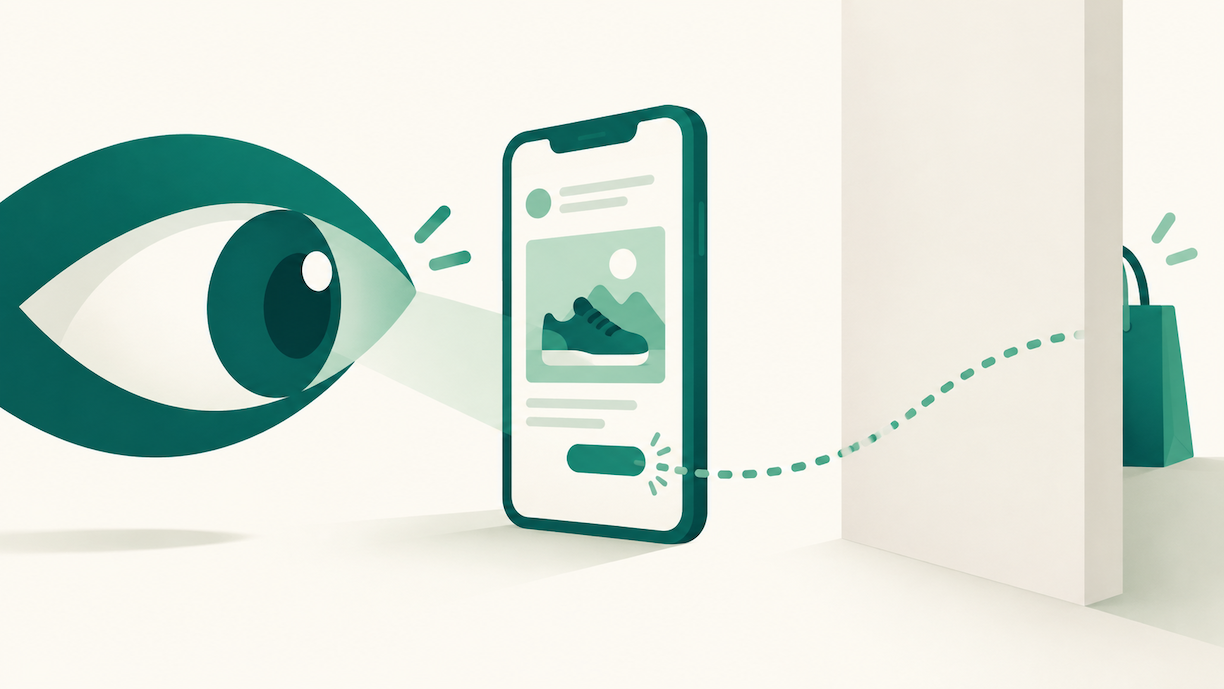
Meta can put your product in front of the right shoppers. It can’t see them buy on Amazon. Here’s how to run Meta ads to Amazon profitably anyway.
Yes, Meta ads can work for Amazon brands, but only when three things are true. You measure results with Amazon Attribution, because Meta’s pixel can’t run on Amazon and never sees the sale. You count the Brand Referral Bonus in your math, because Amazon gives US seller brand owners who enroll a bonus averaging 10% of the sales their tagged outside traffic drives, credited against future referral fees. And the product can convert a cold social click, which rules out a lot of catalogs.
Miss any of those three and Meta becomes the most expensive way to buy clicks your listing doesn’t convert. Get all three right and Meta spend earns part of itself back while feeding your Amazon traffic.
The Problem Most Guides Skip: Meta Can’t See Your Amazon Sales
Meta’s delivery system learns from the events it can see. On your own site, the Meta pixel reports add-to-carts and purchases, and Meta finds more people like your buyers. Send that same ad to an Amazon product page and the signal stops at the click. The pixel is code you install on your own website, and you can’t install it on Amazon’s pages, so out of the box Meta has no purchase data to learn from.
That changes how the campaign behaves. Ask Meta to optimize for purchases and it has nothing to optimize toward. Ask it for link clicks or landing page views and it will deliver exactly that, often from the people most likely to click and least likely to buy. Cheap clicks look great in Ads Manager and do nothing for your Amazon account.
Amazon Attribution, Amazon’s free measurement tool, fills the reporting gap. You put an Attribution tag in your ad’s destination URL, and Amazon reports what happened after the click: detail page views, add-to-carts, purchases, and new-to-brand sales, using a 14-day, last-touch model. Tool providers integrated with the Amazon Attribution API can also show those Amazon results next to your Meta metrics in one console. What Attribution does not do on its own is teach Meta’s algorithm who buys. That’s the tradeoff you manage in the next decision.
Direct to Amazon or Through Your Own Site?
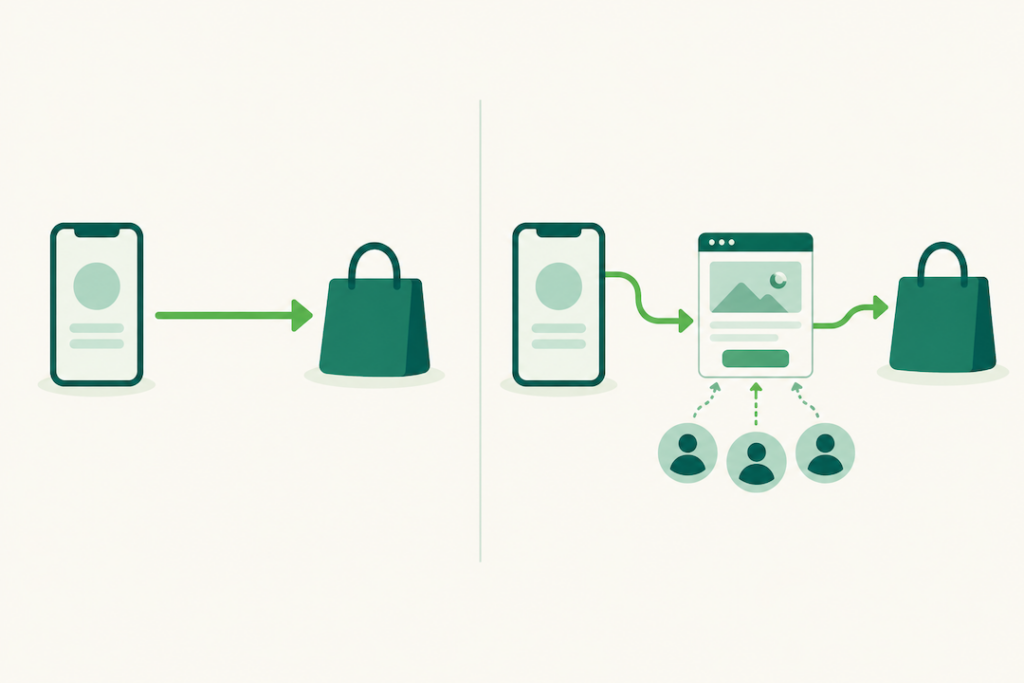
You have two routes, and each gives up something.
Direct to Amazon. The ad clicks straight through to a product page or your Brand Store. It’s the shortest path to purchase, Amazon’s checkout does the converting, and every tagged sale can earn the referral bonus. Amazon also says that increasing glance views of your product pages can help support organic rankings, and Meta traffic adds to those views. The cost is a blind Meta algorithm: you optimize Meta on a proxy, then judge the campaign in Amazon Attribution.
Through your own site first. The ad goes to a landing page or Shopify product page where the pixel fires, then sends shoppers on to Amazon. Meta sees real engagement and builds retargeting audiences, and you can capture email. The cost is an extra click, and if shoppers buy on your site instead, that sale does nothing for your Amazon ranking. We covered this sequencing for product launches in our guide to coordinating Facebook ads with an Amazon launch.
Our take: brands without a real DTC operation should go direct, tag everything, and accept that Meta’s reporting is only half the story. Brands already running Shopify with a working pixel get more from the landing page route, because the retargeting audiences they build there keep paying off long after one campaign ends.
Whichever route you choose, the retargeting doesn’t have to happen on Meta. Amazon’s display ads can re-target shoppers who clicked your non-Amazon ads and viewed your products or Store without buying, which puts the second touch where the purchase happens.

The Math: What the Brand Referral Bonus Does to Meta ROAS
Here’s the part that makes Meta viable for plenty of brands that wrote it off. Enroll in the Brand Referral Bonus program, and Amazon gives US seller brand owners a bonus averaging 10% of product sales driven by their tagged outside marketing. The bonus accumulates as credits that offset referral fees on your future sales. It also covers other products from your brand that the same shopper buys within 14 days of the click.
Run an illustration with round numbers. You spend $3,000 on Meta and Attribution credits $9,000 in sales, a 3.0 ROAS. A 10% average bonus earns about $900 in credits against your future referral fees. That’s 30% of your ad spend offset, which puts your effective spend at $2,100 and your effective ROAS near 4.3.
Two cautions keep this honest. The 10% is an average, so your own rate may land above or below it; model with your own bonus report once you have one. And Amazon notes a two-month processing time between the sale and the bonus, so the credit lands well after the spend. Budget for the lag.
Also read past the promoted product. Attribution reports brand halo sales, meaning purchases of your other products from shoppers who clicked an ad for one. A Meta campaign that looks flat on its featured product can be carrying the rest of your catalog. The same bonus logic applies to Google, and our breakdown of Google Ads for Amazon sellers runs through that side.
Running Meta Ads to Amazon Without Seeing the Sales?
Canopy's Partners Achieve an Average 84% Profit Increase!
Get My Meta-to-Amazon PlanWhich Products Can Carry Meta Traffic
Meta interrupts people who weren’t shopping. That favors some products and punishes others.
Products that tend to work: anything that’s obvious in three seconds of video, solves a visible problem, or looks better in use than in a photo. Giftable products, products with a before-and-after, and new ideas people didn’t know to search for all fit.
Products that tend to struggle: commodity items where the shopper will compare five identical listings on price, low-price consumables whose margin can’t absorb a social CPM, and anything whose value only makes sense after a spec comparison. Those belong in Amazon search ads, where the shopper already has intent.
The listing has to close the sale. A Meta click lands cold on your detail page, so the page does all the persuading. Thin reviews, a weak main image, or an out-of-stock variation will waste the traffic no matter how good the ad is. For brands with a broad catalog, sending Meta traffic to a well-built Store page often beats a single product, and our Brand Store build and measure guide covers how to set one up for that job.
If Meta is the only outside channel you’re considering, test it against TikTok before committing the budget. TikTok content can lift Amazon branded search even when it never earns the click, and our explainer on the TikTok halo effect shows how to spot that in your own data.
How to Set Up Attribution for Meta
- Confirm eligibility. For sellers, Attribution requires Brand Registry with brand representative status. Vendors and agencies are also eligible. Only products that are in stock and have photos and prices can be measured.
- Build one ad group per tactic or creative. Each ad group generates its own tag. One tag for everything tells you Meta worked or didn’t, and nothing about which ad did the work.
- Use bulk upload once you’re past a handful of ads. Amazon’s bulk template tags up to 8,500 Facebook or Instagram ads from a single file exported from Ads Manager.
- Put the tag in the destination URL of every ad, post, and button you want measured. Untagged traffic earns no bonus.
- Enroll in the Brand Referral Bonus program separately. Attribution measures the sales; enrollment is what turns them into bonus credits.
- Check your tags after two days, then review weekly. Judge Meta campaigns on Attribution sales and new-to-brand purchases, never on Ads Manager’s view of the world.

How Canopy Can Help
Canopy Management is a full-service omnichannel agency based in Austin, Texas. We run Amazon, Walmart, TikTok Shop, Shopify, Meta, and Google for brands doing $20K to $1.5M in monthly revenue, with the same dedicated brand manager owning the account for the life of the engagement.
The numbers we lead with: $3.3 billion in partner revenue, 84% average year-over-year profit increase, and 99.1% partner retention.
Schedule a strategy session to see how we’d approach your account.
Frequently Asked Questions
You can run the ads, but you can’t measure them properly. Sellers need Brand Registry with brand representative status to use Amazon Attribution, and without Attribution there’s no referral bonus either. If you’re not registered yet, fix that before spending on outside traffic.
Amazon describes the bonus as an opportunity for US seller brand owners. Attribution itself is available in the US, Canada, the UK, Germany, France, Italy, and Spain, so you can still measure Meta campaigns in those markets. Budget without the bonus outside the US.
Amazon says you may see a 10% to 20% gap between Attribution and publisher click counts, which can come from differences in how the platforms count clicks. Larger gaps often mean mismatched date ranges or one tag shared across several ads. Reporting also takes a day or two to populate after launch.
Amazon shows earned bonus monthly on your account’s Transaction Details page, and you can download a weekly Brand Referral Bonus report in Seller Central. The bonus arrives as credits against future referral fees, not cash. Expect roughly two months between a sale and its bonus.
Both count. Amazon lets you create Attribution campaigns for paid or organic publishers, so a tagged link in an organic post or bio is measured the same way as a paid ad. Give organic and paid their own ad groups, or you won’t be able to tell which one drove the sale.