How to Measure TikTok’s Impact on Your Amazon Sales
TikTok drives Amazon sales your pixel cannot see. Use branded search volume in Search Query Performance to measure the halo your dashboards both miss.


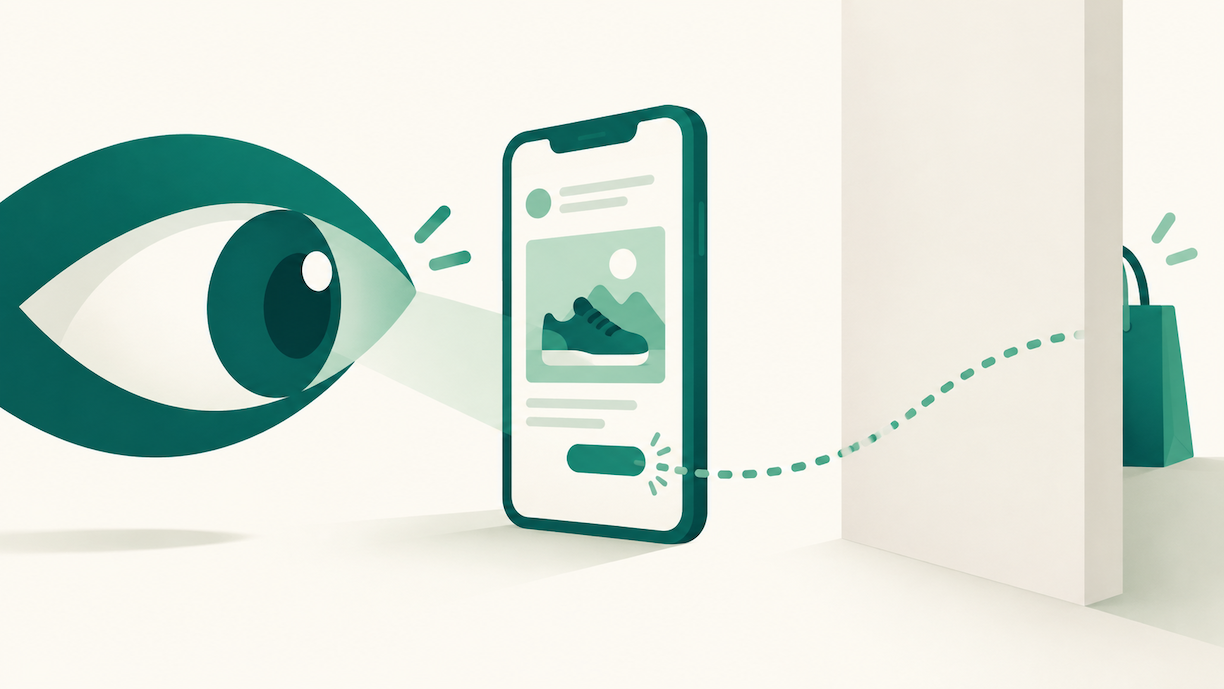
Most of the people your creator videos send to Amazon never click a tagged link. They watch, they remember the name, and two days later they open Amazon and type it into the search bar. No click means no attribution, so your TikTok dashboard shows views, your Amazon dashboard shows sales, and the connection between them lives in neither one. The measurement that survives that gap is branded search volume, and Search Query Performance already reports it.
It gives you two numbers that matter here: how often shoppers search each query that leads to your products, and your brand’s share of the impressions and clicks on those queries. Pull the queries containing your brand name, chart their volume by week, and lay your creator calendar on top. If your content is working, branded search volume rises after your videos land and holds. If it is not working, the line stays flat no matter how many views you bought.
That read takes about an hour to build and it will tell you more than any pixel you install this year.
Your TikTok Views Are Moving Amazon Sales You Cannot See
Canopy's Partners Achieve an Average 84% Profit Increase!
Get Your Cross-Channel Measurement ReviewWhy Amazon Attribution Misses Most of Your TikTok Traffic
Amazon Attribution is Amazon’s own measurement tool for exactly this problem. Amazon describes it as “a free, advertising and analytics measurement solution that provides insight into the on-Amazon impact of your marketing strategies across non-Amazon channels,” covering search, social, display, video, email, and influencer campaigns. It reports clicks, detail page views, add to carts, purchases, and new-to-brand sales. It costs nothing and any brand in Brand Registry can use it.
Use it. It works well for what it covers.
What it covers is tagged clicks. Attribution assigns a tracked link to a campaign, and when someone follows that link to your listing, the tool connects the two. Every part of that chain has to happen. A link has to exist, the shopper has to tap it, and the tap has to survive the trip from one app to another.
Organic creator content breaks that chain in several places at once. A creator talking about your product in a video may have no link at all. If there is one, it sits in a bio three taps away. Plenty of viewers are watching with the sound off in a waiting room and have no intention of leaving the app. The purchase, when it comes, happens later, on a different device, through Amazon’s search bar.

TikTok and Amazon are both closed systems with no interest in passing customer identity to each other. Any tool promising to follow a shopper across that boundary is estimating. The gap is structural, and no amount of pixel configuration closes it.
Amazon Already Told You External Traffic Is Worth Something
Amazon runs a program called the Brand Referral Bonus, which pays brands a bonus when non-Amazon marketing sends customers to the Amazon store. The average is around 10% of qualifying sales, with category variation. Clothing runs closer to 11%. Furniture pays 10% up to $200 and 7% above that.
Read what that program implies. Amazon charges referral fees for the privilege of selling in its store, then hands part of that fee back to brands who bring their own customers. Amazon is a company with excellent data about what drives its business, and it decided that traffic you generate off-platform is worth paying for.
The catch is the same one Attribution has. The bonus applies to sales Amazon can attribute, which means tagged traffic. Organic creator content that drives a branded search does not qualify, even though it produced the same customer. Tag every link you control so you collect the bonus where you can, and understand that the untagged portion is invisible to the program and probably larger than the tagged portion.
What Search Query Performance Shows You
Brand Analytics includes seven dashboards. The one that matters here is Search Query Performance, which shows the top queries leading customers to your products along with impressions, clicks, cart adds, and sales metrics for each. It also gives you your brand’s share of performance compared to the total for that query across the store.

Two things make it the right instrument for this job.
The first is that it reports query volume, meaning how many times shoppers searched that term, independent of whether they found you. Someone searching your brand name has already decided which brand they want. They are not shopping a category, they are looking for you. That intent came from somewhere outside Amazon, and volume is the closest thing to a count of it.
The second is share. Volume tells you demand arrived. Share tells you whether you captured it. A brand can watch its own branded search volume double and still lose most of those shoppers to competitors bidding on the term or to a listing that fails the glance test. Both numbers matter and they answer different questions.
Running the Read
Pull Search Query Performance weekly, not monthly. The effect you are looking for shows up within days and fades. Monthly aggregation buries it.
Isolate the branded queries. Your brand name, common misspellings, and brand-plus-product combinations. Misspellings matter more than people expect, because someone who heard your name in a video is spelling it phonetically.
Build the content timeline separately. Date, creator, view count, and whether it was paid or organic. Do this before you look at the search data so you are not fitting the story to the numbers.
Overlay them and look for lag. The response is rarely same-day. A video that lands Tuesday often shows up in branded search Thursday through the following week, because people who are not ready to buy make a mental note and come back. Judging a campaign on next-day numbers will make working content look dead.
Check share alongside volume. If volume climbs and your click share falls, the content worked and your listing or your defense on branded terms did not. Those are separate problems with separate fixes, and our guide to Amazon ads getting clicks instead of sales covers the conversion side of it.
What This Method Cannot Tell You
Branded search volume is a correlation, not an attribution. Treating it as proof will eventually embarrass you.
Other things move the same line. A press mention, a podcast, a seasonal spike, a competitor going out of stock, an email campaign, a retail placement. If several channels ran in the same window, branded search cannot tell you which one did the work.
It also gives you nothing at the creator level. You will know your content program moved demand. You will not know that the third creator drove four times what the others did, which is the number you want when deciding who to run again.
Three habits make the read more honest. Stagger creator launches by a week or more so each has a clean window. Track a control set of unbranded category terms, since a rise in both suggests seasonality rather than your content. And compare fixed pre and post windows of equal length rather than eyeballing a chart, because a chart will show you whatever you are hoping to see.
None of this makes the method precise. It makes it defensible, which is a fair trade when the alternative is measuring nothing.
What to Do With the Answer
If branded search moves when your content lands, you have found a channel that feeds your Amazon business and does not appear in your Amazon reporting. That changes budget decisions. It also means you need to defend those branded terms, because you are now generating demand that a competitor can intercept for a low bid on your own name. Our keyword research guide walks through building the term list properly.

If branded search does not move, your content is being watched and forgotten. That is a creative and brand recall problem rather than a distribution problem, and buying more views will not fix it. Look at whether your product is legible in the first two seconds, whether the brand name is ever said out loud, and whether the video gives anyone a reason to remember it. If TikTok is meant to be a sales channel in its own right rather than a feeder, our TikTok Shop SEO strategy guide covers ranking inside the platform.
Either answer is worth an hour of work. Most brands run both channels for years and never ask the question, because the dashboards never prompt them to.
How Canopy Can Help
Canopy Management is a full-service omnichannel marketing agency headquartered in Austin, Texas. We manage Amazon, Walmart, TikTok Shop, Shopify, Meta, and Google for brands in the $20K to $1.5M monthly revenue range, powered by our proprietary platform, C.A.T. (Canopy Ad Technology).
What separates us: the same dedicated brand manager owns your account for the life of the engagement. No handoffs between pods, no junior-to-senior escalation chains, no rotating account leads. That continuity is part of why our 99.1% partner retention rate holds where most agencies won’t publish theirs.
The track record: $3.3 billion in partner revenue, 84% average YoY profit increase, and 99.1% partner retention.
Schedule a strategy session to see how we’d approach your account.
Your TikTok Views Are Moving Amazon Sales You Cannot See
Canopy's Partners Achieve an Average 84% Profit Increase!
Get Your Cross-Channel Measurement ReviewFrequently Asked Questions
Yes, for tagged links. Amazon Attribution supports social channels including TikTok and reports clicks, detail page views, add to carts, and purchases at no cost to brands in Brand Registry. It cannot measure a viewer who watches a video, clicks nothing, and searches your brand on Amazon later.
Any query containing your brand name, including misspellings and brand-plus-product combinations like “yourbrand protein powder.” These shoppers have already chosen a brand before they arrive, which is what separates them from category searchers.
Usually two to seven days rather than the same day. Shoppers who are not ready to buy tend to note the brand and return later, so judging a campaign on next-day data will make effective content look like it failed.
Only when the traffic arrives through a link Amazon can attribute. Organic mentions that send someone to Amazon’s search bar produce the same customer but do not qualify for the bonus, so tag every link you control.
No. Pair it with your brand’s share of clicks on those queries. Volume tells you demand arrived and share tells you whether you kept it, and a brand can double its branded search while losing most of those shoppers to competitors.
Stagger launches by at least a week and track unbranded category terms as a control. If branded and unbranded volume rise together, the cause is more likely seasonal than campaign driven