Amazon AI Optimization: The Complete GEO and AEO Guide
How Alexa for Shopping and AI assistants pick which Amazon products to recommend, and what sellers should fix first. Practitioner guide for 2026.

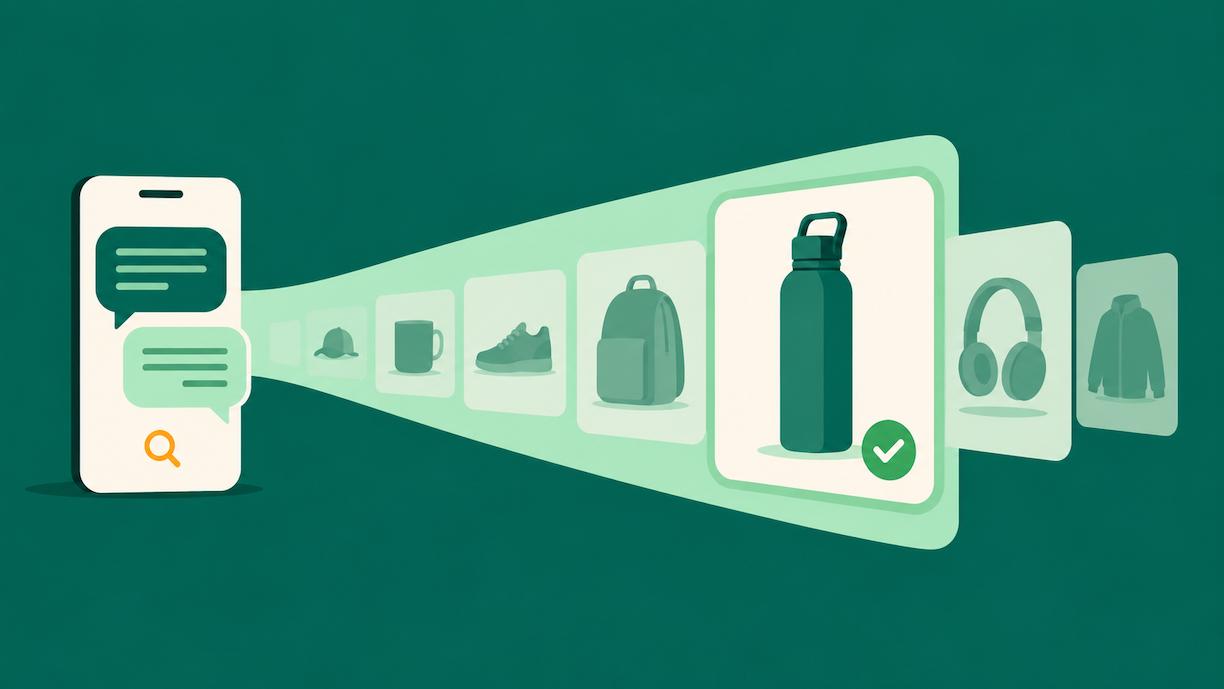
How Alexa for Shopping and external AI assistants choose which products to recommend in 2026, and what Amazon sellers should do about it, in order.
Amazon AI optimization is the work of making your product the answer when a shopper asks an AI assistant what to buy. On Amazon, that assistant is now Alexa for Shopping, which replaced Rufus on May 13, 2026. Off Amazon, it’s ChatGPT, Claude, Perplexity, and Google’s AI Overviews.
Ask ten Amazon sellers what that means in practice and you’ll get ten answers. Half will say it’s about ranking in ChatGPT. The other half will say Amazon hasn’t really changed. Both are working from stale information. Rufus alone helped more than 300 million customers research, compare, and buy products in 2025, according to Amazon, and its replacement now sits in the main search bar, writes AI overviews above search results, and compares products side by side.
Our position after managing accounts through the transition: start with the work inside Amazon, because that’s where the buyer already is, and treat external AI search as a slower brand-building investment. This guide covers what determines whether Alexa for Shopping recommends your product, where external AI search fits, what changes for PPC, and how to sequence and measure the work.
Is AI Recommending Your Competitors Instead of You?
Canopy's Partners Achieve an Average 84% Profit Increase!
Get Your Free AI Visibility AuditWhat Is AI Optimization for Amazon Sellers?
AI optimization is the practice of getting your products surfaced and recommended by the AI systems shoppers use to find, compare, and buy. Two terms get used for it, and they mean slightly different things.
GEO (generative engine optimization) is optimizing for AI systems that write answers by synthesizing many sources. It’s how you get cited or recommended in Alexa for Shopping, ChatGPT, Perplexity, and Google’s AI Overviews.
AEO (answer engine optimization) is optimizing for surfaces that return a single answer to a direct question: voice assistants, featured snippets, and any place a shopper asks “does this fit” and gets one reply.
On Amazon the two collapse into one job, because Alexa for Shopping does both. It writes conversational comparisons and it answers direct questions about specs and use cases. We run them as one practice with one set of inputs.
Three surfaces matter for most Amazon-native brands, in the order we work them:
- Alexa for Shopping inside Amazon. It’s in the search bar, the search results, product detail pages, the Amazon app, and Echo Show. It’s the AI most likely to influence whether your product gets bought, because it sits on top of the store where the purchase happens.
- The answer layer on your detail page. Your listing copy, attributes, customer questions, and reviews are what the assistant reads when a shopper asks about your product.
- External AI search. ChatGPT, Claude, Perplexity, and Google’s AI Overviews increasingly recommend products and cite sources, including Amazon listings, brand sites, review publishers, and forums.
We’ve watched brands spin up an AI task force focused on ChatGPT while their Amazon attributes sat half empty. That’s backwards for a business that sells on Amazon.
How Does Alexa for Shopping Decide What to Recommend?
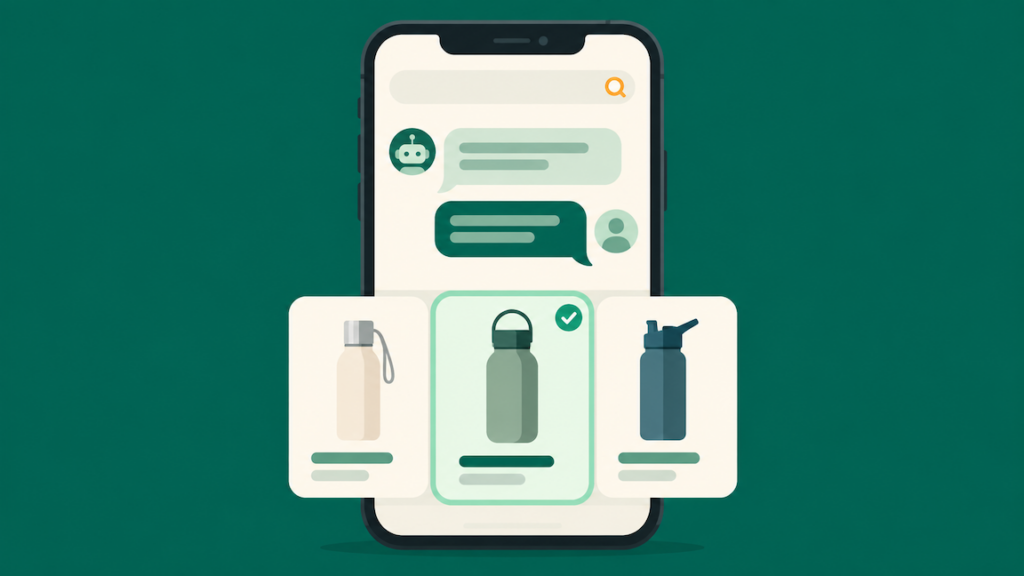
Alexa for Shopping is Amazon’s AI shopping assistant, available free to all Amazon customers signed into their account, with no Echo device or Prime membership required. Amazon says it draws on a shopper’s preferences, shopping history, and conversations across Amazon.com and Alexa, and shoppers can store details like family members, pets, interests, and dietary needs. Amazon retired the Rufus name, though GeekWire reports Rufus still powers parts of the experience behind the scenes. We covered the switch itself in What Happened to Amazon Rufus?
The change is bigger than the rename. A search bar query is one query and one ranking. An Alexa for Shopping session is a conversation: the shopper asks, follows up, narrows, and compares. Each turn is a new chance for a different product to be recommended. The unit of optimization moves from “rank for this keyword” to “be the answer to this kind of question, and the product that wins the comparison.”
That layer sits on top of Amazon’s search ranking; our breakdown of Amazon’s ranking factors in 2026 covers the signals it builds on.
What the assistant reads
Amazon hasn’t published how Alexa for Shopping weighs its inputs. Based on what it can and can’t answer about the listings we manage, these are the inputs that matter:
- Title, Item Highlights, bullets, and description: read for clarity and completeness, not keyword density
- A+ Content: especially comparison charts and feature explanations, which map neatly onto comparison questions
- Product attributes: the structured fields most sellers half-fill. The assistant needs them to answer “what’s the diameter,” “is this dishwasher safe,” or “what battery does it use.” Every empty attribute is a question it can’t answer about your product.
- Reviews: the topics and sentiment across reviews, which feed “what do customers say” answers and suitability questions
- Customer questions and answers: still on Amazon, though no longer on the main detail page (more on that below)
- Performance data: a product that doesn’t convert is a weak candidate to recommend, even when its content matches the question
- Personal context: new with Alexa for Shopping. Two shoppers asking the same question can get different recommendations based on their history and stored preferences.
Write listings that answer questions
The old question was “does this listing contain the keywords shoppers search?” The new one is “does this listing answer the questions shoppers ask?” They produce different copy.
We’ve audited listings where the bullets read like search-query collages: category terms, attributes, and use cases stitched together in syntax no person would write. Those listings still get indexed. Our working assumption is that they give an assistant little it can quote in an overview or a comparison, because there’s no answer in them to extract.
The fix is to write bullets that read like answers. The keywords stay, inside sentences that respond to what shoppers ask about your category. Comparison tables, attribute breakdowns, and use-case content are the formats an assistant can lift cleanly; marketing adjectives aren’t. Our complete guide to Amazon listing optimization and SEO covers each field under the 2026 rules, including the 75-character title cap.

AI overviews, side-by-side comparisons, and scheduled actions
Three Alexa for Shopping features change the most valuable space on Amazon.
AI overviews. Amazon says Alexa for Shopping “surfaces AI-generated overviews at the top of search results in the Amazon Shopping app,” summarizing a product category, and shows them on product detail pages too. The products an overview cites get the first look, much as featured snippets did on Google.
Side-by-side comparisons. Shoppers can select several products from search results and have the assistant compare them on features, prices, and reviews. That means your competitor’s listing affects whether you win the comparison, because the assistant reads both products’ data. Comparison modules, complete attributes, and review quality all feed it.
Price alerts, auto-buy, and scheduled actions. Shoppers can set price alerts, auto-buy an item at a set price, and schedule recurring cart additions, like adding kids’ snacks to the cart each month. Brands already in a shopper’s order history get pulled into that loop. New brands have to break in through search, overviews, and comparisons first, then earn a place in the replenishment pattern.
Our seller’s guide to Alexa for Shopping covers the immediate tactical changes from the May 13 rollout.
Voice and Echo Show
On Echo Show, Amazon says shoppers can “browse and shop the full Amazon store using voice, touch, or both,” starting with the newest Echo Show models for Alexa+ subscribers, according to GeekWire. Voice queries run through the same assistant as typed ones, but they’re longer and more loaded with intent: “order more of the coffee filters I get every month” carries far more context than “coffee filters.”
Be honest about where voice matters. As a way to find new products, it still trails typed search. For repeat purchases (household basics, consumables, pet products, personal care) it already matters, and scheduled actions make it matter more. Brands selling considered purchases or anything shoppers need to see should put their effort into the text and visual side of the assistant instead. Our guide to voice search and Amazon AI optimization covers the structural groundwork.
Customer Questions and Reviews: Your Answer Layer
Your answer layer is everything on or behind your detail page that answers a shopper’s question in plain language: bullets, A+ Content, attributes, customer Q&A, and reviews. It’s where you most directly shape what the assistant says about your product.
Customer Q&A changed this year. Amazon moved the Q&A section off the main product page and replaced the browsable block with a search field, without publishing seller guidance on the change. The answers still exist. Our read, laid out in Amazon Q&A optimization in the age of generative search, is that they still matter as input even though far fewer shoppers see them. That’s our inference; Amazon hasn’t said so.
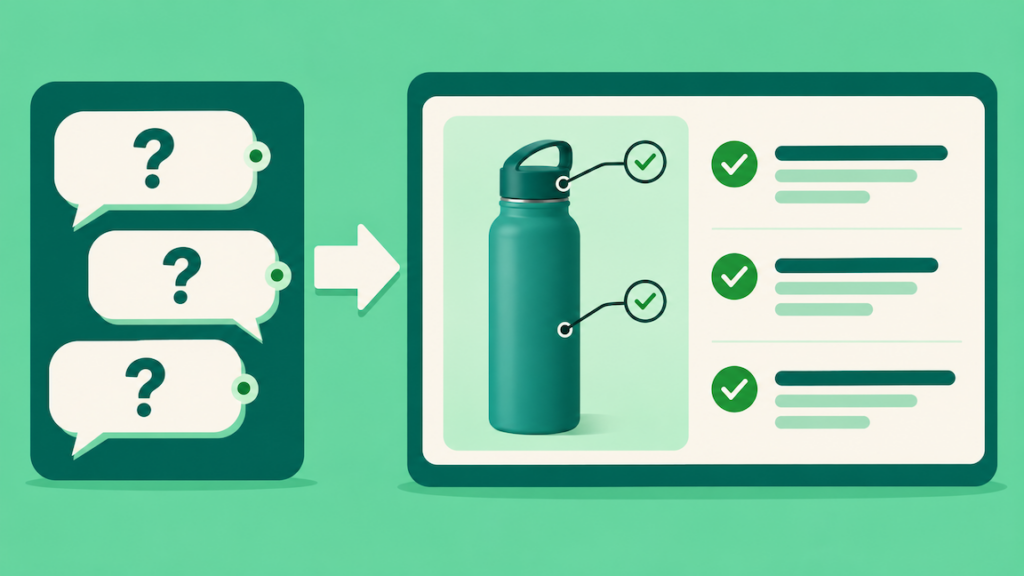
Here’s the practical consequence we’d act on: the questions shoppers ask belong in your listing itself, where both shoppers and the assistant are sure to find them.
- Mine the questions. Pull them from existing Q&A, reviews, return reasons, customer service messages, and the conversational searches in your Search Query Performance data.
- Answer the top ones in the listing. Fit, compatibility, sizing, care, and edge cases belong in bullets, A+ modules, and image callouts, not buried in a thread.
- Keep Q&A answered and accurate. A clear answer from the brand beats a trail of customer guesses, wherever Amazon displays it.
- Read your reviews for patterns. The topics that repeat across reviews are the ones the assistant is most likely to repeat back. If a recurring complaint comes from a wrong expectation, fix the expectation in the listing.
This work compounds. Clearer answers reduce returns and negative reviews, which improves conversion, which strengthens both ranking and recommendations. It’s also hard to credit: there’s no dashboard showing rank lift from a better answer. Brands that stick with it for two or three quarters usually see it in conversion and return rates before they can trace it to a single change.
The categories where this matters most are the ones where fit questions drive returns: supplements, electronics, fitness equipment, pet products, and anything with sizing or compatibility.
Cross-Platform AI Search and External Traffic
ChatGPT, Claude, Perplexity, and Google’s AI Overviews are now places where shoppers find products, even though they send far less traffic than Google search. They matter for two reasons: they increasingly recommend specific products, often linking to Amazon listings, and they build those recommendations from sources Amazon-native sellers rarely think about.
What external assistants draw on
External assistants recommend products using a different mix of sources than Alexa for Shopping:
- Editorial reviews from publishers and category authority sites
- Forum discussions, including Reddit
- Brand-owned content: brand websites, comparison pages, and how-to guides
- Comparison sites and video reviews
- Amazon listings, usually for specs and price confirmation rather than the recommendation itself
Don’t build the strategy on one source. In mid-August 2026, Reddit’s share of ChatGPT Search citations fell by roughly 86% in third-party tracking, while its share in Google’s AI Overviews rose over the same weeks. We covered what happened in Reddit’s ChatGPT citation drop. Sources that engines lean on can change overnight; the content you own can’t be taken away.
What this means for Amazon-native brands
If your brand exists almost entirely on Amazon, you start at a disadvantage in external AI search. Amazon listings aren’t penalized. External assistants simply prefer products they can check against several independent sources, and a brand with no editorial coverage and no site of its own gives them little to check.
The traffic is worth earning. On our own site, ChatGPT referrals converted to booked calls at 3.53% of sessions over a 30-day window in summer 2026, roughly double the 1.77% rate from Google organic search. Your numbers will differ by category, but the pattern is common: AI-referred visitors arrive further along in their decision.
The work is slow: PR for editorial coverage, content on a site you own, and genuine participation in the communities your buyers use. Treat it as a quarterly brand-building investment rather than a weekly campaign. The brands benefiting most were building open-web presence before AI search existed.
Is Alexa for Shopping Recommending Your Competitors Instead of You?
Canopy's Partners Achieve an Average 84% Profit Increase!
Get Your Free AI Visibility AuditHow AI Optimization Differs From Amazon SEO
AI optimization builds on traditional Amazon SEO. The assistant reads the same listing content, attributes, reviews, and performance signals that drive ranking. Brands that skip the SEO foundation and chase AI tactics get inconsistent results, because the assistant has nothing solid to work from.
Three differences are real:
- The unit of optimization. SEO targets “rank for this keyword.” AI optimization targets “be the answer to this kind of question.” Same content, different decisions about what to write.
- Completeness over density. SEO rewards keyword coverage. AI surfaces reward content that fully answers the question, even at lower keyword density. The keywords still need to be there; they now live inside answers.
- Conversations over single queries. SEO assumes one search. AI optimization assumes follow-ups, so the second and third questions are also chances to win or lose the recommendation. The side-by-side comparison makes this concrete: a shopper picks three products from your results page and the assistant compares them. You either make the shortlist or you don’t.
The overlap matters most in four places: reviews (the assistant uses review topics heavily), conversion (a listing that doesn’t convert won’t rank or get recommended), brand consistency (clean parent-child structure and naming help the assistant handle “order more of the usual”), and mobile readability, since most assistant sessions happen in the app. Choosing which keywords deserve space is its own discipline; our Amazon keyword research guide covers ranking a list by purchase rate before you place anything.
What Changes for PPC When Shoppers Ask Amazon’s AI
PPC has to adjust when shoppers query Amazon through an assistant instead of the search bar. No single shift is dramatic, but together they compound.
Three shifts that matter
- Long-tail terms gain value. Conversational queries are longer and more specific, and the assistant handles them well. Long-tail keywords matched to those question patterns capture intent that broad match used to leave behind.
- Match types need tighter control. Matching against intent makes broad match riskier. Phrase match becomes a better control, and negative keywords matter more, because conversational queries can match in directions you don’t want.
- Placement is changing. When an AI overview takes the top of the results page, a traditional top-of-search placement means something different. Budget decisions should account for it.
Sponsored ads inside Alexa for Shopping
Ads are officially part of the assistant. On June 23, 2026, Amazon Ads said advertisers would appear in Alexa for Shopping conversations through “sponsored ads and Sponsored Products and Sponsored Brands prompts on Alexa for Shopping,” and introduced Alexa+ Agentic Ads, which Amazon describes as “the first ad format that takes a customer from seeing an ad to completing a purchase entirely within the conversation.”
What Amazon hasn’t laid out publicly is how those placements are chosen inside overviews and comparisons, or how assistant-driven traffic shows up in campaign reporting. We’ve written about that measurement gap in agentic shopping’s PPC attribution blind spot. Our working assumption: ad creative written for a search results grid looks out of place inside a conversation, and the brands that write ad copy for the conversational context will get the better click-through.
Budgets that were set against pre-May numbers deserve a fresh look. ACoS, TACoS, click-through, and new-to-brand rates moved in many accounts in the weeks after May 13, so compare current performance against post-rollout baselines.
The integration point
The biggest PPC shift is how tightly paid and organic now connect. Performance data from ad traffic feeds the assistant’s recommendations the same way it fed traditional ranking, and listings that answer questions well make every paid click more likely to convert. Brands running PPC and listing optimization as separate workstreams pay for it twice. Our guide to integrating Amazon SEO and PPC makes the full case.

The Practitioner Playbook: Where to Start and What to Measure
Most brands want to start with the most visible surface, usually ChatGPT. Start inside Amazon instead. The same fixes improve ranking, ad efficiency, conversion, and AI visibility at once, and external assistants often confirm product details against Amazon anyway.
Phase one: listing and structured data foundations
Fix structured data first: product attributes, parent-child relationships, A+ modules, Brand Registry consistency, complete bullets, and accurate descriptions. It’s unglamorous, and most catalogs are half done. For a typical Scaling-tier catalog, this takes one to two months of focused work, and it’s where the fastest return sits.
Phase two: the answer layer
Next, build out the question-and-answer work from the section above: mine the questions, answer the important ones in the listing, keep Q&A accurate, and read review patterns quarterly. Shape review content the legitimate way, with listing copy that sets accurate expectations.
Phase three: external AI search
The longest arc: editorial coverage, content on a site you own, community presence, and comparison content. Run it as ongoing brand-building, measured quarterly.
Mistakes we see most often
- Building a ChatGPT strategy before fixing Amazon attributes. External assistants often draw on the same product data, so the Amazon work pays off twice.
- Leaving attribute fields half filled. Empty fields quietly break AI overviews, comparisons, and voice answers.
- Measuring AI optimization like SEO. The metrics don’t map cleanly, and waiting for a perfect dashboard means never starting.
What to measure
Most AI surfaces don’t expose the impression and click data that Search Console gives you for Google. Track proxies:
- Branded search volume: products that get recommended more tend to get searched by name more
- Subscribe & Save attach rate and repeat-purchase cohorts: scheduled actions and voice push replenishment
- New-to-brand purchase rate: a leading indicator of whether you’re still reaching first-time shoppers as overviews and comparisons take over the top of the page
- Review topic patterns: whether the themes you’ve invested in are the ones shoppers repeat
- External AI referral traffic in GA4: chatgpt.com, perplexity.ai, and similar sources, tracked for trend and conversion rather than raw volume
- Conversion rate on long-tail terms: listings that answer questions tend to convert better on the queries that ask them
The full picture takes a few quarters to build. Brands that start measuring now will have a baseline in early 2027.
Is Alexa for Shopping Recommending Your Competitors Instead of You?
Canopy's Partners Achieve an Average 84% Profit Increase!
Get Your Free AI Visibility AuditHow Canopy Approaches Amazon AI Optimization
We run AI optimization, listing optimization, and advertising as one program, because Alexa for Shopping is where paid and organic now meet most directly. The same dedicated brand manager owns each partner’s account for the life of the engagement, so the attribute fixes, answer-layer work, and ad strategy come from one person with the full picture. That continuity is a big part of why our partner retention rate is 99.1%.
Our listing optimization services cover the structured data, A+ Content, and answer-layer work the assistant reads. Our PPC management team runs the paid side, including Sponsored ads inside Alexa for Shopping.
Frequently Asked Questions
No. Amazon says all customers can use Alexa for Shopping free when signed into their Amazon account, with no Echo device, Alexa app, or Prime membership required. That’s why it matters to every seller, not only those in voice-heavy categories. Echo Show adds a voice-and-touch shopping experience on top.
The Rufus name is gone from Amazon’s interface as of May 13, 2026. GeekWire reports that Rufus technology still powers parts of Alexa for Shopping behind the scenes, so work you did for Rufus (clear attributes, answer-focused copy, strong A+ comparisons) carries forward. Update any content or internal documentation that still describes Rufus as a live product.
Not cleanly, as of September 2026. Amazon’s June 2026 announcement of ads in Alexa for Shopping didn’t address reporting, and assistant-driven sessions aren’t broken out as a separate channel in the standard reports we use. Watch proxies such as branded search, new-to-brand rate, and long-tail conversion until Amazon adds more visibility.
Usually not at first. Most of the work that moves AI visibility is listing, attribute, and review work your listing and PPC teams already own, done with a different question in mind. Visibility tracking tools for external AI search become useful once the Amazon foundation is solid and you’re investing in open-web content.
Foundation fixes to attributes, bullets, and A+ Content can show up in conversion within weeks, because they help shoppers immediately. Changes in how often the assistant recommends you take longer, since they depend on performance data building up. External AI visibility is measured in quarters