Amazon Buried Your Q&A Section. The AI Assistant Still Reads Every Word.
Amazon moved Q&A off the product detail page while Alexa for Shopping kept reading it. How to audit, write, and measure now that machines are the audience.

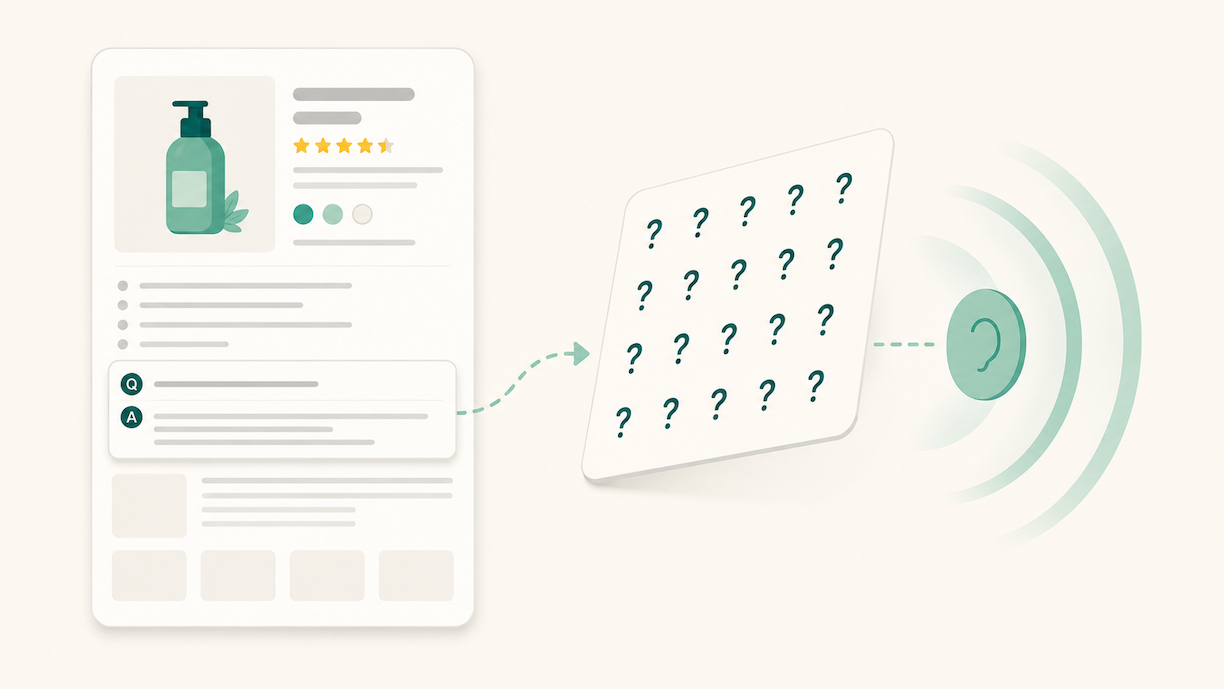
Amazon pulled the browsable customer questions and answers block off the product detail page and pushed it to secondary pages. What sits in its place is a search field that asks shoppers what specific information they want. Your Q&A is now one query away at best and invisible at worst.
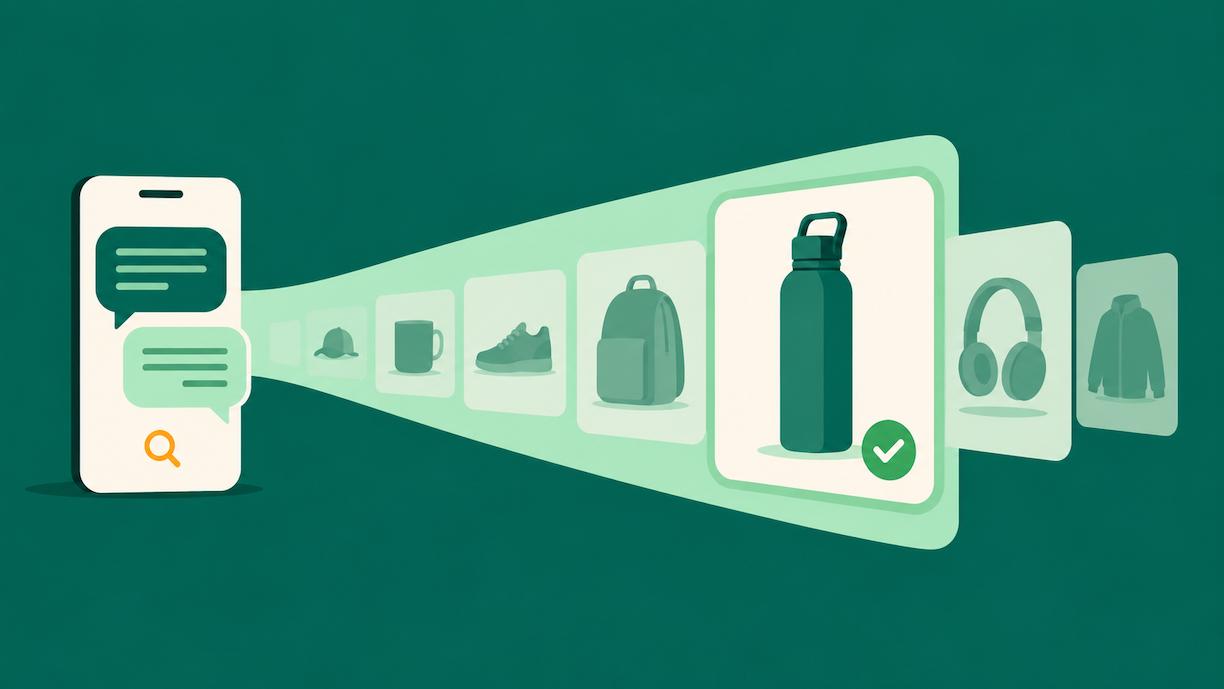
In roughly the same stretch, Amazon built two systems that consume that same content at full depth. Alexa for Shopping, which replaced Rufus in May 2026, answers shopper questions using listing details, reviews, and community Q&A. Join the chat, launched in April 2026, does it out loud, letting shoppers interrupt an audio product summary to ask a question and get an answer assembled from product information and customer feedback.
So Q&A stopped being something you display to shoppers and became something you supply to machines. The audience changed, which means the writing has to change. Answers built to reassure a browsing human now serve a reader that never browses, never infers, and never gives you credit for what you implied.
This is a playbook for brands doing seven to eight figures who want to keep organic share while AI mediates more of the purchase decision.
Your Best Product Answers Are Sitting on a Page Nobody Visits
Canopy's Partners Achieve an Average 84% Profit Increase!
Get a Q&A and Detail Page AuditWhat Amazon Changed on the Detail Page
Research published in January 2026 describes the redesign plainly: Amazon eliminated the Q&A section from the main product page and relegated it to secondary pages. Shopper complaints on Amazon’s own question pages run long, with buyers asking for the full browsable list back and calling the search-only replacement unusable.
Amazon has not published seller guidance explaining the move. The reasonable read is that a public section where any stranger could answer for your product was a liability, and that an assistant trained on the same material delivers the answer with fewer ways to go wrong.
Two things follow. Your existing Q&A stopped earning direct conversions from people who scroll. And it kept every bit of its value as training and retrieval material, because that is where it goes now.
The Two Systems Still Reading It
Alexa for Shopping is the one that matters most. It sits in the search bar, the results page, and the detail page, and it draws on your listing, your reviews, and your community Q&A along with information from the wider web. We covered what the Rufus transition changed for listings when it rolled out.

Join the chat is the newer surface. Amazon’s vice president of conversational shopping, Rajiv Mehta, described it as responding to shopper questions in real time using product information, customer reviews, and other information before resuming the summary. A shopper listening to an audio rundown of your product can stop it and ask whether the thing fits a carry-on. Something answers. What it says is built from content you either wrote well or left thin.
Neither system tells you what it pulled. You find out by asking it questions and reading what comes back.
How to Audit Q&A You Can No Longer Browse
The full question set still exists. Append an ASIN to amazon.com/ask/questions/asin/ and the complete list loads on its own page.
Run that on your top twenty ASINs and score three things. How many questions exist. How many carry answers with real detail instead of a yes or a no. How many of your target use cases have at least three questions covering them.
Then do the same for your three closest competitors. Q&A depth is one of the few competitive signals still fully public, and most brands stopped tracking it the moment it left the detail page.
Ask, Answer, Architect
We run this framework with partners in three parts.
Ask: Build an Intent Map
Harvest questions from every source you have. Your ASINs’ existing Q&A. Competitor Q&A on similar products. Support tickets and chat logs. Search term reports. Reddit threads and one-star reviews. Amazon’s search suggestions.
You are mapping intent, not collecting the questions that happened to get posted. Customers phrase things your marketing team never would, and those phrasings are what people say to an assistant. The same discipline drives keyword research that produces a list which sells rather than a list that ranks.
Answer: Be Explicit Where You Used to Be Brief
Answers now have one job, which is to state facts a machine can lift without inference.
That means naming the context outright. Who the product suits. What it fits. What it does not do. If it works for beginners but not competitive players, write that. If it fits apartments under 500 square feet, write the number.

Weak: “Yes, dogs love it.”
Strong: “Most picky eaters take to this formula. It’s a grain-free chicken recipe with no artificial flavors, which tends to work better for dogs that reject other kibbles. The 30lb bag lasts about six weeks for a medium-sized dog.”
The second version gives a retrieval system multiple hooks against different query types while telling the human something useful. Notice it carries both registers shoppers use, the conversational one and the specific one.
Honest limitations belong in the answer too. “This isn’t built for heavy-duty use, but it holds up for everyday home projects” reads as more credible than “works great for everything,” and it prevents the assistant from confidently recommending your product into a use case that generates a return.
For B2B categories the precision matters more. A label printer answer that specifies compatibility with Windows 10 and 11, Mac OS 12 and up, integration with QuickBooks and ShipStation, and a rate of 150 labels per minute gives the assistant concrete specifications to match against a business buyer’s question.
Architect: Push Q&A Themes Into Bullets, Images, and A+
Recurring questions are a map of where your detail page fails to communicate. Five people asking about compatibility with a specific device means that belongs in your bullets. Repeated sizing questions mean your images need a comparison chart.
The target is one consistent account of your product across every surface the assistant can reach. When bullets, A+ content, Brand Store, and Q&A reinforce the same facts in slightly different phrasings, the system builds a clean picture. When they contradict each other, it builds a hedge. That coherence feeds the same signals that decide organic ranking.
How to Measure Whether Any of This Works
Coverage by theme and persona. Map your customer segments and use cases, then count how many have three or more answered questions addressing their context. Gaps are visibility gaps.
Conversion after Q&A work. Track shifts over the 30 to 60 days following a substantial update. Across our partner accounts we typically see 5 to 15% conversion improvement after systematic Q&A optimization. These are internal program results rather than Amazon-published figures, and we treat the pattern as a leading indicator of detail page health rather than proof of causation. In one home and kitchen account, going from 4 to 18 substantive Q&As on top SKUs correlated with a 9% conversion lift.
Assistant visibility spot checks. Pick five to ten queries representing your core use cases. Ask Alexa for Shopping each one monthly and record whether your products appear, get recommended, or go unmentioned. Build it into reporting. It moves before share of voice does.
Seeding Q&A Without Breaking Policy
Waiting for organic questions is a losing position when competitors are building depth on purpose.
Run internal sessions where your product team lists every question that comes up on calls. Mine support tickets for recurring themes. Use AI to draft candidate questions from your specifications, then check them against real customer language before anything gets posted.
The line matters. Do not fabricate questions no customer would ask, do not incentivize planted questions, and do not post Q&A that misrepresents legitimate customer concerns. Amazon’s policies prohibit manipulative practices. The goal is surfacing real questions early rather than waiting for them.
A+ FAQ modules give you a second channel where you control the framing entirely.

The Returns Dividend
Q&A is a running focus group, and mining it systematically shows where your listing fails.
Track question themes monthly and feed the exact customer phrasing into listing updates. When you rewrite bullets, use their words. When you brief A+ content, address the objections that showed up in questions.
This compounds. Better detail page content eliminates basic questions, which means new questions get more specific, which reveals needs you had not documented. Returns drop alongside it, because customers who understood what they were buying return less of it.
Where This Goes From Here
Q&A moved from a conversion surface to an input. The direction of travel is toward more of that, not less: a federal court recently allowed AI agents to shop Amazon on a customer’s behalf, which puts another reader between your content and the buyer.
Start this week. Pull the question list for your top ASINs at the workaround URL, score depth and answer quality, and ask Alexa for Shopping your five most important customer questions to see whether you come up.
Amazon stopped showing your answers to shoppers. It did not stop reading them.
Canopy Management is a full-service omnichannel agency based in Austin, Texas. We run Amazon, Walmart, TikTok Shop, Shopify, Meta, and Google for brands doing $20K to $1.5M in monthly revenue, with the same dedicated brand manager owning the account for the life of the engagement.
The numbers we lead with: $3.3 billion in partner revenue, 84% average year-over-year profit increase, and 99.1% partner retention.
Schedule a strategy session to see how we’d approach your account.
Your Best Product Answers Are Sitting on a Page Nobody Visits
Canopy's Partners Achieve an Average 84% Profit Increase!
Get a Q&A and Detail Page AuditFrequently Asked Questions
It moved. Research published in January 2026 describes Amazon removing the Q&A section from the main product page and relegating it to secondary pages, with a search field left in its place. The full question set for any product remains reachable by appending the ASIN to amazon.com/ask/questions/asin/. Nothing was erased, and the assistant still draws on all of it.
No. Brands can answer customer questions through Brand Registry, and Amazon expects them to. What gets flagged is promotional, misleading, or evasive content, not the fact that the brand wrote it. Quality and honesty are the standards, not authorship.
Within 24 to 48 hours. Slow responses leave the field open for another customer to answer inaccurately, and you have limited ability to correct someone else’s answer once it posts. Speed also signals active brand engagement.
Yes. One-word answers waste the slot entirely, and defensive or vague responses raise shopper hesitation instead of resolving it. An answer that names a limitation without giving context can cost you a sale that honest framing would have kept. Thin Q&A is often worse than none.
No, and the choice is a false one. Reviews carry more weight in ranking and in shopper trust, and they are harder to influence directly. Q&A is the surface you control, which makes it the faster lever when your review volume is already healthy.
There is no published threshold, and anyone quoting one is guessing. Work from coverage instead: every use case and customer persona you sell to should have at least three answered questions addressing its specific context. Fifteen questions covering five personas beats forty covering one.