Your Shopify Storefront Is Now Agent-Callable. It Does Not Create a New Discovery Channel.
Shopify turned on WebMCP tools for every Liquid storefront on August 5. What it does, what it does not do, and the catalog work it rewards right now.

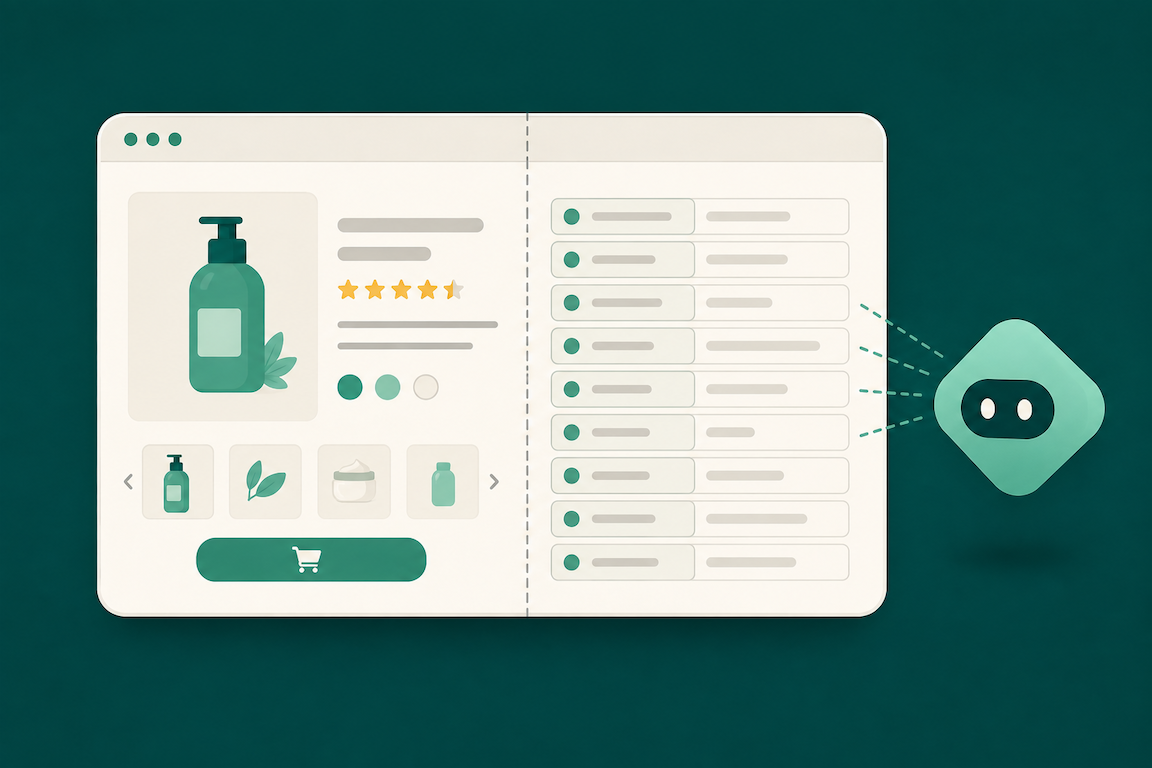
On August 5, Shopify announced WebMCP support for every Liquid storefront and the Hydrogen developer preview. With no app or admin configuration required, an AI agent operating in a shopper’s Chromium-based browser can search the catalog, work with the shopper’s cart, and take them to checkout in the live browser session.
Here is the part most of the coverage is skipping. WebMCP does not find you customers. Chrome’s documentation lists tool discoverability as a known limitation: browsers and agent clients have to visit a site directly before they know callable tools exist there. The shopper, or the agent working for them, has to already be on your storefront. This is a change to the conversion path wearing the costume of a discovery change.
That distinction decides whether you should care and what you should do. If your Shopify traffic is healthy but your product data is thin, Shopify just handed a very literal reader a direct line into that data with no page design in between to cover for it.
Your Product Data Is Now a Direct Answer, Not a Sales Page
Canopy's Partners Achieve an Average 84% Profit Increase!
Get a Catalog Readiness AuditWhat Shopify Turned On
Ten tools, in four groups.
The catalog tools are search_catalog, browse_store, get_product, and show_variant.
Search covers products, collections, articles, and pages. get_product returns full detail including variants, prices, and which option combinations are in stock. show_variant will take a partial instruction like a color and select a matching available variant.
The cart tools are get_cart, update_cart, and cancel_cart. Shopify built these on the same standard storefront actions that apps already use, so an agent’s cart change behaves like the shopper’s own.
If your theme opens a cart drawer when something is added, the agent trips that same drawer.
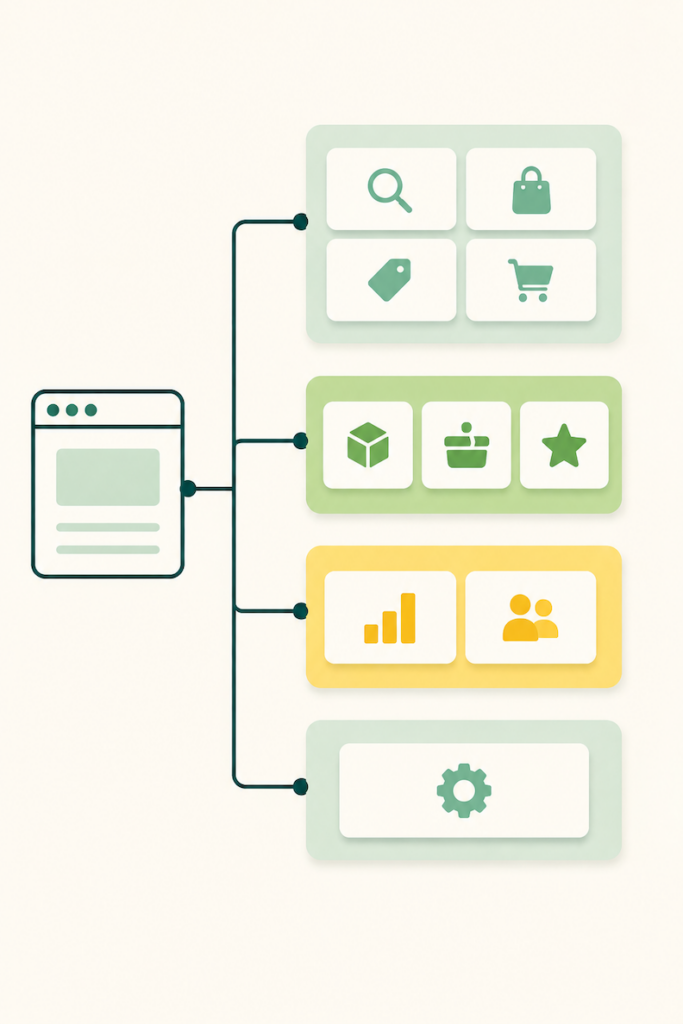
Checkout and orders are proceed_to_checkout and manage_orders. Checkout verifies the cart is not empty and then takes the shopper there. Order management routes them to their order history and asks them to log in if they are not.
The last one is search_shop_policies_and_faqs, which answers questions about returns, shipping, and hours from your own content.
Read that list again with an operator’s eye. Every one of those tools is a structured read or write against data you already own. None of them is a marketing surface. There is no placement to buy and no ranking to win.
This Is Not Shopify Agentic Storefronts
The two get blended constantly and they work in opposite directions.
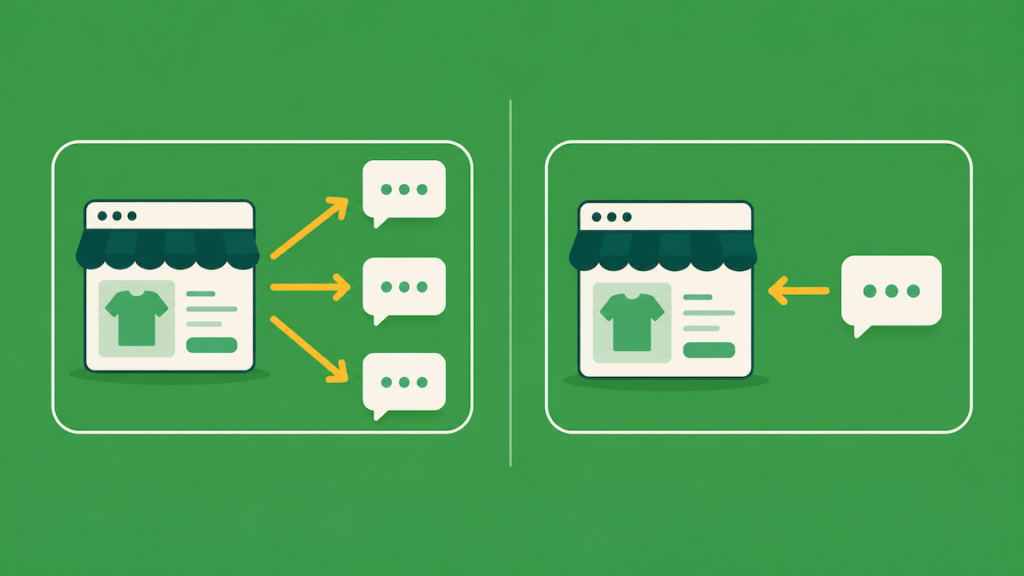
Agentic Storefronts, from the Winter ’26 Edition, pushes your catalog outward so your products can be found and bought inside ChatGPT, Copilot, and Perplexity. Your brand shows up in a conversation happening somewhere else. We covered that shift when it landed alongside a stack of simultaneous platform changes across Amazon, Walmart, and TikTok Shop.
WebMCP pulls inward. It serves an agent the shopper brought with them to your site. Shopify’s documentation separates the two plainly and routes developers to different pages depending on which one they mean.
If you only do one of these, do the outward one, because that is where new demand comes from. WebMCP matters because of what it does to the traffic you have already paid for.
The Timing Question, Answered Honestly
WebMCP is not an AI-shopping discovery channel. Chrome says clients and browsers must visit a site directly before they can know it offers callable tools, so WebMCP improves what an agent can do after the shopper reaches your storefront; it does not make the storefront newly discoverable on its own.
The volume through these tools today is small. Anyone selling you an urgent WebMCP project is selling you something.
The reason to move anyway is that the work WebMCP rewards is work you should have done regardless. Nothing on the list below is a WebMCP task. It is catalog hygiene, and it pays out across your Google Shopping feed, your marketplace listings, and every conversational shopping surface that keeps arriving, including the ones Amazon rebuilt around Alexa for Shopping. WebMCP just adds a reader who will never squint at a nicely designed page and infer what you meant.
Where Thin Data Gets Exposed
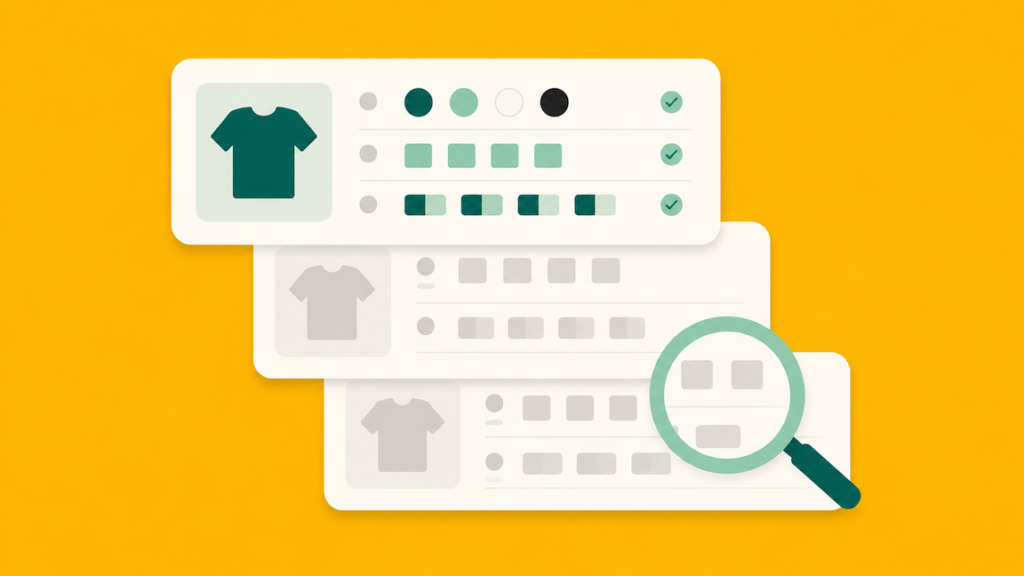
Variant modeling. get_product reports which option combinations are in stock, and show_variant resolves a partial request like “the olive one” to an available variant. Stores that encode meaning in variant names humans can decode by eye, “Style A” and “Style B,” give an agent nothing to resolve against. Options need real values in real option sets.
Inventory accuracy. An agent reading stock state as structured data and reporting it to a shopper does not hedge. Locations with stale counts turn into confident wrong answers.
Collection and content copy. search_catalog covers collections, articles, and pages, not just products. Collection descriptions most merchants wrote in ten minutes and never revisited are now search targets.
Policy pages. search_shop_policies_and_faqs reads your policies and answers from them. If your return policy is a wall of legal text with the actual window buried in the fourth paragraph, expect the answer a shopper gets to be worse than the one you would give. This is the same discipline behind treating customer questions as a ranking and recommendation asset on Amazon.
Ambiguity. update_cart returns clarifying options instead of guessing when a request is unclear. Every one of those clarifications is a step where a shopper can abandon. Ambiguity in your product naming has always cost you conversions quietly. Now it costs you a visible round trip.
What We Would Do This Quarter
Pull an export of your catalog and check three fields: option names, option values, and inventory location accuracy. Fix the products carrying the most revenue first.
Rewrite collection descriptions for the top ten collections by sessions so the first sentence says what belongs in the collection and who it is for.
Restructure your top five policy pages so the operative fact leads. Return window in the first sentence. Shipping cutoff in the first sentence.
Then leave it alone and watch. The tools will get more capable, browser support will widen, and the merchants who cleaned their data during the quiet part will be the ones agents can represent accurately when it stops being quiet. That pattern has repeated through every retrieval shift we have tracked, including the ranking changes reshaping Amazon organic visibility.
Your storefront is readable by machines now whether you prepared for it or not. The only variable left is what they find when they read.
How Canopy Can Help
Canopy Management is a full-service omnichannel agency based in Austin, Texas. We run Amazon, Walmart, TikTok Shop, Shopify, Meta, and Google for brands doing $20K to $1.5M in monthly revenue, with the same dedicated brand manager owning the account for the life of the engagement.
The numbers we lead with: $3.3 billion in partner revenue, 84% average year-over-year profit increase, and 99.1% partner retention.
Schedule a strategy session to see how we’d approach your account.
Your Product Data Is Now a Direct Answer, Not a Sales Page
Canopy's Partners Achieve an Average 84% Profit Increase!
Get a Catalog Readiness AuditFrequently Asked Questions
No. Shopify provides the tools on every Liquid storefront and on storefronts built with the Hydrogen developer preview, with nothing to install or configure. There is no app, no theme edit, and no admin toggle documented. Merchants on custom headless builds outside the Hydrogen developer preview are not covered by this rollout.
Chromium-based browsers, through a Chrome origin trial that opened with Chrome 149. Support outside Chromium does not exist yet because WebMCP is a proposed standard rather than a finished one. Shopify is working on the specification alongside Google and Microsoft.
Not through these tools. The checkout tool takes the shopper to checkout, and completing the purchase remains subject to Shopify checkout’s normal authentication, payment, and confirmation steps. Chrome’s guidance also allows sites to require a confirmation dialog for sensitive actions, though it does not mandate one.
Shopify has not announced a dedicated WebMCP acquisition channel or attribution guidance. Because the cart tools call Standard Actions, the same actions apps use, agent-driven cart changes are likely to fire the same events as shopper-driven ones. Test your own instrumentation before assuming agent activity is separately identifiable, and treat it as unmeasured until you have confirmed otherwise.
No. Off-site discovery through Agentic Storefronts is where incremental demand comes from, and it should stay ahead of WebMCP in your queue. WebMCP improves the experience of traffic you already have.
Start with option names and option values on your highest-revenue products, because those fields determine whether an agent can resolve a shopper’s request to a real variant. Inventory location accuracy comes second, since stale counts become confident wrong answers. Collection descriptions and policy pages come third.