Walmart Killed Its ChatGPT Checkout. The Reason Matters More Than the News
Walmart shut down its ChatGPT checkout after in-chat purchases converted at one third the rate of clicks to Walmart.com. What that means for your listings.

Walmart ran the experiment, measured it, and pulled back. The number it published tells sellers where AI shopping is actually going.
In October 2025, Walmart and OpenAI announced that shoppers would be able to buy Walmart products without leaving ChatGPT. Five months later, Walmart shut it off.
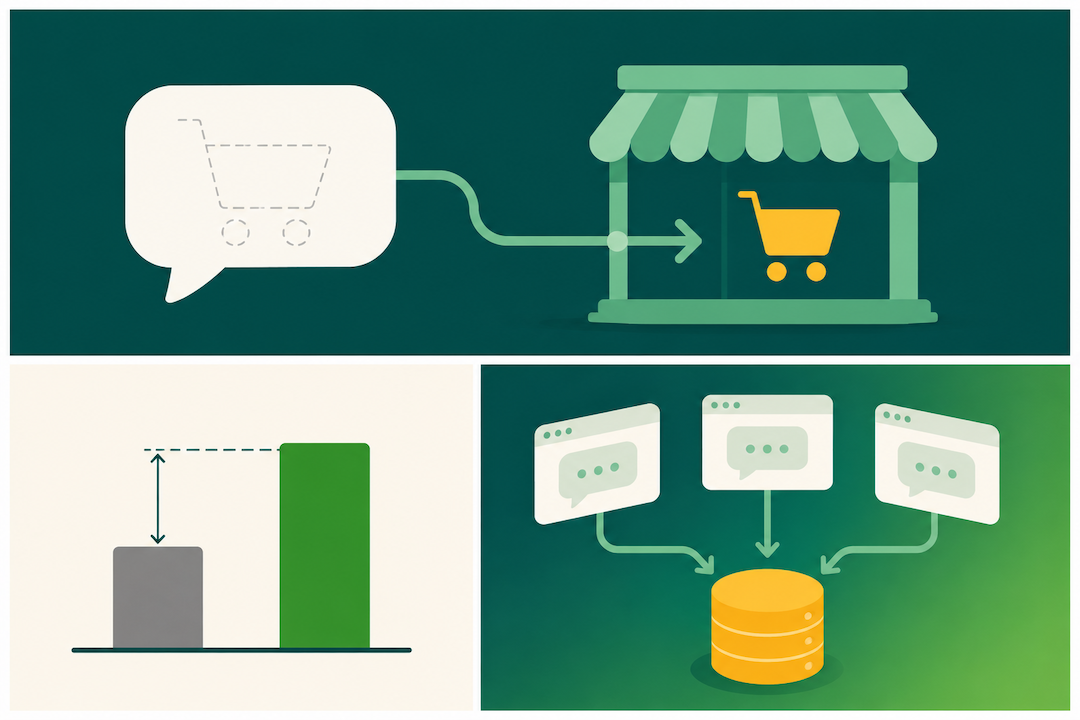
The reason is the part worth your attention. Walmart’s EVP of AI acceleration, product, and design, Daniel Danker, disclosed that purchases completed inside ChatGPT converted at roughly one third the rate of shoppers who clicked through to Walmart.com. He said it publicly, on the record, about a product Walmart had helped launch as the flagship partner.
That single number reorganized how both Walmart and Amazon are building AI shopping. Discovery happens in the assistant. The transaction goes back to the retailer. If you sell on either platform, that split determines what you should be optimizing and what you can safely ignore.
What Was Announced in October 2025
The original pitch was end-to-end. Ask ChatGPT to plan dinner, and it would add Walmart ingredients to a cart and complete the purchase without you touching Walmart’s site.
Then-CEO Doug McMillon framed it as the end of an era, saying in October 2025 that the long-running model of search bars and item lists was about to change fundamentally. Walmart made roughly 200,000 products available for purchase inside ChatGPT through OpenAI’s Instant Checkout feature.
It was a reasonable bet, and Walmart was not a minor participant. It was the marquee retail partner alongside Etsy and Shopify.
What Walmart Measured
Conversion ran about three times worse than a normal click-through to Walmart.com.
Danker went on the record with WIRED in a report published March 18, 2026. A few weeks earlier, at Morgan Stanley’s technology conference on March 4, he had put the same figure in front of investors.
The diagnosis was less about AI and more about retail fundamentals:
Delivery and cost information was unreliable. ChatGPT was working from scraped or stale product data, so estimated delivery windows and shipping costs were often wrong or missing. Those are frequently the deciding factors in a purchase.
Tax handling was unresolved. As of early 2026 there was no system for collecting and remitting state sales tax on Instant Checkout purchases, which created compliance exposure for the retailer and surprise costs for the shopper.
The environment was unfamiliar. Completing a $200 purchase in a chat window with no visible cart, no return policy in view, and no recognizable brand signals introduced hesitation that had nothing to do with how many steps the flow took.
OpenAI reached a compatible conclusion from its side, saying the first version of Instant Checkout did not give merchants the flexibility it wanted, and shifting its focus to product discovery instead.

What Replaced It
Starting the week of March 25, 2026, Walmart’s own assistant, Sparky, began operating inside ChatGPT as an in-platform app. Gemini followed the next month.
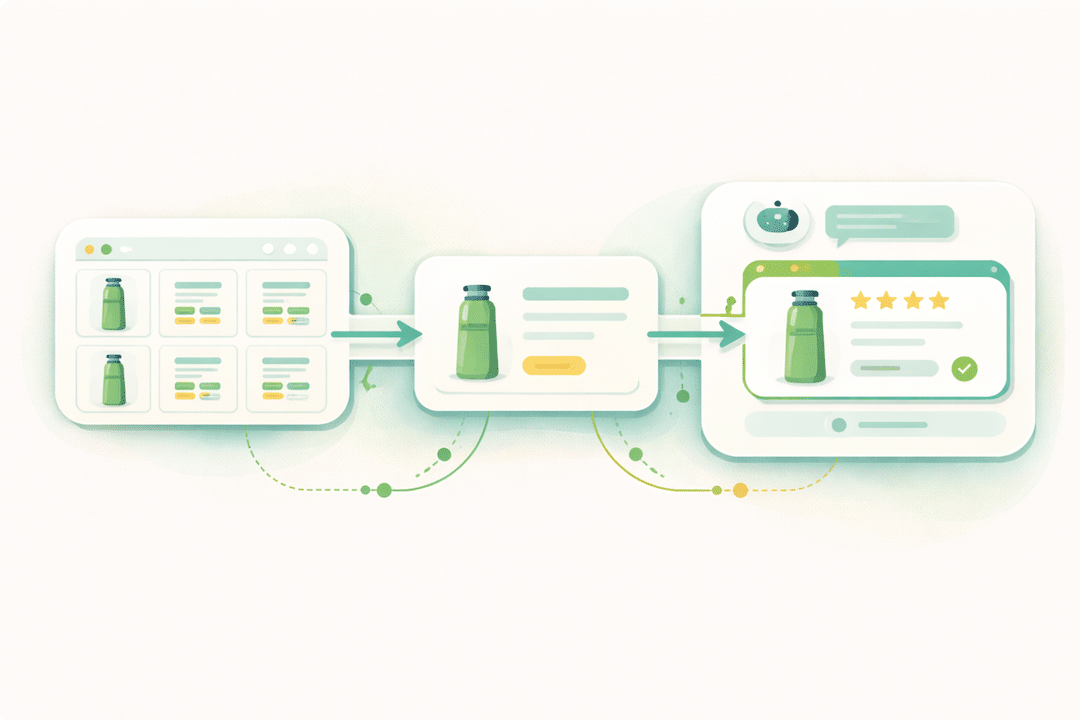
The structure inverted. A shopper discovers products through conversation in ChatGPT, then moves into a Walmart environment that handles account linking, loyalty, and payment. Baskets sync across Walmart.com, the Walmart app, and ChatGPT. Walmart keeps the transaction, the customer data, and the post-purchase relationship. OpenAI gets reach.
OpenAI rebuilt its Agentic Commerce Protocol around the same idea, letting merchants share product feeds and promotions while running their own checkout. Target, Sephora, Nordstrom, Lowe’s, Best Buy, The Home Depot, and Wayfair have integrated on those terms.
Your Catalog Is Being Read by Systems You Cannot See
Canopy's Partners Achieve an Average 84% Profit Increase!
Get your listings AI-readyThe Rule This Leaves Behind
Discovery moved into the assistant. Conversion stayed on retailer property.
That is not a Walmart quirk. Amazon retired the Rufus brand on May 13, 2026 and folded the assistant into Alexa for Shopping, positioned in the main search bar rather than a side panel. Both retailers arrived at the same architecture: own the agent, own the transaction, let the general-purpose AI feed the top of the funnel.
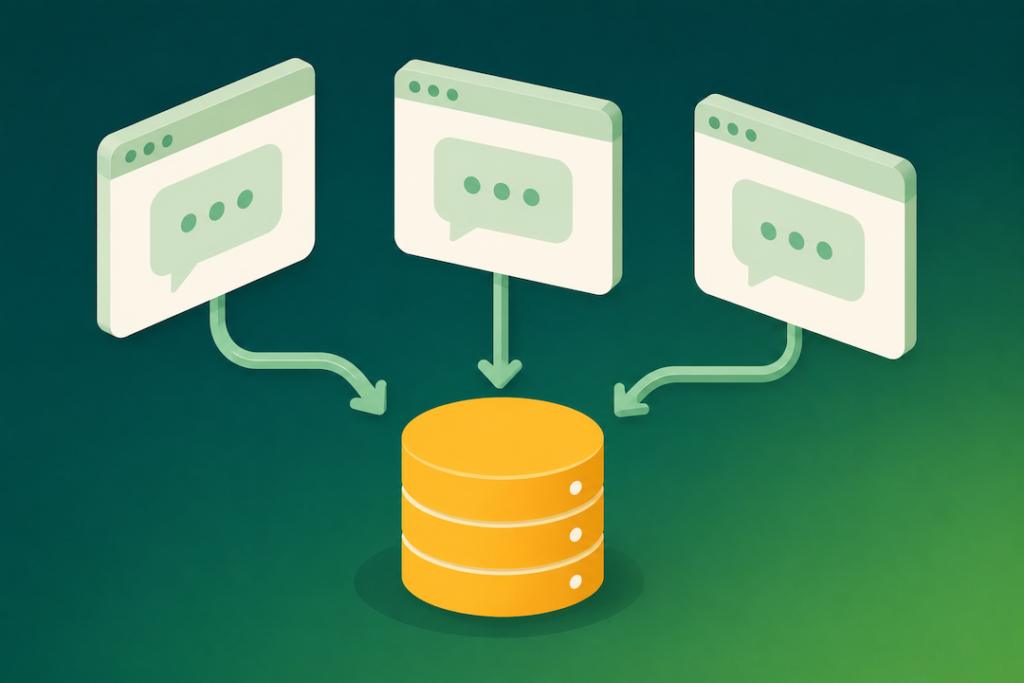
For a seller, the practical consequence is that the input to both systems is your structured product data. Not your ad spend, and not your brand story. Attributes, specifications, inventory accuracy, and reviews are what the retrieval layer reads before deciding whether your product is a candidate at all.
The same listing work that makes your products visible on Walmart.com is what makes them eligible to surface when Sparky answers a question in ChatGPT. On Amazon, the attribute and content work behind Alexa for Shopping is the same job. Two platforms, one workstream.
The Numbers That Held Up
Walmart’s second quarter FY27 results, reported August 2026, put figures on the surviving half of the strategy. CEO John Furner, who succeeded McMillon on February 1, 2026, said Sparky usage was up 70% year over year and that customers who use Sparky for shopping spend 40% more per order than those who do not.
Read that carefully. Walmart did not claim Sparky causes larger baskets, and it should not be read that way. Sparky users select themselves, and people who open an assistant to plan a week of meals were likely bigger-basket shoppers already. What it does show is that a meaningful share of high-intent shopping now runs through a conversational surface, and that Walmart has a reason to keep investing in it.
The discovery half worked. The transaction half did not. Walmart kept the half that worked.
What to Do About It
Audit your attribute completeness first. Retrieval systems filter on structured fields before they rank anything. Missing attributes remove you from consideration rather than just lowering your position, and there is no report that shows you what you were excluded from.
Stop building for a single assistant. Two years of AI shopping products have launched and been rebuilt. Optimizing for the mechanics of any one of them is a bet on a specific interface surviving. Optimizing your catalog data pays out regardless of which one wins.
Treat inventory and delivery data as ranking signals. Walmart’s own post-mortem identified stale availability and delivery information as a conversion killer. The same data feeds recommendation eligibility.
Judge paid placement on top of that foundation, not instead of it. Walmart Connect has been testing Sponsored Prompt ads inside Sparky since January 2026, and Amazon runs a similar format. Both are closed-loop, meaning you can only sponsor products already listed on the platform. Paid placement cannot rescue a listing the assistant would not have surfaced anyway.
Canopy Management is a full-service omnichannel marketing agency covering Amazon, Walmart, TikTok Shop, Shopify, Meta, and Google. Our partners have generated more than $3.3 billion in revenue, with an average 84% year-over-year profit increase and a 99.1% partner retention rate.
AI Assistants Are Deciding Which Products Get Recommended. Yours Should Be One of Them.
Canopy's Partners Achieve an Average 84% Profit Increase!
Talk to a brand managerFrequently Asked Questions
No. What failed was one implementation of one part of it, the payment step inside a third-party chat interface. The discovery half is growing, which is why Walmart, Amazon, and Google all kept building assistants after the checkout retreat. The lesson is that shoppers will take AI recommendations but want to complete purchases somewhere they recognize.
The updated Agentic Commerce Protocol lets merchants share feeds and promotions with OpenAI, and several large retailers have. For most marketplace sellers this is not a direct option, because your products reach ChatGPT through Walmart’s or Amazon’s integration rather than your own. Your leverage point is the catalog data you give the marketplace.
You largely cannot, and neither Walmart nor Amazon provides seller-facing attribution for assistant-driven traffic. The workable approach is to test prompts against your top products manually, record the responses and the date, and repeat after you make catalog changes. Treat it as directional evidence rather than a rank tracker.
Yes, because Amazon made the same architectural choice. Alexa for Shopping sits in Amazon’s own search bar, and the recommendation logic runs on your listing data. A seller who ignores this on Amazon is exposed to the same filtering that Walmart sellers face.
Only after your organic catalog data is complete. These placements are early, reporting is thin, and both platforms restrict them to products already listed. Budget spent sponsoring a listing with empty attribute fields buys visibility for a product the assistant has already judged a poor match.
Nothing announced suggests it. Walmart’s public position is that customers want a consistent experience across every touchpoint, which its current setup delivers by keeping the transaction on Walmart property. Plan around the architecture that exists rather than a reversal.